Free vs Paid Event Tickets: Why We Sell Both, and How to Split the Budget
Free tickets fill the room. Paid tickets show up. What 2026 attendance data says, and the break-even VIP model we use to get both.
 Devin AlexanderCo-Founder & CEO
Published 8 min read
On this page
Key takeaways
- Don't choose between free and paid. Free registrations fill the room cheaply. A paid VIP tier puts committed buyers in the front rows.
- In 2026 data from more than 1,070 events, paid events had a median no-show of about 17%, against about 28% for free events.[1]
- Most of that gap comes from the event, not the individual. Inside the same event, paying guests attend only 2 to 4 points more reliably than comped guests.[2]
- Run the VIP side at break-even: VIP ticket revenue, net of fees and refunds, should cover the ads that sold it.
- Judge the whole thing on cost per checked-in attendee, not cost per registration.
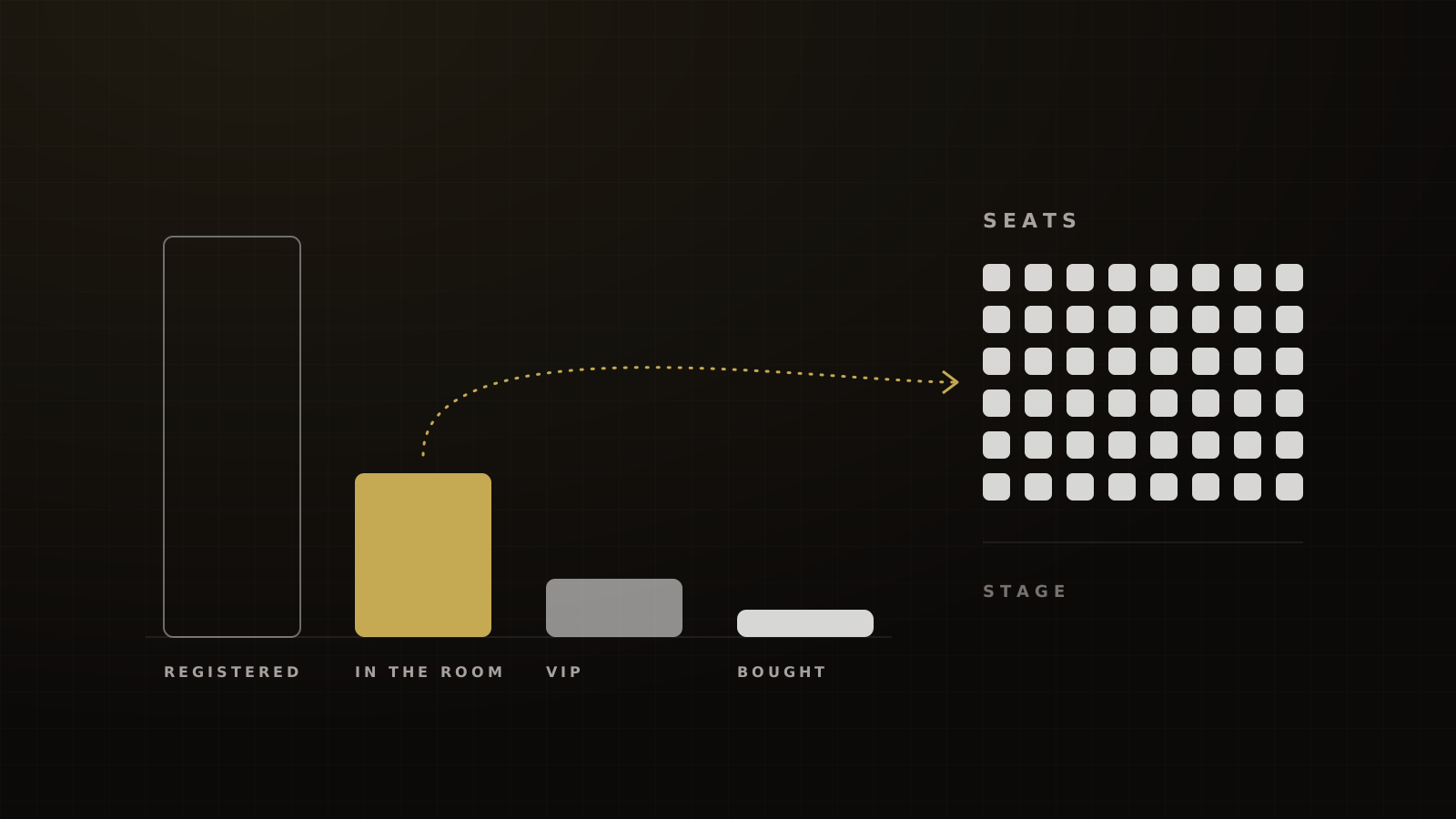
Sell both. "Free or paid?" comes up on almost every event strategy call we take, and it's the wrong choice to frame. Free and paid tickets do different jobs. Free tickets buy volume. Paid tickets buy commitment. A room that sells needs both.
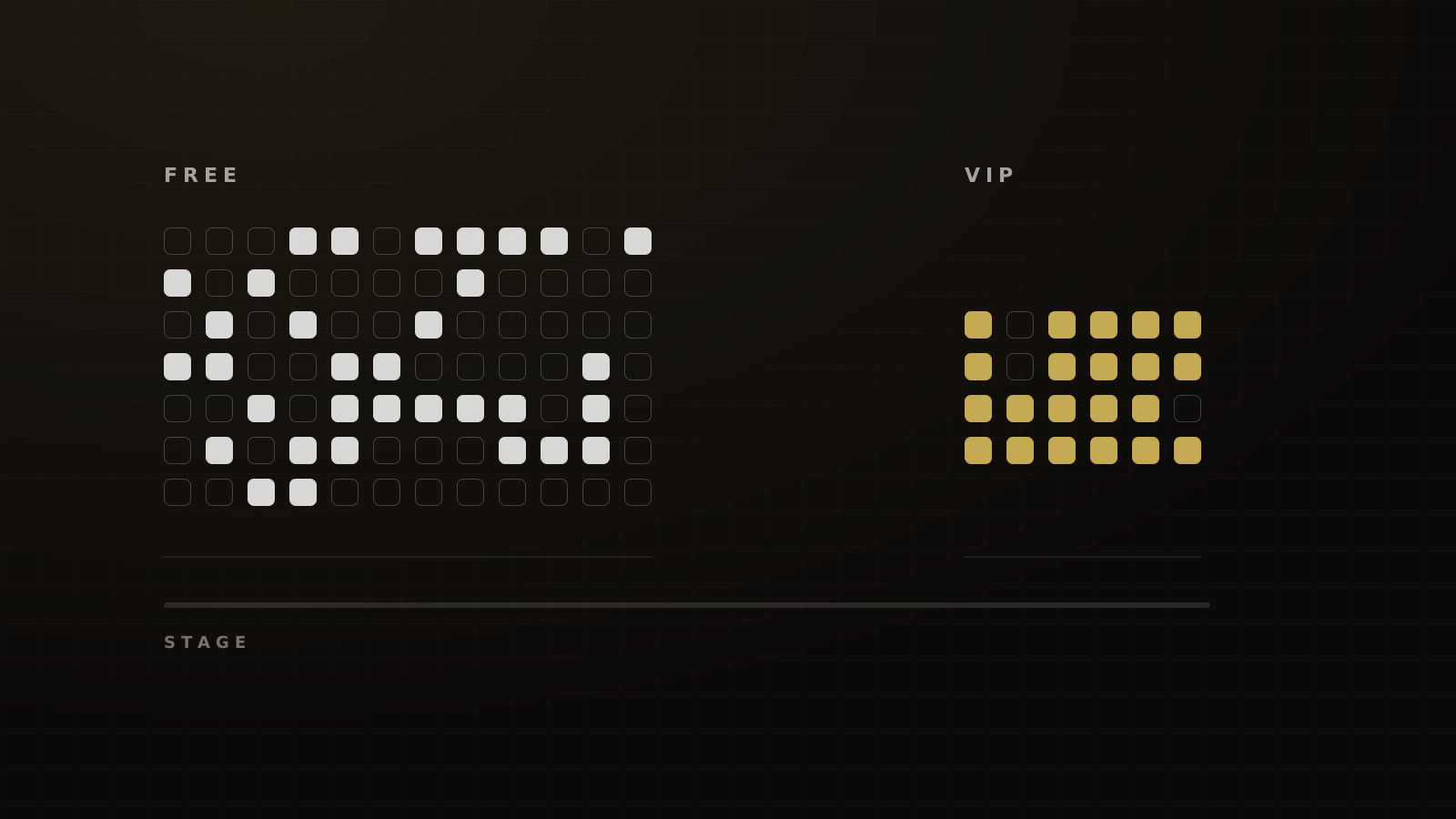
So we run both. Most of the ad budget goes to free registrations. A smaller slice sells a VIP ticket, priced so the VIP sales pay for their own ads. Every room ends up seeded with people who have already paid, at roughly zero net cost.
Here is what the data says, where it gets misread, and how to set up the split.
What the data says about free vs paid attendance
The best recent dataset comes from PheedLoop, an event platform that published check-in data from more than 1,070 live events in April 2026. The median no-show rate was about 28% for free events and about 17% for paid ones.[1]
Median no-show rate at free events vs paid events, across 1,070+ live events
Small rooms amplify the gap. At events of 10 to 49 expected attendees, free events had a median no-show of about 37%.[1] If you run small workshops, a free ticket costs you more than a third of the room.
The gap also widens when people register late. In a separate PheedLoop analysis of 216,282 registrations across 467 events, people who registered for a free event in the same week attended at 28.2%. Same-week registrants for paid events attended at 72.8%.[3] Late free sign-ups are the weakest registrations you'll get.
A second view from a check-in vendor, Just Attend, points the same way: 55.34% turnout for free events and 87.33% for paid, across its 2022 to 2024 events. It doesn't publish a sample size, so treat it as a direction, not a benchmark.[6]
In our experience, a free one-day event run well (a short promotion window, a steady reminder cadence, a confirmation page with every detail) shows 35% to 45% of registrants. Paid VIP tickets in the $100 to $297 range show 85% to 90%. That lines up with PheedLoop's roughly 83% check-in for paid events.
Paid events vs paid people: the part most advice gets wrong
Here is the nuance nobody in the top results mentions. PheedLoop looked at 195 events that sold some tickets and comped others. Within the same event, paying guests attended only 2 to 4 percentage points more reliably than non-paying guests, and they did better in 57% to 65% of those events.[2] PheedLoop calls this a directional result, not a benchmark.
Read that carefully. The big free-vs-paid gap is mostly about what kind of event it is, not about whether each person paid. Paid events tend to have a defined audience, a clear promise and a specific agenda. Free events often don't.
That changes how we think about VIP tickets. A $197 charge doesn't make someone reliable by itself. A VIP ticket works because it changes who is in the room and what they were promised: reserved seats, extra access, a reason to arrive on time. Sell the promise, not just the price tag.
No one cares about a $100 ticket. What we care about is a full room of qualified buyers.
The volume trade-off: why "just charge for it" fails
Making every ticket paid fails for one reason: volume drops.
PheedLoop's registration data shows free flows complete at about 96% and paid flows at about 86%.[2] That's only the checkout step. The bigger loss happens before it: fewer people click "register" on a paid offer from a cold ad in the first place.
The cleanest public example comes from Jason Fried at Basecamp. For a breakfast event he asked for a $100 deposit, refunded at the door. 55 people signed up and 50 attended. His earlier free RSVP for a similar event had drawn 84 sign-ups and 38 attendees.[4] Skift Meetings summarized it as registrations down about 35% and attendees up about 32%.[5]
It's a good result, and it's one event against another, not a study. Notice one more thing: a refundable deposit earns $0 toward your ads. The money goes back at the door. That's why we sell a real VIP tier instead of a deposit. The VIP side has to fund itself.
Alex Hormozi makes the general case that friction raises lead quality and that you tune it to the volume you need. Russell Brunson's Invisible Funnel, which takes a card at registration, is the webinar version of the same idea. The split below is how we apply it to live events.
The split, step by step
Framework
The free + VIP split
- Set the room target first. Work backwards from the seats you need filled, not from the registrations you can buy.
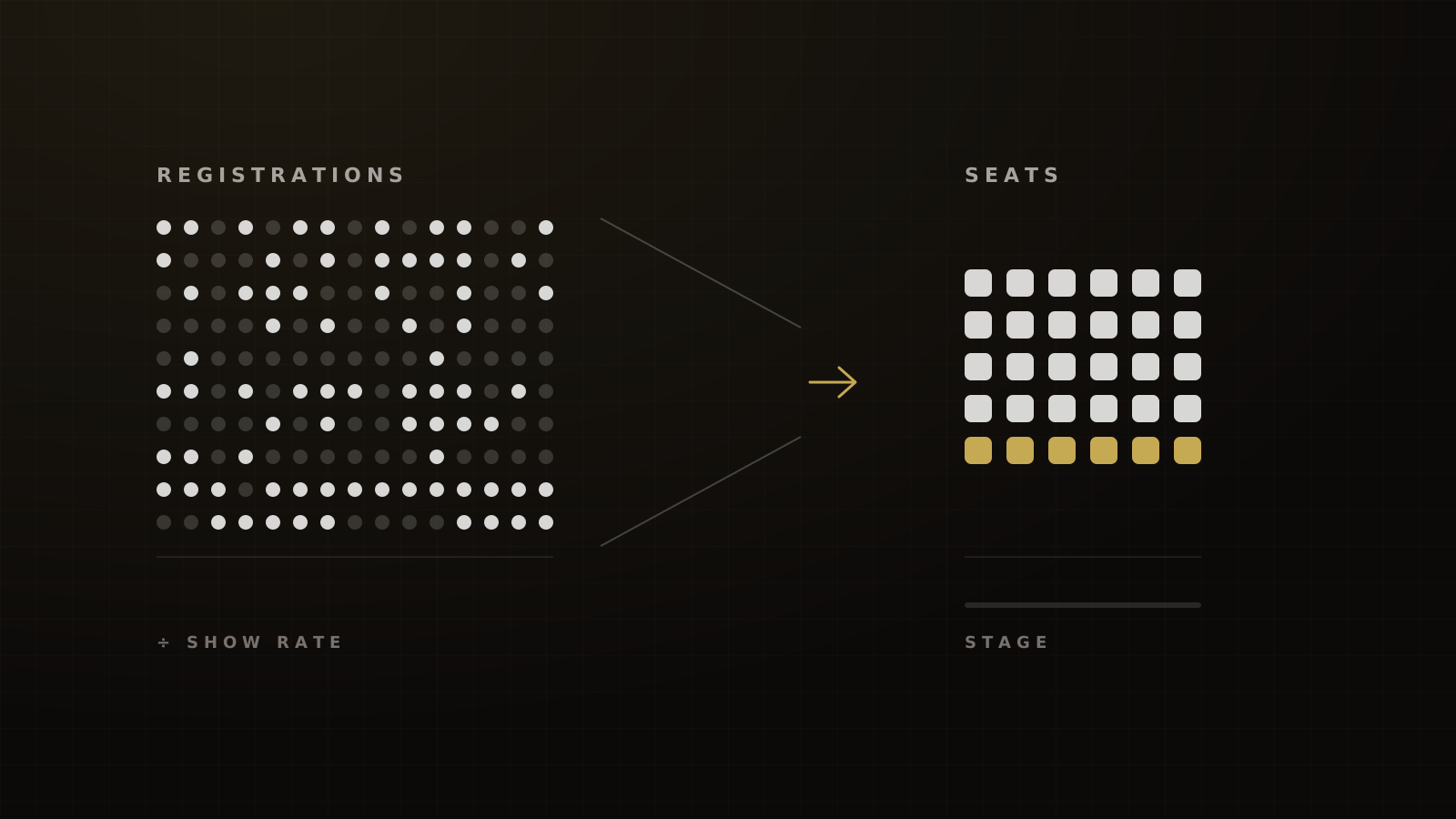
- Fund the free side for volume. Most of the budget buys free registrations. Divide the seats you need by your expected free show rate to get the registrations you need.
- Fund the VIP side only as far as it pays back. Sell a VIP upgrade on the confirmation page and with its own ads. Its budget is capped by what VIP sales return.
- Make the VIP promise concrete. Reserved seating, an early-access session, a workbook, a separate check-in. Put it in writing on the checkout page.
- Gate the VIP budget on break-even. If VIP revenue, net of fees and refunds, stops covering VIP ad spend, stop scaling it and fix the offer.
- Judge on cost per checked-in attendee. Registrations are an input. People in seats are the output.
Victory's operating model for free one-day events. Friction theory credited to Alex Hormozi; card-at-registration idea credited to Russell Brunson.
The break-even gate is the rule that keeps this honest:
VIP sales × (price − processing fees − refunds − fulfillment cost) ≥ VIP ad spend
If that holds, the VIP tier is free to run and you can scale it with confidence. Across the events we run, our house standard is that VIP ticket revenue recovers 100% or more of VIP ad spend.
A worked example (illustration, not a client result)
Say an event has $10,000 of ad budget split 70/30. The numbers below are made up to show the math.
| Line | Free tickets | VIP tickets ($197) |
|---|---|---|
| Ad spend | $7,000 | $3,000 |
| Cost per registration or sale | $20 | $150 |
| Registrations or sales | 350 | 20 |
| Revenue, net of 8% fees and refunds | $0 | $3,625 |
| Show rate | 40% | 85% |
| People in seats | 140 | 17 |
| Net cost | $7,000 | −$625 (profit) |
Every figure here is hypothetical. Swap in your own cost per registration, VIP price and show rates.
Free-only, the room costs $50 per checked-in attendee ($7,000 for 140 people). With the VIP side added, 157 people are in seats for a net $6,375, about $41 each. And the 17 people in the front rows have already bought something from you once, which matters when the offer comes at the end of the day.
Pricing the VIP tier
Start higher than feels comfortable. We usually test between $100 and $297 and open near the top, because you can always lower a price later but raising it after people have paid less is hard.
Price against the promise, not against the free ticket. The comparison in the buyer's head is "is a front-row seat, extra time with the speaker and the workbook worth this?", not "why pay when GA is free?" If the promise is thin, the price will feel arbitrary at any number.
When the event sells a high-ticket offer from stage, the VIP group is your warmest audience. Seat them where the speaker can see them, and brief your sales team on who they are before the event starts.
Numbers to stop repeating
Some free-vs-paid figures circulate with no data behind them. Don't build a budget on these:
- "Free events see 40% to 60% no-shows; paid events see 90% to 97% attendance." We traced this chain: Event Tech Live cites Eventtia, which cites a vendor roundup. No original study turned up.[10][9]
- "A $5 ticket cuts no-shows to 15%; $10 or more cuts them below 5%." This is one organizer's experience, reported by Localist in 2021, with no data attached.[8]
- "Paid events get 70% to 90% attendance, free about 50%." Eventbrite calls these ballparks itself, and gives no sample or method.[7]
They may be roughly right. They're not evidence.
Common mistakes
- Comparing cost per registration across tiers. A $20 free registration that shows 40% of the time costs $50 per seat. Compare what you pay per person in the room.
- Selling VIP without a VIP experience. If VIPs sit with everyone else, the next event's VIP sales drop.
- Treating a deposit as a revenue line. A refundable deposit raises attendance and earns nothing.
- Scaling the free side late in the promotion. Same-week free registrants are the least likely to show.[3]
Frequently asked questions
Sources
- 1.Event Data Lab #05: no-show rates by ticket type and event size. PheedLoop, 2026-04-29.
- 2.Event Data Lab #06: registration completion and paying vs non-paying guests (with addendum). PheedLoop, 2026-05-26, addendum 2026-09-01.
- 3.Event Data Lab #09: late registrants aren't flakier, their events are different. PheedLoop, 2026-09-10.
- 4.$5,300 in $100s: the verdict. Jason Fried, HEY World, 2026-08-28.
- 5.The $100 experiment that slashed no-show rates to just 10%. Skift Meetings, 2026-09-02.
- 6.Free vs paid entry: what to expect at your event. Just Attend, 2024-07.
- 7.How to increase event attendance. Eventbrite, 2024-10-23.
- 8.Should I charge for my event?. Localist, 2021-03-09.
- 9.How to prevent no-shows at your events. Eventtia, 2025-08-18.
- 10.Return on attendance: the hidden crisis threatening a $1.5 trillion industry. Event Tech Live, 2026-01-15.
Written by
Devin AlexanderCo-Founder & CEO
Devin architects Victory's revenue systems: team structure, comp plans, scripts and the accountability frameworks that make sales floors predictable. He has generated more than $150M in sales and trained more than 250 closers.
Part of the guide: Event Marketing for Coaches and Experts: Fill the Room, Raise Show Rates and Monetize Free Events