Why People Register for Events and Don't Show Up (and How to Fix Your Free Event Show Rate)
Most no-shows trace to one failure point between sign-up and doors open. A symptom-by-symptom audit, and what controlled tests say about reminders.
 Ray GillespieCo-Founder & COO
Published 10 min read
On this page
Key takeaways
- People who register and don't show usually hit one failure point between sign-up and doors open. Find it before you change the ads.
- The usual suspects: a thin confirmation page, a ticket or join link that never arrived, reminders in spam or carrier-filtered, a format that's too long and a runway long enough to forget.
- When we fix them on a free one-day event, 35% to 45% of registrants show up, filled from cold paid social.
- 68% of webinar no-shows in a Zoom survey blamed a scheduling conflict, not lost interest.[1] Most no-shows are logistics.
- In a controlled test, one more text on top of working automated reminders changed nothing.[2] Delivery and timing beat volume.
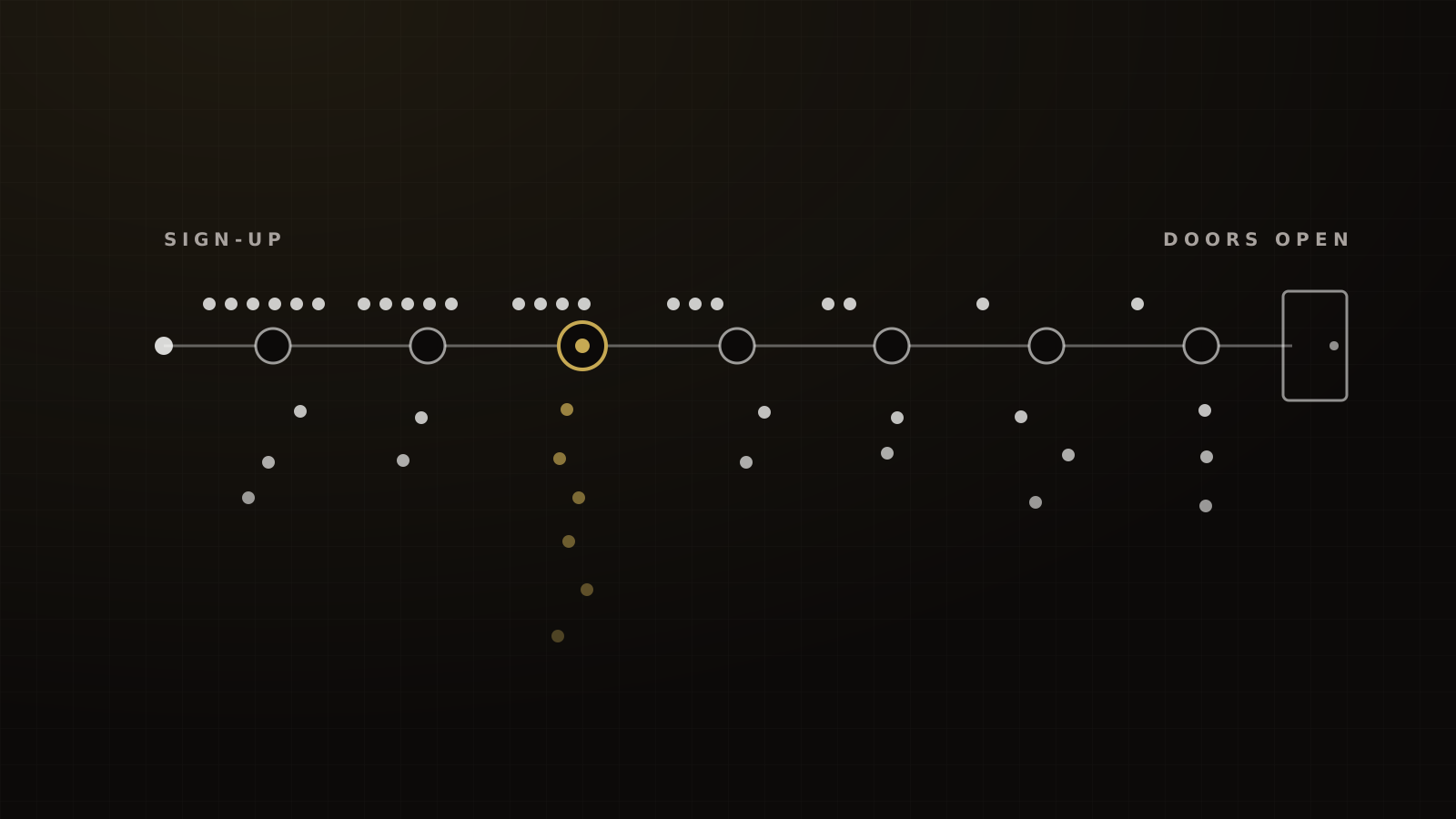
People who register and don't show up usually hit a failure point between sign-up and doors open. The confirmation page didn't tell them enough. The ticket or join link never arrived. The reminders went to spam or got filtered by a carrier. The event asked for more time than they had. Or the runway was long enough to forget.
None of those is an ad problem. But when the room is half empty, the ads get blamed, the budget gets cut, and the next event has the same leak with fewer people going through it.
Audit the failure points first. When we fix them on a free one-day event, 35% to 45% of registrants show up.
What a normal free-event show rate looks like
Before you diagnose a low show rate, make sure you're comparing it with the right number.
For in-person events, the best public data comes from PheedLoop: a median no-show of about 28% at free live events, which is roughly 72% check-in. Small free gatherings ran closer to 37% no-show.[3] Those are mostly organizers with an audience of their own, and PheedLoop's denominator includes expected attendees who didn't register.
For webinars, the number is live attendees divided by registrants, and it's lower. Livestorm reports 47.7% live show-up in 2025 data.[4] Goldcast reports a 40% average for B2B webinars.[5]
On the funnels we run, the numbers split by audience:
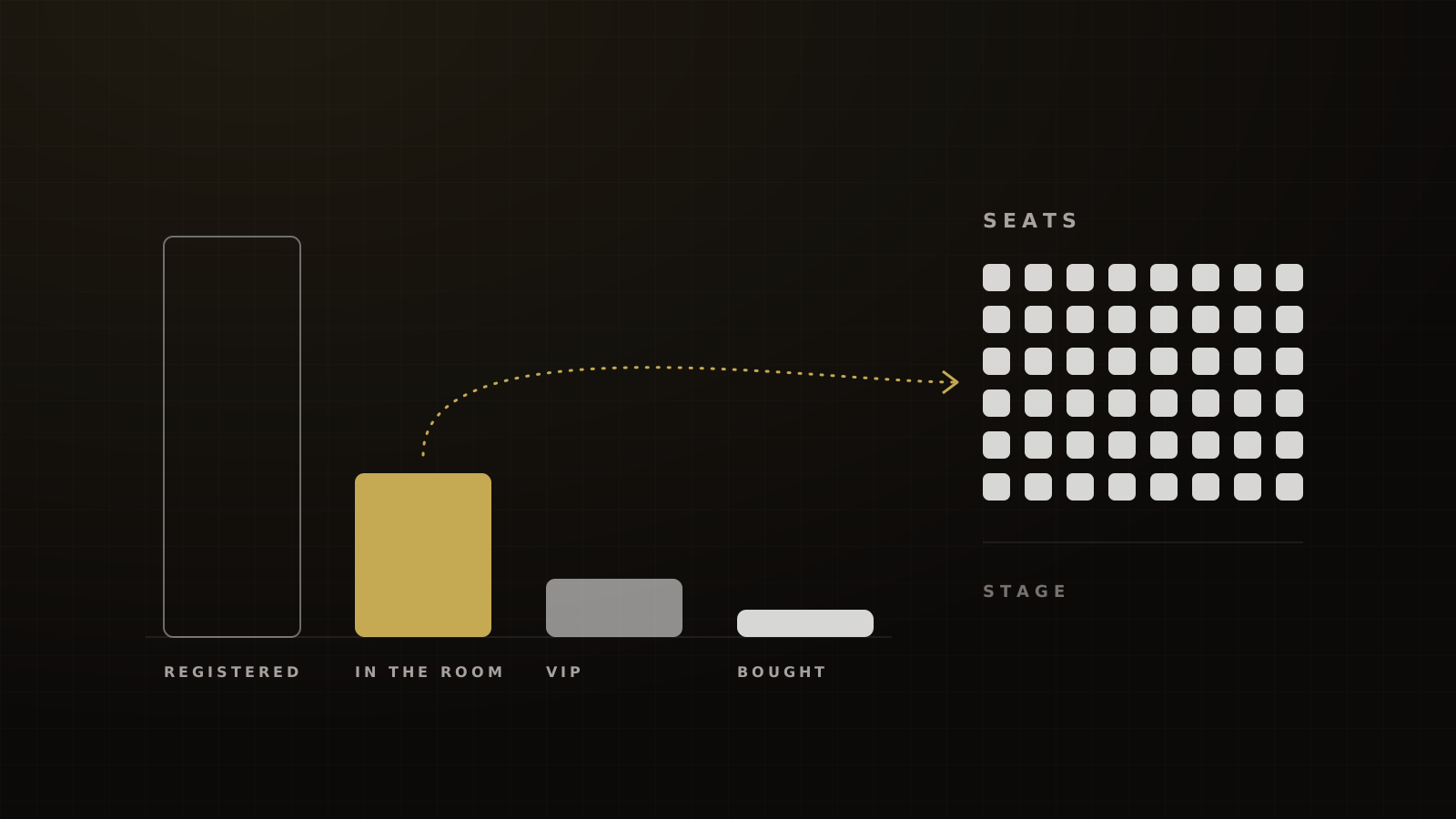
- Free one-day in-person event, cold paid social: 35% to 45%.
- Free evening webinar, cold paid traffic: 25% to 35% live.
- Free webinar to a warm or house list: 40% to 50% live, close to the Goldcast and Livestorm figures.
- Paid VIP tickets at $100 to $297: 85% to 90%, which is why we sell a VIP tier alongside free tickets.
Don't mix these. A webinar host comparing a 30% live rate with a 72% in-person check-in figure will chase a problem that isn't there. The pillar guide to event marketing and show rates explains the denominators in more detail.
Why registrants don't show
The most useful number here comes from Zoom. In a survey of 1,000 attendees published in August 2026, 68% of webinar no-shows said a scheduling conflict kept them away, and 30% said a last-minute reminder makes them more likely to attend live.[1] That's stated preference, not a measured lift. But it points at the cause: most people who don't show still meant to.
Behavioral scientists call this the intention-action gap. Registering is an intention. Showing up is an action that has to beat everything else in the person's day. Your job between sign-up and doors open is to make the action easy, specific and timely.
The failure-point audit
Each failure point leaves a fingerprint in your data. Start with the symptom, then check the cause.
| Symptom | Likely failure point | What to check | Fix |
|---|---|---|---|
| People ask "where is it?" or "what time?" the day before | Confirmation page | Does it show date, time zone, address, agenda and what to bring? | Rebuild it as the day-of reference page |
| Day-of check-ins can't find a ticket | Ticket or join-link delivery | Did the ticket email land? Did people save the pass? | Wallet pass, plus a follow-up for non-savers |
| Registrants say they forgot, or saw the reminder too late | Reminder timing | When does each reminder fire, in the registrant's time zone? | A dense day-of cadence |
| Low clicks on reminder emails, high on texts | Email deliverability | Inbox placement, spam rate, authentication | SPF, DKIM, DMARC, one-click unsubscribe |
| Text clicks collapse, or a workflow stops sending | SMS delivery | Error codes in the message logs | Registered number, own-domain links, drip sends |
| Good day-one turnout that fades on day two or three | Format length | Hours of content asked of a free registrant | One day, about five hours |
| Early registrants are the weakest group | Promo runway | Days between registration and event | Short paid window, warm list earlier |
Work down the table in order. The first three failure points are the most common we find in audits.
Confirmation page
The confirmation page is the page people come back to on the morning of the event. If it reads like a receipt, they'll guess, and some will guess wrong.
It should carry the date and time with a time zone, the full address and parking, the agenda with times, what they'll get, what to bring, the ticket or join link and a way to text the team. Our thank-you page guide lays it out block by block. We've seen rushed launches where the confirmation page simply had nothing useful on it, and the room showed it.
Jason Fladlien takes a contrarian line in his webinar training: send people to their inbox from the thank-you page instead of offering a one-click calendar button, so the first email gets opened and future emails land. We use both. The calendar add is cheap, and the inbox step trains the inbox.
Ticket and join-link delivery
If the ticket lives only in an email, it's one search away from lost. A Wallet pass puts it on the phone, where Apple's event tickets can surface at the right time and place on the Lock Screen.[6] Google's event tickets can also send reminder notifications on the day of the event.[7]
In our experience, 40% to 55% of registrants add the pass when it's offered on the confirmation page and in the confirmation text and email. That's a save rate, not a show rate. The value is that you can see who didn't save it and chase them. Our Wallet tickets guide covers the setup.
Reminder timing
Reminders sent at the wrong time are reminders nobody reads. Fire them in the registrant's time zone, and put most of them on the day itself: a morning text, one about an hour out, one minutes before start, and a "we're live" message for webinars. The full cadence is in our event reminder schedule.
Email deliverability
"Sent" isn't "delivered", and "delivered" isn't "inbox". Gmail requires bulk senders (5,000+ messages a day) to authenticate with SPF, DKIM and DMARC, offer one-click unsubscribe and keep the spam rate below 0.30%, aiming for below 0.10%.[8] Yahoo has the same shape of rules and requires unsubscribes to be honored within 2 days.[9]
On the domains we manage, our targets after remediation are 90% or more inbox placement on pre-send seed tests and a Gmail spam rate under 0.1%. Seed-test before every big send.
SMS delivery
SMS fails more quietly than email. Twilio's error 30007 means the message was filtered, blocked by Twilio or by the carrier as spam or objectionable content.[10] The account still shows "sent" volume. The registrant never sees the text.
The common causes are a raw link in the first text to a new contact, public link shorteners, an unregistered number and blasting a whole list at once. We wrote up the carrier-filtering failure and the trigger-link fix in detail. Our target after that fix is 95% or more of reminder texts delivered. For the rules behind it, see our email and SMS deliverability guide.
Format length
A free event asks for time, and time is what most no-shows say they didn't have. Bizzabo's 2026 data puts the average event at 11.8 hours across 7.5 sessions.[13] Livestorm finds the average webinar viewer stays 26 minutes of a typical 68-minute session.[4]
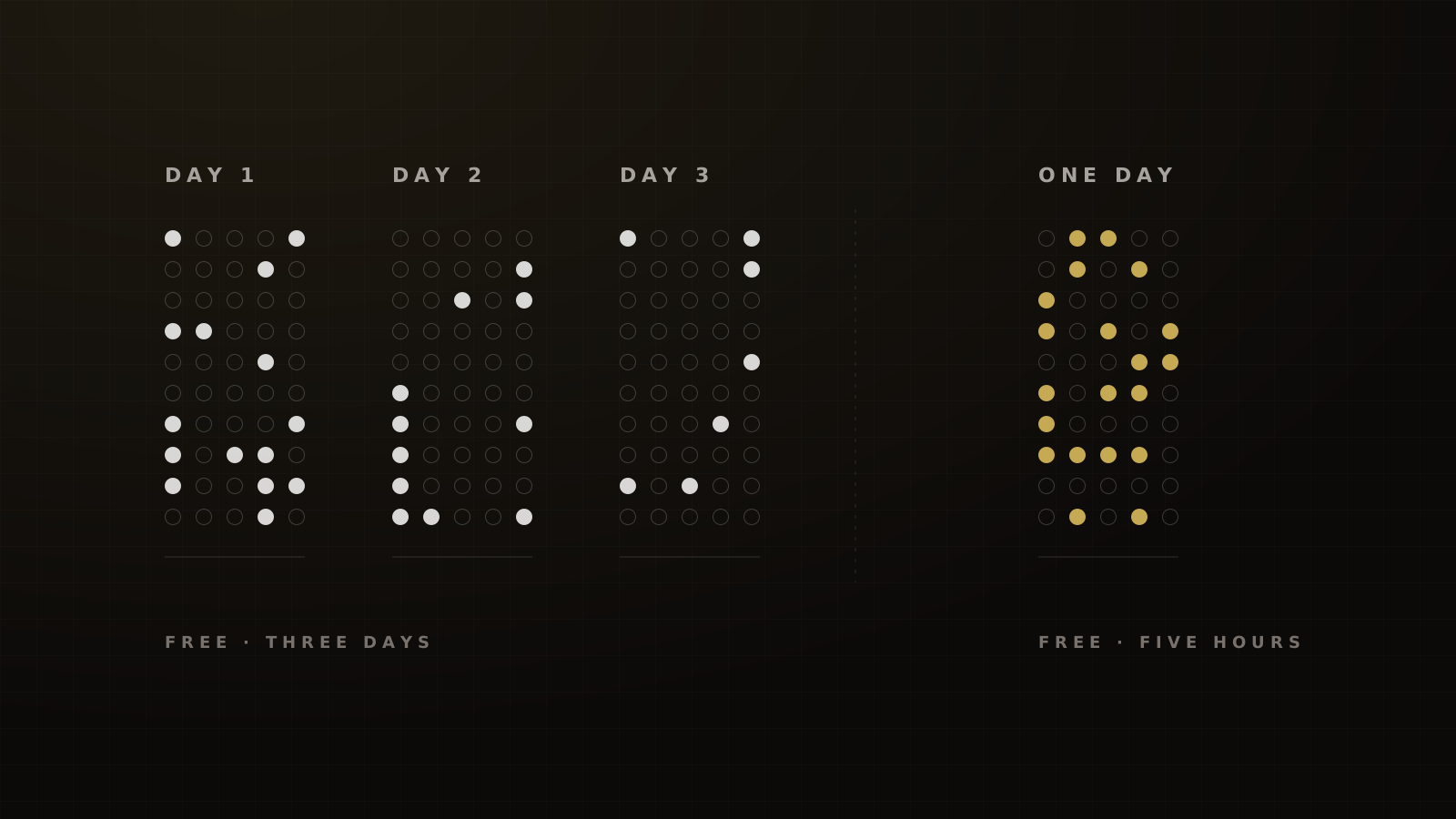
In our experience, a free three-day event shows only 10% to 15% of unique registrants on at least one day, against 35% to 45% for a free one-day event. Our house rule for a free one-day event is about five hours of content.
Promo runway
The longer the gap between sign-up and the event, the more room there is to forget. Livestorm's data shows 49.6% of webinar registrations land in the final week and 15.3% on the day.[4]
PheedLoop's analysis of 216,282 registrations across 467 events adds the key detail: within the same event, people who registered late attended at almost the same rate as early registrants, a median gap of 0.6 points across 374 events.[14] So promoting late costs you very little in show rate. Free events trailed paid ones in every lead-time band, from 28.2% to 59.3% attendance for free against 72.8% to 81.6% for paid.[14]
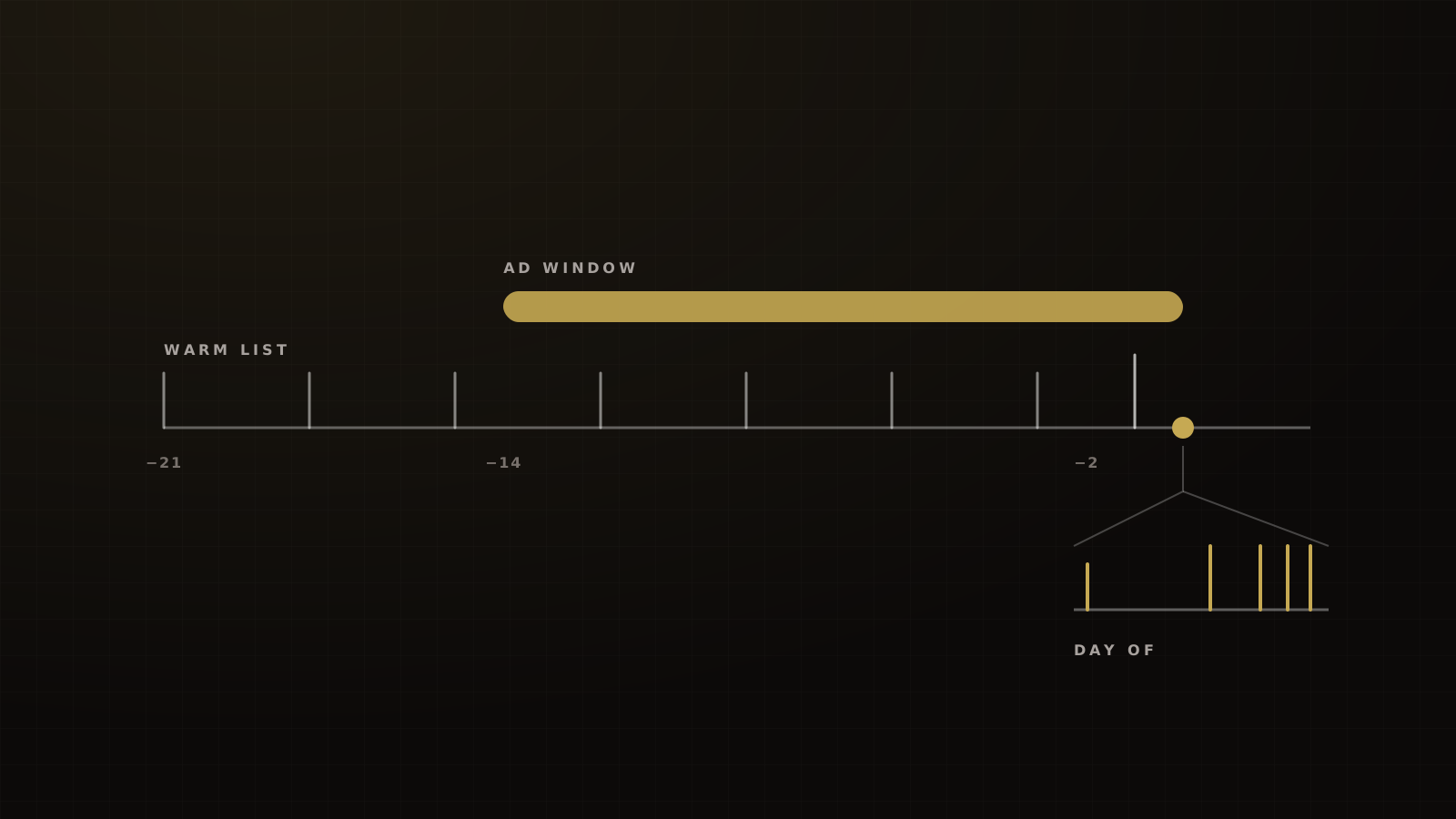
Our defaults: 10 to 14 days of paid ads for a free in-person event, warm email and SMS from about 21 days out, and webinar ads only in the 2 days before.
Zoom offers a fair counterpoint. The top 1,000 webinars by attendance had a 13-day median promotion window, against 9 days for the rest.[1] But that ranks by attendance count, not rate. Bigger audiences with longer windows will win on volume. It doesn't show that a longer window raises the share of registrants who show.
What the experiments say about reminders
Most reminder advice is untested. The controlled studies we found say something narrower and more useful.
| Study | Setting | Result |
|---|---|---|
| Ganatra et al., 2023[15] | Text 5 minutes before an in-person conference, 211 learners | 49.5% vs 44.4% attended; +4.0 points adjusted |
| Sister District, 2021[2] | One extra personal text on top of automated email and SMS, 293 RSVPs | 56.16% vs 55.78%; no effect (p=0.947) |
| Sister District, 2019[16] | Personal call or text confirmation vs email-only, volunteer events | About +51% relative attendance |
| Robotham et al., 2016[17] | Healthcare appointments, meta-analysis | 67% vs 54% attended with text notifications; multiple beat single |
Small samples and adjacent settings. Read them as direction, not as a forecast for your event.
Three lessons hold across them. A well-timed reminder close to start helps a little. Once a working automated cadence exists, one more automated message adds nothing. And personal contact, a real call or text from a person, is where the bigger effects show up.
Banzai's analysis of 800,000+ Demio webinars says attendance rises when hosts use email notifications, but it publishes no figure for the size of the lift.[18]
Numbers to stop repeating
- "98% of texts get opened." SMS has no open event to measure. Twilio says the channel can't provide that statistic, then repeats the 98% figure in the same post with no source.[19] Measure delivery, clicks, replies and joins instead.
- "Free events see 40% to 60% no-shows." Eventtia sources this to other roundups, not to a study.[20]
- "Free events get about 50% attendance." Eventbrite publishes this as a ballpark, with no sample.[21]
How we run this at Victory
If you'd like us to find the leak in your own event funnel, run the diagnostic above or book a strategy call.
Frequently asked questions
Sources
- 1.How to promote a webinar: your pre-event strategy guide. Zoom, 2026-08-19.
- 2.You don't have to tell me twice: additional text message reminders for confirming volunteer attendance. Sister District Project (now States Win), 2021-05-18.
- 3.Event Data Lab #05: no-show rates by ticket type and event size. PheedLoop, 2026-04-29.
- 4.Webinar Benchmark Report 2026. Livestorm, 2026-09-01.
- 5.2026 B2B Webinar Benchmark Report. Goldcast, 2026.
- 6.Get started with Wallet. Apple Developer, undated, checked 2026-10-04.
- 7.Event tickets overview. Google for Developers, current 2026, checked 2026-10-04.
- 8.Email sender guidelines. Google Workspace Admin Help, effective 2024-02-01.
- 9.Sender best practices. Yahoo Sender Hub, effective 2024-02.
- 10.Error 30007: Message filtered. Twilio Docs, living doc, checked 2026-10-04.
- 11.The 1-to-1 consent rule is no more. Nelson Mullins, 2025-01-29.
- 12.CAN-SPAM Act: a compliance guide for business. Federal Trade Commission, 2023-08, edited 2024-01.
- 13.Event Program Benchmarks 2026. Bizzabo, 2026-03-05.
- 14.Event Data Lab #09: late registrants aren't flakier, their events are different. PheedLoop, 2026-09-10.
- 15.Are text pages an effective nudge to increase attendance at internal medicine morning report conferences? A cluster randomized controlled trial. Ganatra, Reese & Breu, Federal Practitioner, 2023-10.
- 16.Call (or text) your girlfriend: personal contact works better than just email to recruit and confirm volunteers. Sister District Project (now States Win), 2019-05-07.
- 17.Using digital notifications to improve attendance in clinic: systematic review and meta-analysis. Robotham et al., BMJ Open, 2016-10-24.
- 18.2024 Guide to Webinar Insights. Banzai, 2024-01-09.
- 19.How to maximize your SMS marketing ROI. Twilio, 2022-06-06.
- 20.How to prevent no-shows at your events. Eventtia, 2025-08-18.
- 21.How to increase event attendance. Eventbrite, 2024-10-23.
Written by
Ray GillespieCo-Founder & COO
Ray runs day-to-day operations across every Victory engagement, building the systems, automations and AI-powered workflows that hold the machine together. He has overseen operations behind more than $120M in revenue.
Part of the guide: Event Marketing for Coaches and Experts: Fill the Room, Raise Show Rates and Monetize Free Events