One-Day vs Three-Day Events: What a Free-Event Post-Mortem Taught Us About Format and Show Rate
A free three-day event we ran missed badly. What went wrong, how we owned it, what multi-day attendance data shows, and the format rule we use now.
 Ray GillespieCo-Founder & COO
Published 8 min read
On this page
Key takeaways
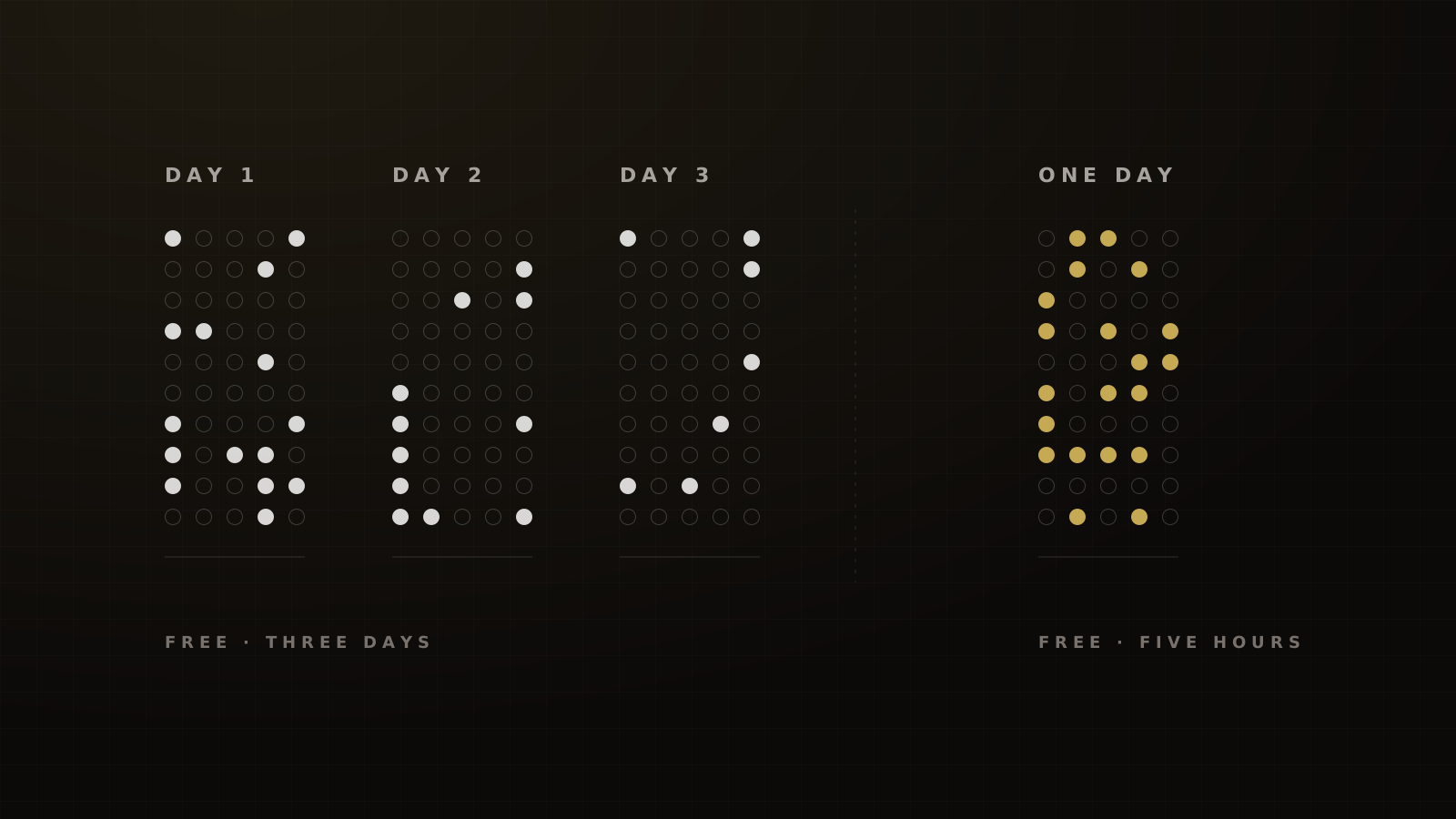
- If the event is free, make it one day, with about five hours of content. That's our house rule.
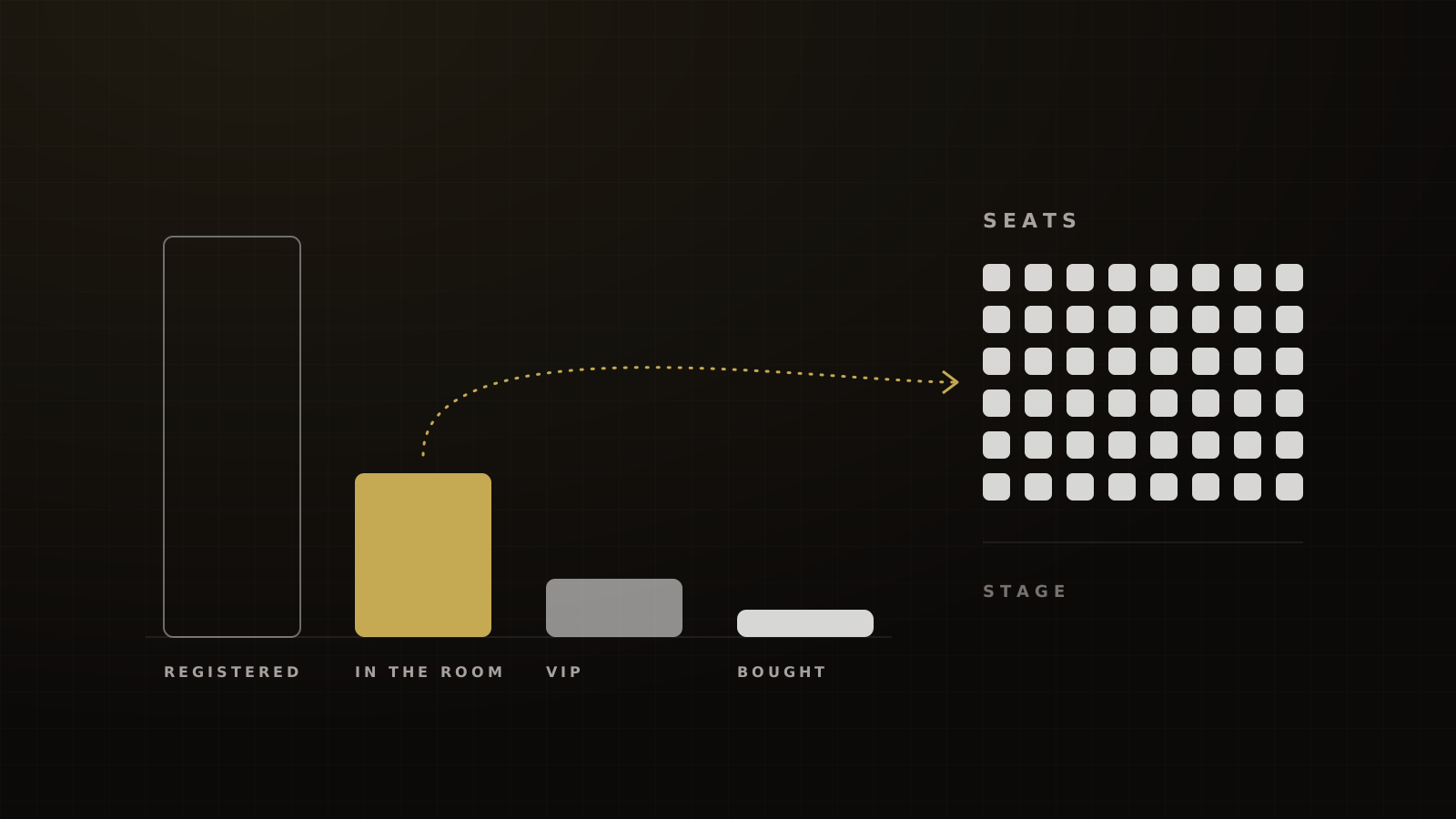
- In our experience, a free one-day event run well shows 35% to 45% of registrants. A free three-day event shows 10% to 15% of unique registrants.
- No public benchmark for multi-day attendance exists. The few published single-event curves all fall day by day, one of them from 58% on Day 1 to 31% on Day 3.[1]
- Multi-day can hold an audience, but only with high commitment: a big list, a big lineup and a paid ticket.
- We missed on this one. We had shared the one-day model at kickoff and didn't push back on the client's plan. That's on us.
We got this one wrong. A real-estate education client ran a free three-day event, we ran the traffic, and the show rate was a fraction of what a one-day event would have produced.
We'd shared our one-day model at kickoff. We didn't poke holes in the three-day plan. When it missed, we said so, and we offered a free one-day redemption event.
Here is what happened, what the published data says about multi-day attendance, and the format rule we hold to now. Short version: if the event is free, make it one day, about five hours.
The event
The client sells real-estate education and wanted a big free event to fill its sales pipeline. The format was three days, free to attend, promoted to cold audiences with paid social.
On paper it looked generous. More days meant more content, more speakers and more time with the audience before the offer.
The registrations came in. The attendance didn't. Most people who signed up never showed on any of the three days, and the ones who did thinned out after the first.
What went wrong
Four things, and the last one is ours.
The time commitment was too big for a free ticket. As Devin puts it, a one-day event is "much, much less of a commitment." Three days asks a stranger from an ad to block out a weekend for something they paid nothing for. Every extra day is another chance to drop out.
Nobody had skin in the game. A free registrant can blow off Day 2 the way they'd skip a gym session. Hormozi makes the general case that friction filters for commitment: make people do or pay a little more, and the ones who come through are more serious. A free three-day event has almost no friction at the door and a lot of it after.
The list and lineup weren't big enough to carry three days. Multi-day formats work for brands with huge audiences and a lineup strong enough to pull people back each morning. This client had neither at that scale.
We didn't challenge the plan. We knew the one-day model and shared it at kickoff. Then we went along with three days anyway. An agency that sees a structural risk and doesn't push hard on it has made part of the mistake.
Extreme ownership and accountability is the only way we're going to be able to make a change.
The phrase comes from Jocko Willink and Leif Babin's book Extreme Ownership. The idea is simple: the leader owns the outcome, including the parts other people executed.
What we did next: the one-day redemption event
Our style is not to leave a client high and dry after a failed event. So the first conversation wasn't about the next invoice. It was about what we got wrong and how to fix it.
We offered a free one-day redemption event, built on the format we should have pushed for at the start: one day, about five hours, a short promotion window and a tight reminder cadence.
The lesson for agencies is about the relationship as much as the format. Owning a miss quickly is how you keep the client long enough to get the win.
What the data can and can't tell us
Start with the hard truth: nobody publishes a benchmark for multi-day event attendance. The top results for "multi day event attendance" describe a "day-two dip" and offer tips. None shows a curve.
What does exist is a handful of single-event cases, all academic and several years old.
| Event | Day 1 | Day 2 | Day 3 |
|---|---|---|---|
| Free three-day virtual science symposium, 977 registrants (2020)[1] | 58% | 45% | 31% |
| Two-day online IT conference, 408 registered (2021)[2] | 277 attendees | 199 attendees (−28%) | n/a |
| Three-day society conference, 438 active users (2021)[3] | 74% of active users attended all three days |
Single events, not benchmarks. Denominators differ: the first two use registrants, the third uses people who created platform accounts.
The free symposium is the closest match to our case: free to register, three days, and turnout on Day 3 about half of Day 1.[1] The two-day conference lost 28% of its Day 1 attendees overnight.[2]
The counterexample matters too. At a society conference, 74% of active users came to all three days.[3] That audience was professional and committed, and the denominator was people who had already logged in, not registrants. Decay isn't inevitable. It depends on commitment.
Turnout from Day 1 to Day 3 at a free three-day virtual symposium with 977 registrants
Why webinar numbers don't transfer
Webinar roundups often get recycled as summit benchmarks. They shouldn't be. Goldcast's 40% average live attendance for 2025 covers single-session webinars only and excludes multi-session summits.[4]
Vendor summit stories don't fill the gap either. One Goldcast case reports 3,500 registrants for a two-day summit and, separately, a 50% attendance rate for the program, counting live and on-demand.[5] The two figures aren't linked, so you can't treat 50% as a live summit show rate.
Why long formats leak
Attention gives out well before the agenda does. Bizzabo's average event runs 11.8 hours across 7.5 sessions, and its virtual sessions are watched for an average of 46 minutes.[6] Livestorm's webinar viewers stay an average of 26 minutes of a 68-minute session.[7]
Stanford's Virtual Human Interaction Lab found that longer, more frequent video calls with fewer breaks go with more self-reported fatigue, across 9,787 people.[8] It didn't test a length cutoff, so it supports breaks, not a specific limit.
There's also a useful analog from courses, not events. In edX courses from MIT and Harvard, 3.13% of all participants completed in 2017–18, against 46% of paying verified learners.[9] Different setting, same pattern: long and free loses people, and payment holds them.
The format rule
Framework
The free-event format rule
- Free ticket: one day. About five hours of content, with breaks. In our experience this shows 35% to 45% of registrants when run well.
- Multi-day only with all three: a big list, a lineup strong enough to bring people back each day, and a paid ticket.
- No paid ticket, no second day. If you can't charge for it, cut it to one day or split it into separate events.
- Every day needs its own reason to return. A headline session, a reveal or a live hot seat, announced in advance.
- Measure three numbers, not one. Unique attendees ÷ registrants, attendees per day ÷ registrants, and multi-day retention.
Victory's house rule. Friction and commitment theory credited to Alex Hormozi.
Five hours is our house rule, not a statistic. It's long enough to teach, build trust and make an offer, and short enough that a free registrant can say yes to it.
For retention, Zoho Backstage defines it as attendees who returned on all event days divided by Day 1 attendees.[10] Pair that with unique attendees over registrants. A three-day event can look busy on Day 1 and still put fewer unique people in front of the offer than a one-day event would.
PheedLoop's data shows the price effect at the event level: a median no-show of about 28% for free events, against about 17% for paid ones.[11] A long free event stacks both problems.
If you still run multi-day
Sometimes a multi-day format is right: a flagship with a big audience, a certification, a paid intensive. Then change the economics of attending.
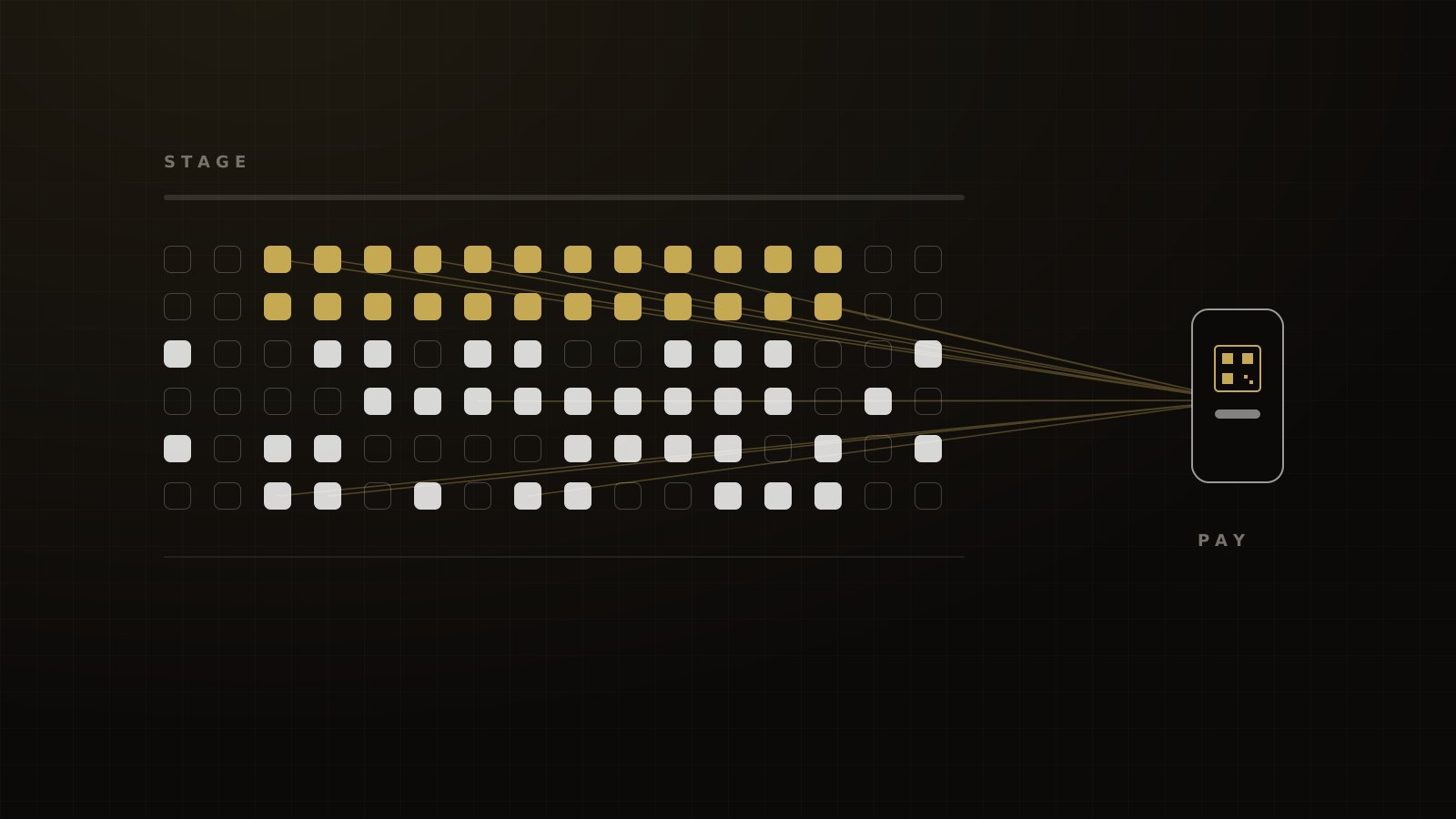
Charge for the ticket. In our experience, paid VIP tickets in the $100 to $297 range show 85% to 90%, against about 83% check-in at paid events in PheedLoop's data.[11] We cover how to split the budget in free vs paid event tickets.
Or take a deposit. Jason Fried asked for a $100 deposit, refunded at the door, for a one-day breakfast. 50 of 55 people came, against 38 of 84 at his earlier free event.[12] It's two small events, not a study, but the direction is clear. Brunson's Invisible Funnel, which takes a card at registration, works on the same idea.
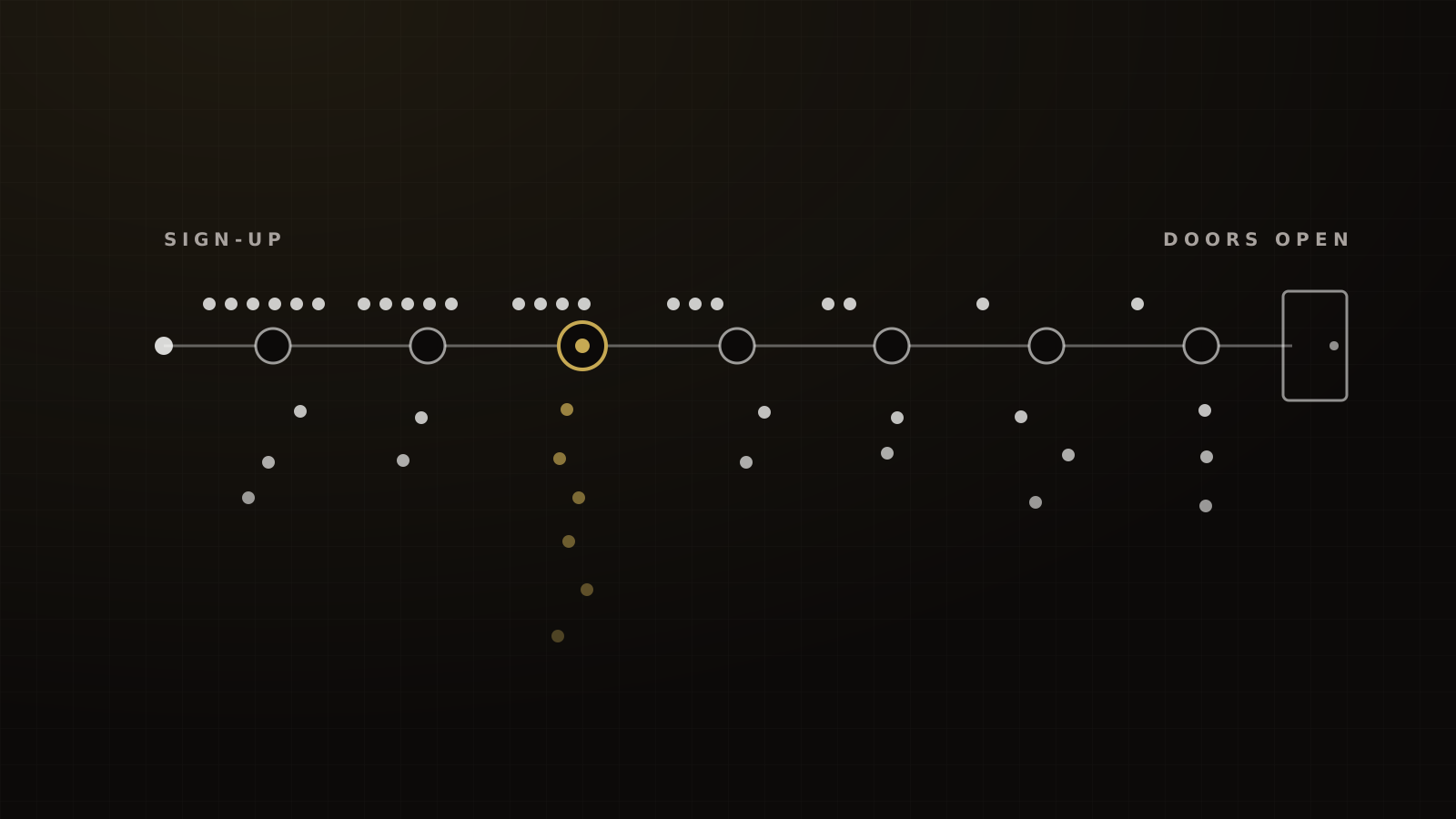
Give each day its own reminder sequence. One reminder stream for a three-day event treats Day 2 as an afterthought. Our reminder schedule applies to every day, not just the first.
Use paid multi-session formats for community. In a paid community challenge, our target is live-call attendance above 50% of enrolled participants. In Circle's 2024 report, 59% of top-10% creators said their events see more than 50% attendance, against 33% of other creators.[13]
Mistakes to avoid
- Treating more days as more value. To a free registrant, more days is more cost.
- Reporting cumulative attendance. Three days of 100 people is 300 "attendees" and maybe 120 unique people. Count unique.
- Borrowing webinar benchmarks. They exclude summits.[4]
- Fixing it with reminders alone. Reminders help, and we cover the full list of levers in why people register and don't show up. They can't fix a format that asks too much.
For the bigger picture on filling rooms and getting people to show, start with our event marketing guide, and see the 2026 event statistics for the free and paid benchmarks. If you're planning a multi-day event and want a second opinion on the format, book a strategy call.
Frequently asked questions
Sources
- 1.Ten Steps to Organize a Virtual Scientific Symposium. Global Challenges (Wiley), 2022-06-26 (event May 2020).
- 2.Online conference attendance, Day 1 vs Day 2 (CHI EA 2023). Kowalski et al., arXiv 2305.09403, 2023-05-16 (event Dec 2021).
- 3.Engagement at a three-day virtual society conference. Cornell et al., Frontiers in Communication, 2022-08-18 (event 2021).
- 4.2026 B2B Webinar Benchmark Report. Goldcast, 2026.
- 5.Customer story: Birdeye. Goldcast, undated, checked 2026-10-04.
- 6.Event Program Benchmarks 2026. Bizzabo, 2026-03-05.
- 7.2026 Webinar Benchmark Report. Livestorm, 2026-09-01.
- 8.Video conferencing usage dynamics and nonverbal mechanisms exacerbate Zoom fatigue. Fauville et al., Stanford Virtual Human Interaction Lab, 2023.
- 9.Study offers data to show MOOCs didn't achieve their goals. Inside Higher Ed, reporting Reich & Ruipérez-Valiente in Science, 2019-01-16.
- 10.How to measure event success. Zoho Backstage, undated, checked 2026-10-04.
- 11.Event Data Lab #05: no-show rates by ticket type and event size. PheedLoop, 2026-04-29.
- 12.$5,300 in $100s: the verdict. Jason Fried, HEY World, 2026-08-28.
- 13.2024 Community Benchmark Report. Circle, 2024.
Written by
Ray GillespieCo-Founder & COO
Ray runs day-to-day operations across every Victory engagement, building the systems, automations and AI-powered workflows that hold the machine together. He has overseen operations behind more than $120M in revenue.
Part of the guide: Event Marketing for Coaches and Experts: Fill the Room, Raise Show Rates and Monetize Free Events