Selling From Stage: Offer Timing, Text-to-Pay Links and VIP Upgrades That Pay for the Event
One offer, paid in the room by text link or QR, a fast upsell, VIP seats full of buyers and a next-day kickoff. How we sell from stage, within the rules.
 Devin AlexanderCo-Founder & CEO
Published 9 min read
On this page
Key takeaways
- If you paid to fill the room, sell from it. One offer, made after you've delivered real value, and closed long.
- Take payment in the room while energy is high: one QR code and one text-to-pay link, both pointing to the same product.
- Put a fast upsell line in front of the people who just said yes, and seat VIP buyers where the speaker can see them.
- Start fulfilment the next day. A kickoff session within 24 hours heads off buyer's remorse, refunds and chargebacks.
- Sell within the rules. In-room sales of $130 or more at a hotel or convention center can carry a three-day right to cancel.[1]
Sell on every event you pay to fill. A free event with no offer is a cost line. A free event with one clear offer, a way to pay in the room and a reason to start tomorrow is how the event pays for itself.
Marketers already know rooms make money. In Splash's 2025 survey of 1,058 US event marketers, 66% of those running several event formats said in-person events generated the most revenue.[2] The question is how to turn that energy into sales that stick.
The guides that rank for "selling from stage" cover storytelling, credibility and scarcity lines.[3] They skip the parts that decide whether the money stays: how people pay, who sits up front, what happens the next morning and which rules apply. That's what this article covers.
One offer, placed late, closed long
Make one offer from stage. Two offers split the room's attention and give people a reason to think it over.
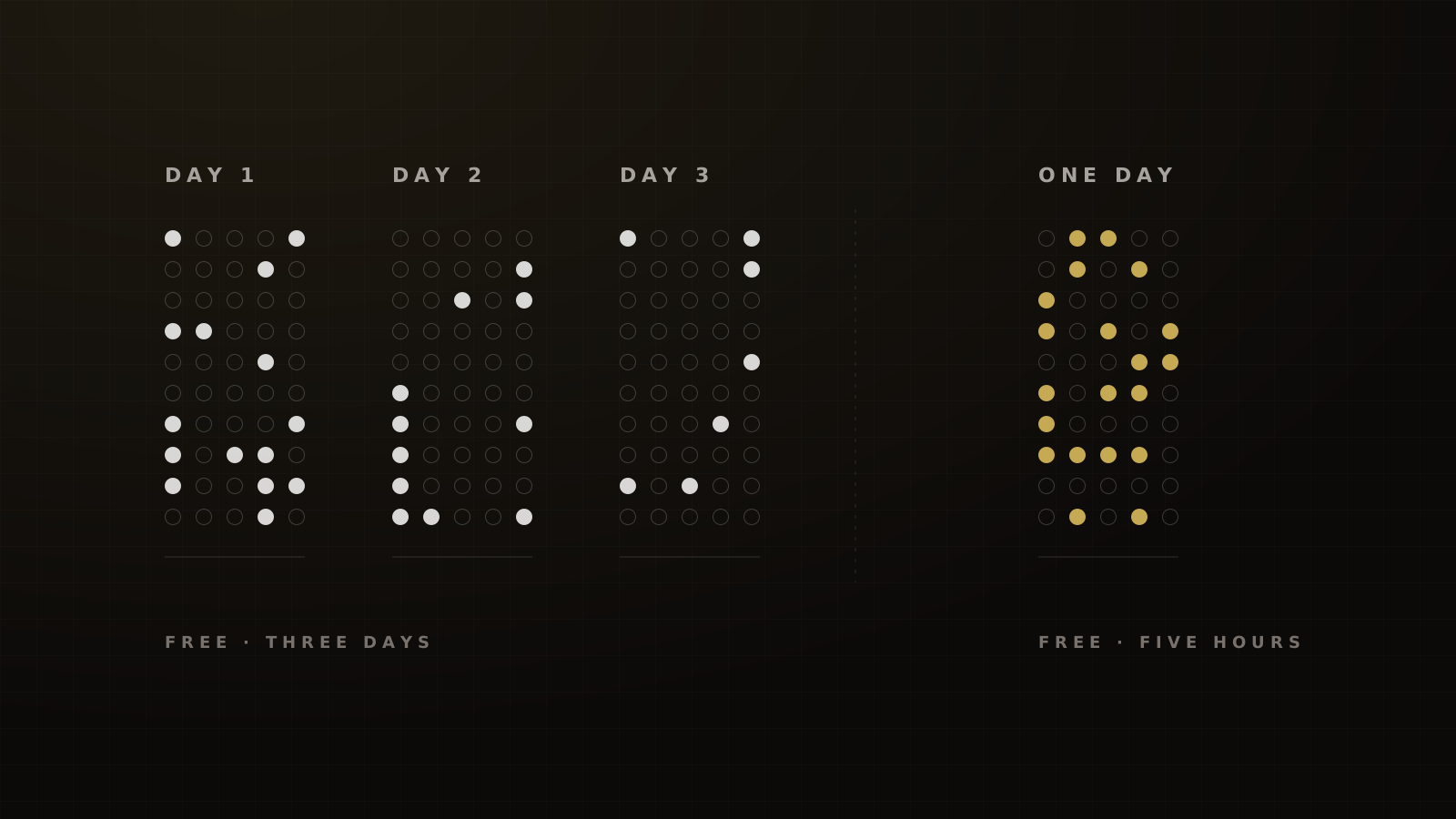
Place it after the audience has had a real win. On a free one-day event of about five hours, that means most of the teaching is done and the room has seen what working with you looks like.
Then close long. Jason Fladlien's view is that most people say no to the first presentation of an offer, and the money is made in what comes after: working through the objections one at a time. He gets through the core offer and the price quickly, then spends most of the close on the real reasons people hesitate. He's willing to spend a long time on objections, because that's where the sales are.
Two more rules we take from the same school:
- Stack bonuses instead of discounting. Hormozi, who credits Fladlien, argues for splitting the offer into named, priced bonuses aimed at specific objections, so value rises while the price holds.
- Show payment options side by side. Fladlien frames it so the decision becomes how to buy, not whether. Pay in full next to a payment plan, with neither one looking like a bad deal.
If the energy is high in the room, wallets fly open.
Take payment in the room
Energy fades on the walk to the car. Take payment while people are still in their seats.
There are two good ways to do it, and we use both.
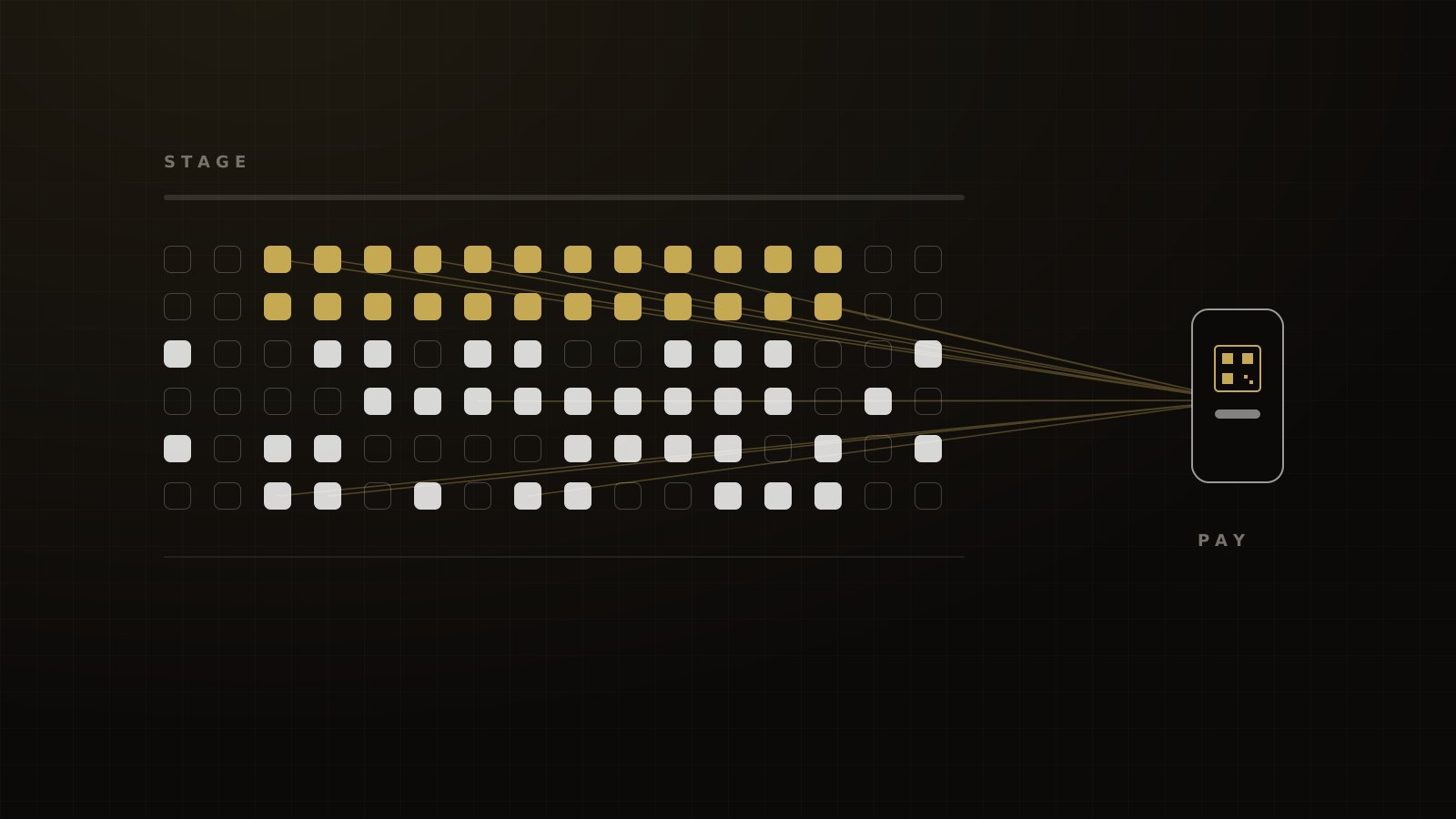
A QR code on screen. Stripe Payment Links can be shared by text, email or social, and the Dashboard generates a QR code for any link. The QR code doesn't expire.[4] Project it during the close and leave it up.
A text-to-pay link. HighLevel's Text-To-Pay sends a secure payment request by SMS from a conversation. It needs HighLevel Payments connected through Stripe, an active number and a product, and it has test and live modes.[5] It's built per conversation, so for a whole room we send the same payment link through a workflow to everyone who opted in to texts.
Make the QR code and the text point to the same product, so every sale reconciles to one place.
Before you walk on stage
- Product, price and bonuses loaded and named exactly as they appear on the slide
- Pay-in-full and payment-plan options both live
- Checkout run end to end in test mode, then switched to live
- QR code tested on two phones, from the back row
- Text-to-pay workflow tested on an opted-in staff number
- Staff at a buy line with tablets, for anyone who wants help or has a card declined
- Refund terms and any required cancellation notice on the checkout page and in the receipt
Check payment plans before the event, not during it. Stripe Payment Links support upsells and optional items but not payment plans or partial payments; Invoicing does.[6] And don't promise financing on stage until you've confirmed eligibility. Affirm through Stripe lists professional services, including consulting, as prohibited or restricted.[7]
The fast upsell line
The moment after someone buys is the moment they are most likely to buy again. Hormozi calls this offer stacking: after the main offer, present an upsell at peak buying intent, and a smaller downsell for anyone who says no.
At an event, that means a fast line. The buyer's confirmation screen or the buy-line staff offers one add-on that makes the main purchase work better: a faster start, a done-with-you session, a seat at the next event. One add-on, decided in under a minute.
Keep it short. A long upsell conversation in a buy line holds up everyone behind it, and the room's energy goes with it.
VIP tiers that seed the room
The stage offer starts selling before the event does. A VIP tier puts people who have already bought from you in the front rows.
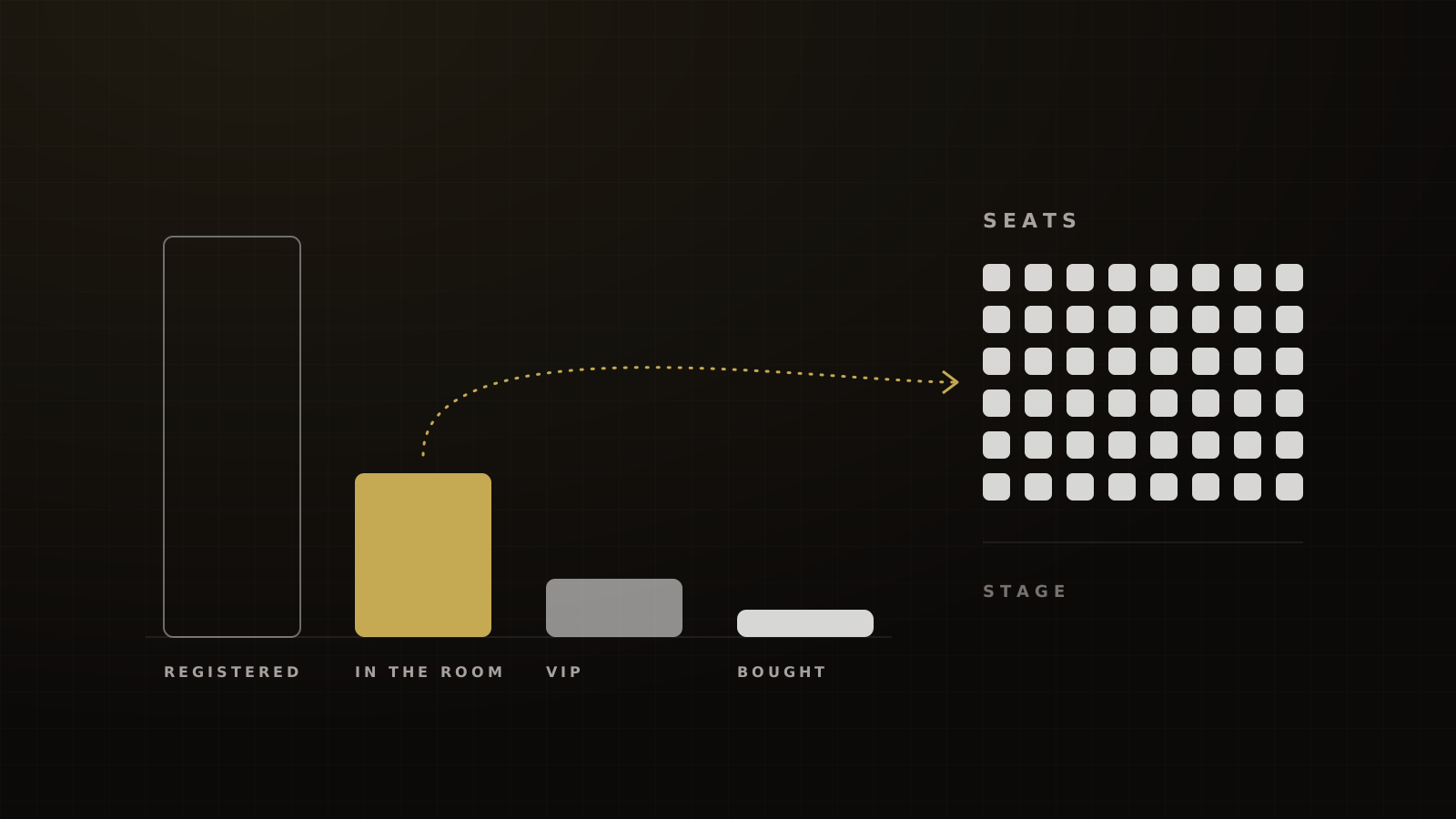
In our experience, VIP tickets priced from $100 to $297 show at 85% to 90%. Our house standard is that VIP ticket revenue, net of fees and refunds, covers 100% or more of the ads that sold it. That's how the VIP side seeds every room at roughly zero net cost. We cover the full model in our free vs paid ticket split, and the budget math in the event budget calculator.
The price alone isn't what makes VIPs reliable. Inside the same event, PheedLoop found paying guests attended only 2 to 4 percentage points more reliably than comped guests.[8] What changes the room is the promise: reserved seats near the front, a separate check-in, extra time with the speaker. Put that promise in writing on the checkout page.
Start the VIP price high. You can always lower a price; raising it after people have paid less is hard.
Then use the VIPs. Seat them where the speaker can see them, brief the sales team on who they are, and make sure the people who can buy are the ones in the room. How we qualify event attendees covers that side.
Head off buyer's remorse: the next-day session
Buyer's remorse usually starts the night of the sale. The buyer goes home, the energy wears off and the doubt arrives before the first result does.
So we start fulfilment the next day. On one live-event model, a Friday webinar fed a Saturday event, and buyers got a Sunday "acceleration" session. Devin's account is that it "completely eliminated pretty much all of the churn and the chargebacks." Ray's version: the Sunday session wipes out buyer's remorse.
Automate the invite so nobody slips through. HighLevel's Payment Received workflow trigger can filter on a Text2Pay link as the payment source.[9] A text-to-pay purchase can then send the kickoff invite and access straight away.
Chargebacks are more than lost revenue. They count against your payment account. Visa's monitoring program counts fraud reports and disputes against transactions, and its US excessive-merchant line fell from 2.2% to 1.5% in April 2026.[10] Your processor will usually act well before Visa does. On event sales with a next-day kickoff, our target is a dispute ratio under 0.5% of transactions.
We go deeper on this model in the acceleration session case.
Rules for selling in a room
The FTC's Cooling-Off Rule. It covers consumer sales made away from the seller's place of business, including hotel or motel rooms, convention centers, fairgrounds and restaurants, at $130 or more. The buyer can cancel before midnight of the third business day after the sale. The seller has to give a receipt and a cancellation notice, in the same language as the sales presentation.[1] So a Spanish-language event needs a Spanish notice.
It applies to coaching and education. The rule's definition of consumer goods or services includes courses of instruction or training, whatever they're taken for.[11] Whether a buyer checking out online on their own phone in a hotel ballroom is covered is a question for your lawyer. Don't assume the QR code takes you out of scope.
Earnings claims. Existing law already requires you to back up claims about what someone can earn. The FTC's guidance is that atypical successes don't support claims about typical earnings.[12] In January 2025 it proposed extending its Business Opportunity Rule to money-making opportunities such as business coaching, with written substantiation for earnings claims. That proposal isn't final.[13] The FTC has also banned a real-estate and ecommerce seminar operator from the industry over false or unsubstantiated earnings claims.[14] Show typical results, not your best student's.
Recurring payment plans. The FTC's 2024 click-to-cancel rule was vacated, and in March 2026 the FTC asked for public comment on what to do next.[15] State auto-renewal laws still apply. If the stage offer renews, get the cancellation terms reviewed.
Payment texts. Send payment links only to people who opted in to receive texts from you.
What "good" looks like
No credible public benchmark exists for the share of a room that buys from stage. The figures that circulate have no method behind them. Ticket Fairy's widely shared 5% VIP upgrade figure is a worked example, not data.[16]
The target we hold on a free one-day event is 8% to 12% of attendees buying the main stage offer. That's our target, not an industry number.
Track two ratios: buyers ÷ attendees who saw the offer, and buyers ÷ registrants. The first tells you whether the pitch works. The second tells you whether the show rate is costing you sales before anyone hears the pitch.
The sales team that works the room and follows up afterward matters as much as the pitch. See how we build a high-ticket sales team, and for the full system around the event, start with our event marketing guide. If you want us to pressure-test your stage offer before the next event, book a strategy call.
Frequently asked questions
Sources
- 1.16 CFR Part 429: Rule concerning cooling-off period for sales made at homes or at certain other locations. eCFR (Federal Trade Commission rule), current as of 2026-09-01.
- 2.Splash's 2025 outlook on events: 88% of marketers identify events as a key revenue driver. Splash (Cvent press release), 2025-03-27.
- 3.How to sell on stage. The Speaker Lab, 2024-06-06.
- 4.Share a payment link. Stripe Docs, current, checked 2026-10-04.
- 5.Text-To-Pay links. HighLevel Support Portal, 2025-12-04.
- 6.Payment Links. Stripe Docs, current, checked 2026-10-04.
- 7.Affirm payments. Stripe Docs, current, checked 2026-10-04.
- 8.Event Data Lab #06: registration completion and paying vs non-paying guests (with addendum). PheedLoop, 2026-05-26, addendum 2026-09-01.
- 9.Workflow trigger: Payment Received. HighLevel Support Portal, current, checked 2026-10-04.
- 10.Visa VAMP changes: what merchants need to know about chargebacks and disputes. Ravelin, updated 2026-01.
- 11.16 CFR 429.0: Definitions. eCFR (Federal Trade Commission rule), current, checked 2026-10-04.
- 12.Back up those earnings claims, and other lessons from the FTC's Labor Task Force work. Federal Trade Commission, 2026-06-16.
- 13.FTC proposes rule changes and new rule to deter deceptive earnings claims. Federal Trade Commission, 2025-01-13.
- 14.Operator of ecommerce and real estate business opportunity scam faces lifetime ban. Federal Trade Commission, 2025-06-20.
- 15.FTC seeks public comment on advance notice of proposed rulemaking regarding negative option. Federal Trade Commission, 2026-03.
- 16.Mastering event upselling in 2026. Ticket Fairy, 2026-01-24, updated 2026-04-26.
Written by
Devin AlexanderCo-Founder & CEO
Devin architects Victory's revenue systems: team structure, comp plans, scripts and the accountability frameworks that make sales floors predictable. He has generated more than $150M in sales and trained more than 250 closers.
Part of the guide: Event Marketing for Coaches and Experts: Fill the Room, Raise Show Rates and Monetize Free Events