How to Qualify Event Attendees Before They Get a Seat (Without Applications)
Applications cut the volume you paid for. Soft fit questions, CRM routing, a behaviour-based Meta signal and an honest waitlist work better.
 Devin AlexanderCo-Founder & CEO
Published 9 min read
On this page
Key takeaways
- Don't put an application in front of a free event. It cuts the volume you paid for, and the answers are self-reported anyway.
- Ask two or three soft fit questions inside the registration form instead, and save every answer to a CRM field.
- Send Meta what people did (attended, booked, bought), not their financial answers. Meta's terms prohibit events and audiences based on income, credit or debt.[1]
- When the room is genuinely full, use an honest "we're at capacity" waitlist. Never use it to hide a financial screen.
- Check Meta's special ad categories before you launch. Real-estate or finance education can fall inside them.
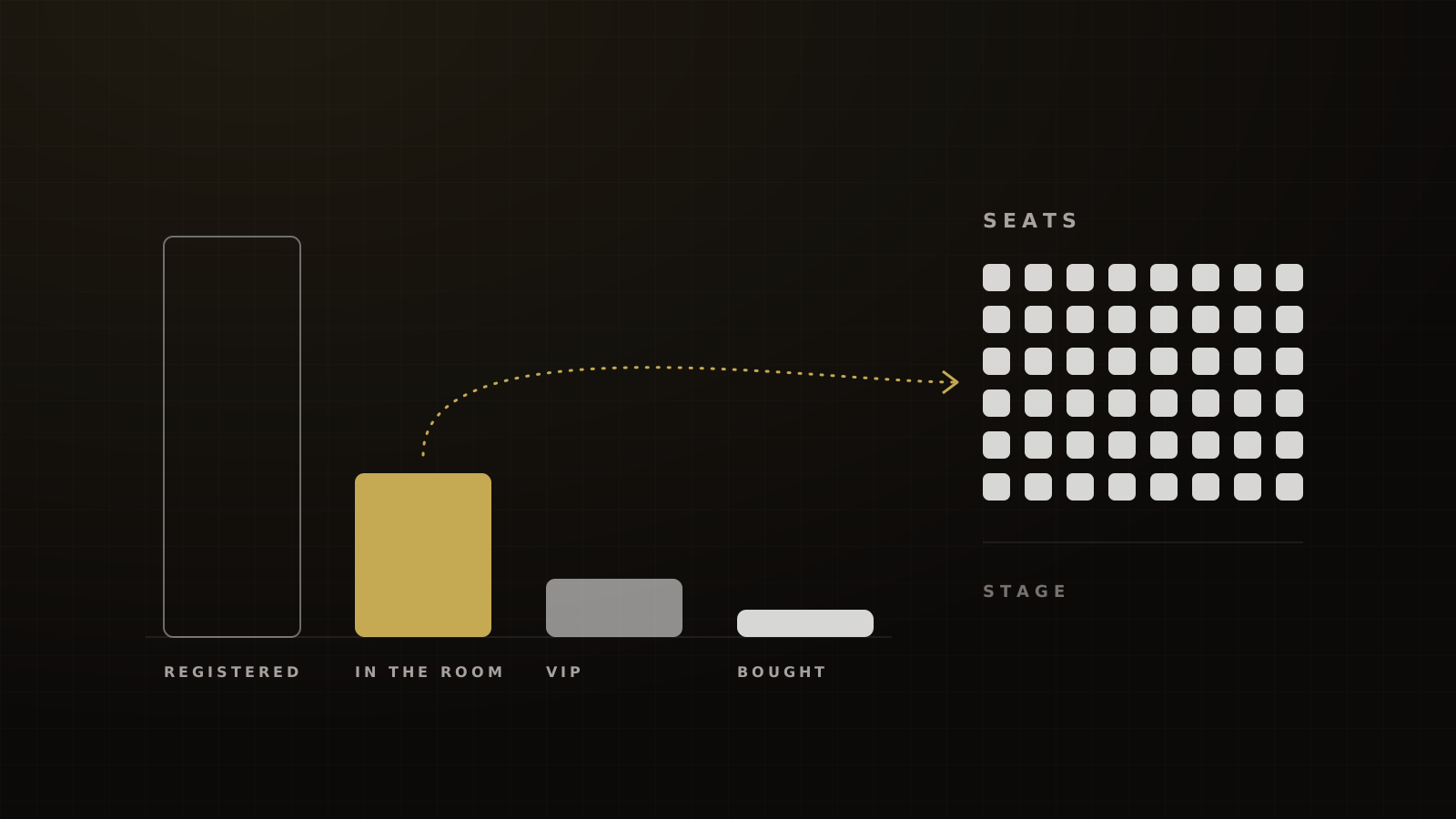
A full room isn't the goal. A buying room is. If half the seats hold people who will never buy, you've paid for those seats, your closers' time and the energy in the room, and got nothing back.
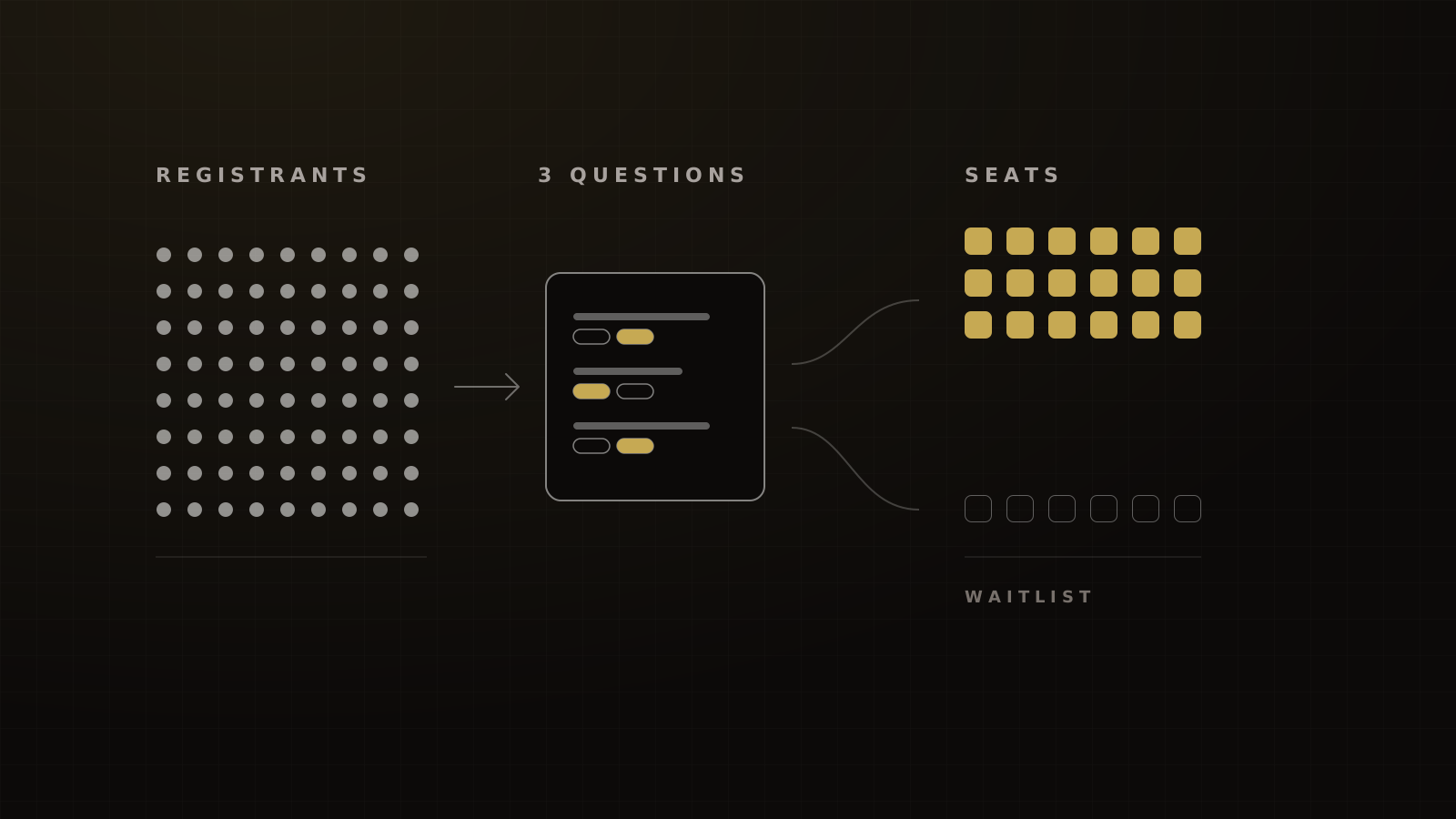
So qualify the room before people get a seat. Not with an application, which cuts the volume you paid for, but with a few soft questions, a CRM that routes on the answers, a quality signal to Meta built on behaviour, and an honest waitlist when you run out of seats.
Here is how we do it, and where the rules draw the line.
Why applications cost you volume
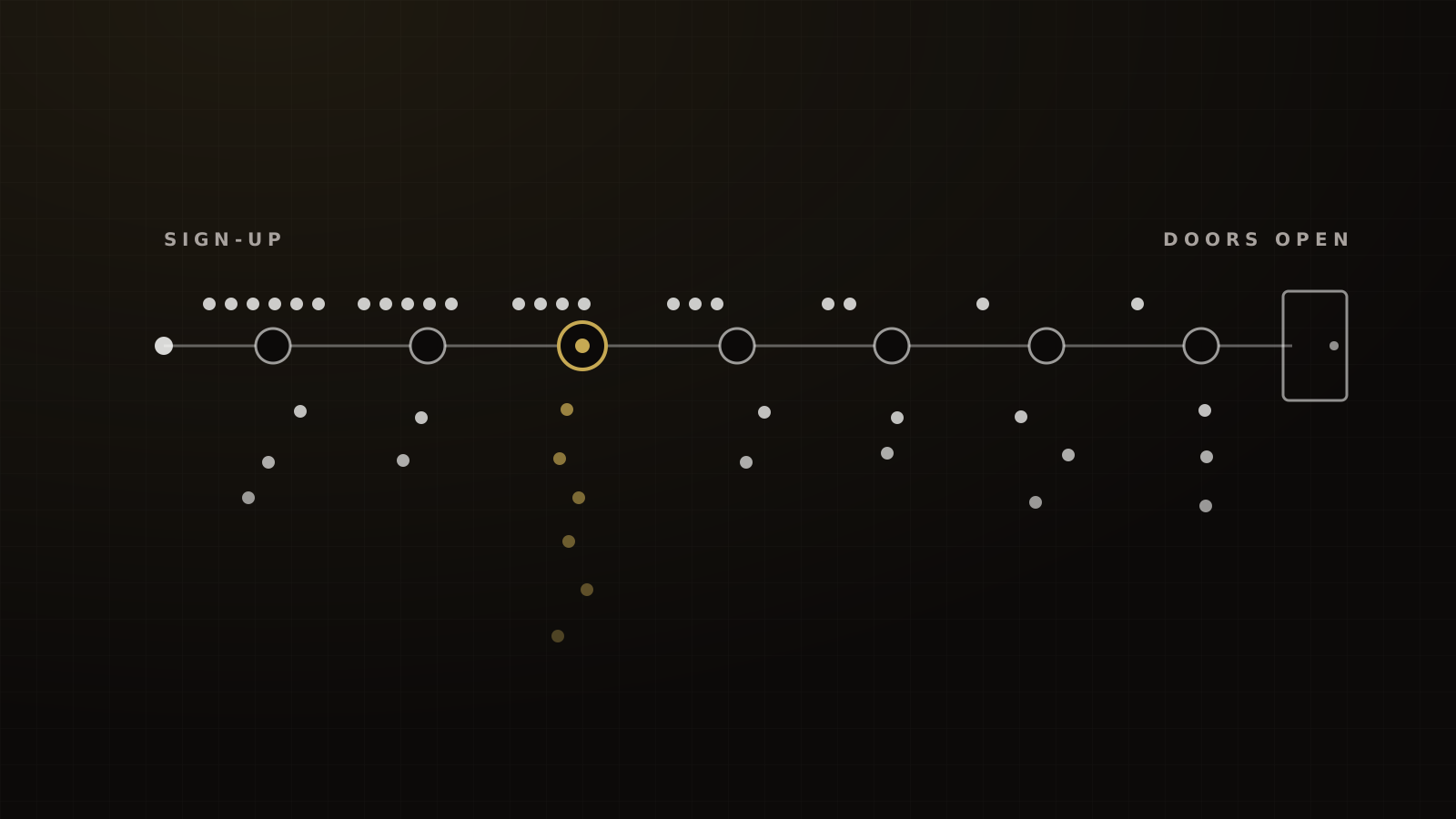
Every step between the ad and the confirmation page loses people. On free events, that loss lands on the step you're paying to fill.
The data shows how sensitive registration is to design. PheedLoop found free registration flows complete at about 96%, against about 86% for paid flows.[2] Bizzabo found dynamic registration flows convert 24.4% of visitors, against 11.6% for static ones.[3] That is roughly double the conversion, and the difference between the two groups is the flow.
On cold Meta traffic, we typically see 22% to 30% of landing-page visitors register for a free event, beside Bizzabo's 21.5% average.[3] An application step puts that rate at risk on every dollar of spend. In our experience, free in-person registrations from Meta cost $18 to $24 each. You don't want to pay that for a form people abandon.
Hormozi's argument is that friction raises lead quality: the more hoops someone goes through, the more serious they are, and you tune the friction to the volume you need. We agree with the principle. Our nuance is where the friction goes. Put it in questions, not in an application.
An application also asks the wrong thing. People describe themselves the way they'd like to be seen. What they do (show up, stay for the offer, book a call) tells you more.
The soft questions that sort the room
Two or three questions, inside the registration form, each with tap-to-answer options. That's it.
The best public evidence says this costs little. Across 3,600-plus events, PheedLoop found registrations with custom questions completed at a median of about 91%, against about 89% without, and completion didn't fall as the number of questions rose.[4] That measures completion inside the form, not page conversion, and the events are mostly B2B, but the direction is clear.
In our experience, adding two or three soft questions to a free registration form costs no more than 10% of registrations. That's our rule of thumb, not an industry benchmark.
Here's the kind of wording we use:
Soft fit questions (pick two or three)
- Stage: Which best describes you today? (Just exploring / Getting started / Already doing this and want to grow / Running a team)
- Timeline: When do you want to make a change? (This month / In the next 3 months / Sometime this year / Just curious)
- Goal: What would make this event worth your day? (A clear plan / A specific skill / Meeting the speakers / Finding the right program)
- Readiness (optional): If the right program came along, how ready are you to invest in yourself? (Ready now / In a few months / Not right now)
Notice what's missing: income, credit, net worth, debt. Don't ask for them, and don't infer them.
Keep the form fast. Registration forms complete at 60.7% of form sessions in Zuko's benchmark, against 51.7% for all forms.[5] Field count alone isn't the lever, either. In a MECLABS test, a 15-field form beat an 11-field control by 109% after the page around it was redesigned and the navigation removed.[6] Test the whole flow, not just the number of fields.
Numbers to stop repeating
You'll see "each extra field cuts conversion by 4.1%", "67.8% abandon forms over seven fields" and "three to five fields is optimal" quoted everywhere. We found them repeated with no links to any original study.[7] The real HubSpot source behind most form-field advice is an old observational analysis of 40,000-plus landing pages, with no per-field constant in it.[8]
Score and route
Every answer goes to its own CRM field, not into a notes box. In HighLevel, that means custom fields on the contact, a tag per answer band, and workflow branches that act on them.
Routing does three jobs:
- Closer prep. Registrants who say "ready now" and "this month" get flagged so the sales team knows who to look for in the room.
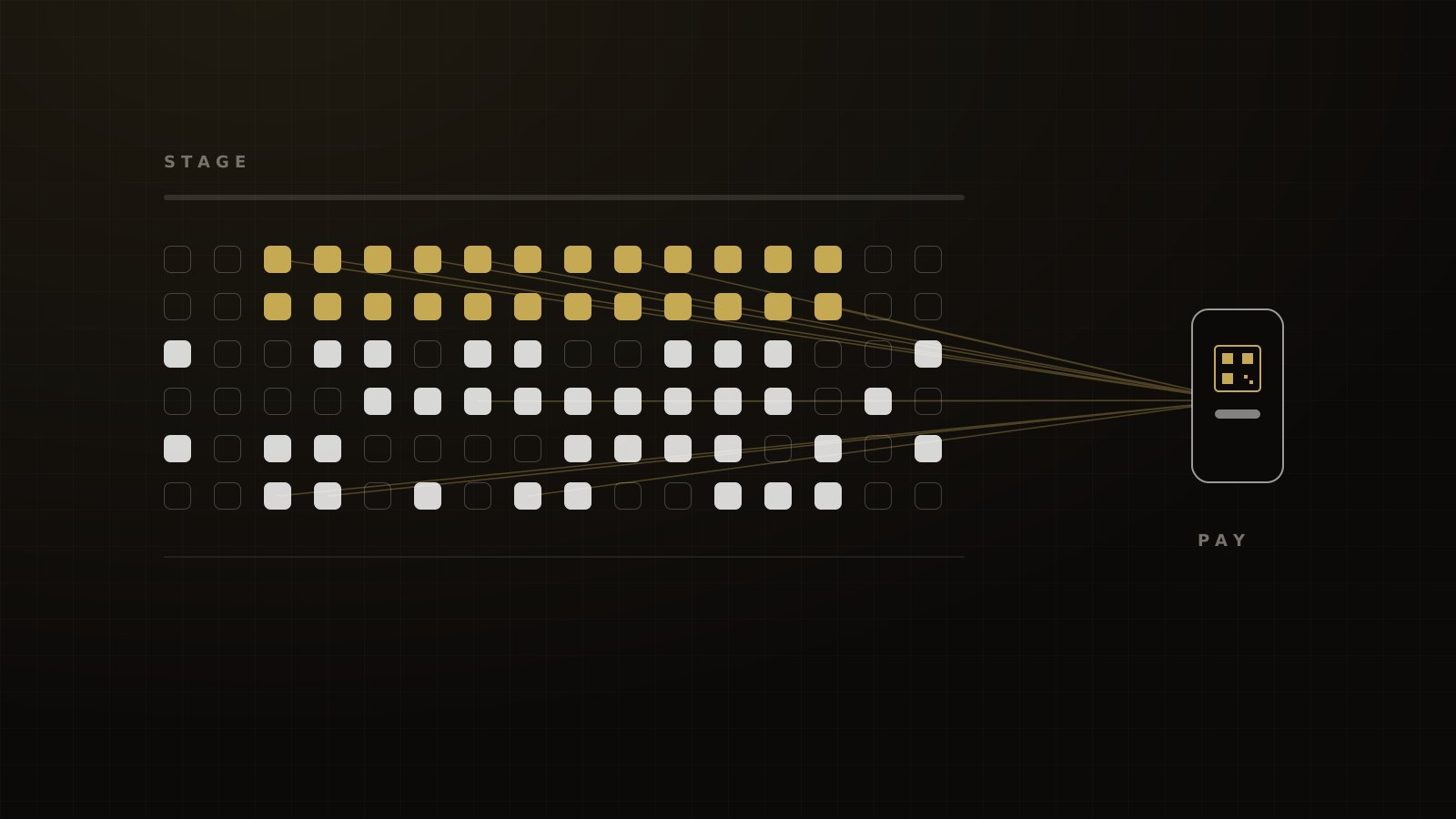
- The VIP offer. People further along get the VIP upgrade on the confirmation page first.
- The right follow-up. "Just curious" registrants still get reminders. They just don't take a closer's call slot.
We cover the build in our GoHighLevel guide.
Devin puts the trade-off plainly: it "would make sense to pay twice as much for someone you know is financially qualified." The questions don't make anyone qualified. They tell you where to spend your closers' time and which registrations are worth paying more for.
Send Meta the right quality signal
This is where most advice, including some we used to give, goes wrong.
The tempting move is to score registrants on their answers and send Meta only the "qualified" ones. If the score is built on financial answers, Meta's terms prohibit it. The names and criteria you set for events, conversions and Custom Audiences must not reflect, imply or be based on prohibited information, which includes income, credit score, loan pre-qualification, account balance and debt status.[1] That applies even if the raw answers never leave your CRM.
So send behaviour instead. The Conversions API accepts website, app and offline events from your CRM, including custom events, to optimise delivery.[9] The signals we use:
Framework
The behaviour-based quality ladder
- Registered. The base event. Volume, not quality.
- Attended. Fired from the check-in scan or the live-room join.
- Stayed for the offer. Still in the room when the pitch started.
- Booked a call. From the calendar, not the form.
- Bought. From the payment, with the value.
Victory's approach to event conversion signals. Friction principle credited to Alex Hormozi.
Optimise as far down the ladder as your volume allows. Meta's "maximize number of qualified leads" goal works with website and instant forms, and new campaigns need the Conversions API from April 2026.[10] Meta reports 21% lower cost per quality lead with instant forms plus Conversions API for CRM, and 9.5% lower with website forms. It gives no sample or method, and it advises an A/B or lift test.[10] Run one before you trust the number.
If you use instant forms, Meta's Conversion Leads integration has its own requirements: the Meta Lead ID stored, 200 or more leads a month, at least daily uploads, and an optimised stage reached within 28 days at a 1% to 40% rate.[11]
The event you optimise toward has to fire often enough to learn from. Our rule before scaling is a stress test of 7 days at the planned daily spend, or until about 50 optimisation events. Meta's own guidance for value optimisation asks for 5 or more unique values and 100 or more conversions in 14 days.[10] If "bought" is too rare, optimise on "attended" or "booked" and move down the ladder as volume grows.
More on feeding Meta clean signals in our paid ads guide for coaches.
The "we're at capacity" waitlist
When the room is genuinely full, say so. Give seats first to the people the event is built for, based on stage and timeline, and offer everyone else a place on the waitlist with something useful in the meantime.
Here's the shape of the message we send:
Subject: You're on the waitlist for [Event]
Thanks for registering for [Event]. The room is now at capacity, so we've added you to the waitlist. If a seat opens up, we'll text and email you first.
In the meantime, here's [the replay / the workbook / the free community] so you don't miss the core of it.
The text version is two lines: you're on the waitlist, and here's the link to the free resource.
Two rules make this honest. The capacity has to be real: no fake cap to create urgency. And the message must never cover for a financial screen-out. Use stage and timeline to allocate scarce seats, not money.
Waitlist emails follow CAN-SPAM like any other commercial email: honour opt-outs within 10 business days and include a physical postal address.[12] Texts go only to people who opted in to receive them.
Stay inside the rules
Meta's special ad categories. Housing, employment, financial products and services, and social issues, elections or politics are special ad categories. Financial products and services replaced the old credit category. Ads in these categories get restricted targeting: age fixed at 18 to 65-plus, all genders, a minimum location radius, limited detailed targeting and restricted lookalike audiences.[13] The financial products and services category has been required for US advertisers and audiences since January 21, 2025.[14] Real-estate investing, credit repair and personal-finance education events may fall inside one of these. Check before you launch.
No credit reports. Don't pull credit reports, credit scores or soft-pull checks on registrants. Consumer reports are regulated under the Fair Credit Reporting Act, and marketing an event is not a recognised reason to obtain one. Any third-party enrichment data you use has to be lawfully sourced and disclosed in your privacy policy.
Collect less. Ask only what you'll act on. Every answer you store is data you have to protect and explain.
No protected traits. Never use gender, ethnicity or other protected characteristics as a criterion for who gets a seat or how you value a lead.
Registrants who don't fit the main offer still belong somewhere. A clear offer ladder gives them a next step. For getting the right people to actually show up, see why people register and don't show up, and for pricing the seats themselves, see free vs paid event tickets. The qualified room is also where selling from stage works best. Start with our event marketing guide for the full system, or book a strategy call and we'll review your registration flow.
Frequently asked questions
Sources
- 1.About prohibited information. Meta Business Help Center, current, checked 2026-10-04.
- 2.Event Data Lab #06: registration completion and paying vs non-paying guests. PheedLoop, 2026-05-26.
- 3.Event Program Benchmarks 2026. Bizzabo, 2026-03-05.
- 4.Event Data Lab #03: custom registration questions and completion. PheedLoop, 2026-03-05.
- 5.Form type benchmarking. Zuko, undated, methodology page 2026-03-26.
- 6.Optimizing web forms: longer form lifts leads after page redesign. MarketingExperiments (MECLABS), 2014-07.
- 7.Lead forms in B2B: the balancing act between data depth and conversion rate. Brixon Group, undated (2025).
- 8.Which types of form fields lower landing page conversions?. HubSpot (Dan Zarrella), c. 2010, updated 2025.
- 9.Conversions API. Meta for Developers, current, checked 2026-10-04.
- 10.About performance goals for lead ads. Meta Business Help Center, current, checked 2026-10-04.
- 11.Conversions API for CRM integration (Conversion Leads). Meta for Developers, current, checked 2026-10-04.
- 12.CAN-SPAM Act: a compliance guide for business. Federal Trade Commission, 2023-08, edited 2024-01.
- 13.Special ad categories. Meta for Developers (Marketing API), current, checked 2026-10-04.
- 14.How to choose a Special Ad Category. Meta Business Help Center, current, checked 2026-10-04.
Written by
Devin AlexanderCo-Founder & CEO
Devin architects Victory's revenue systems: team structure, comp plans, scripts and the accountability frameworks that make sales floors predictable. He has generated more than $150M in sales and trained more than 250 closers.
Part of the guide: Event Marketing for Coaches and Experts: Fill the Room, Raise Show Rates and Monetize Free Events