Which Ad Creative Sells Event Tickets? Speaker Lineups vs Story Ads vs Selfie-Style Video
Selfie-style video for cold traffic, full-room testimonials as proof, speaker lineups for retargeting. What Meta's tests show and how we read the results.
 Marius BulaiCMO & Head of Paid Media
Published 10 min read
On this page
Key takeaways
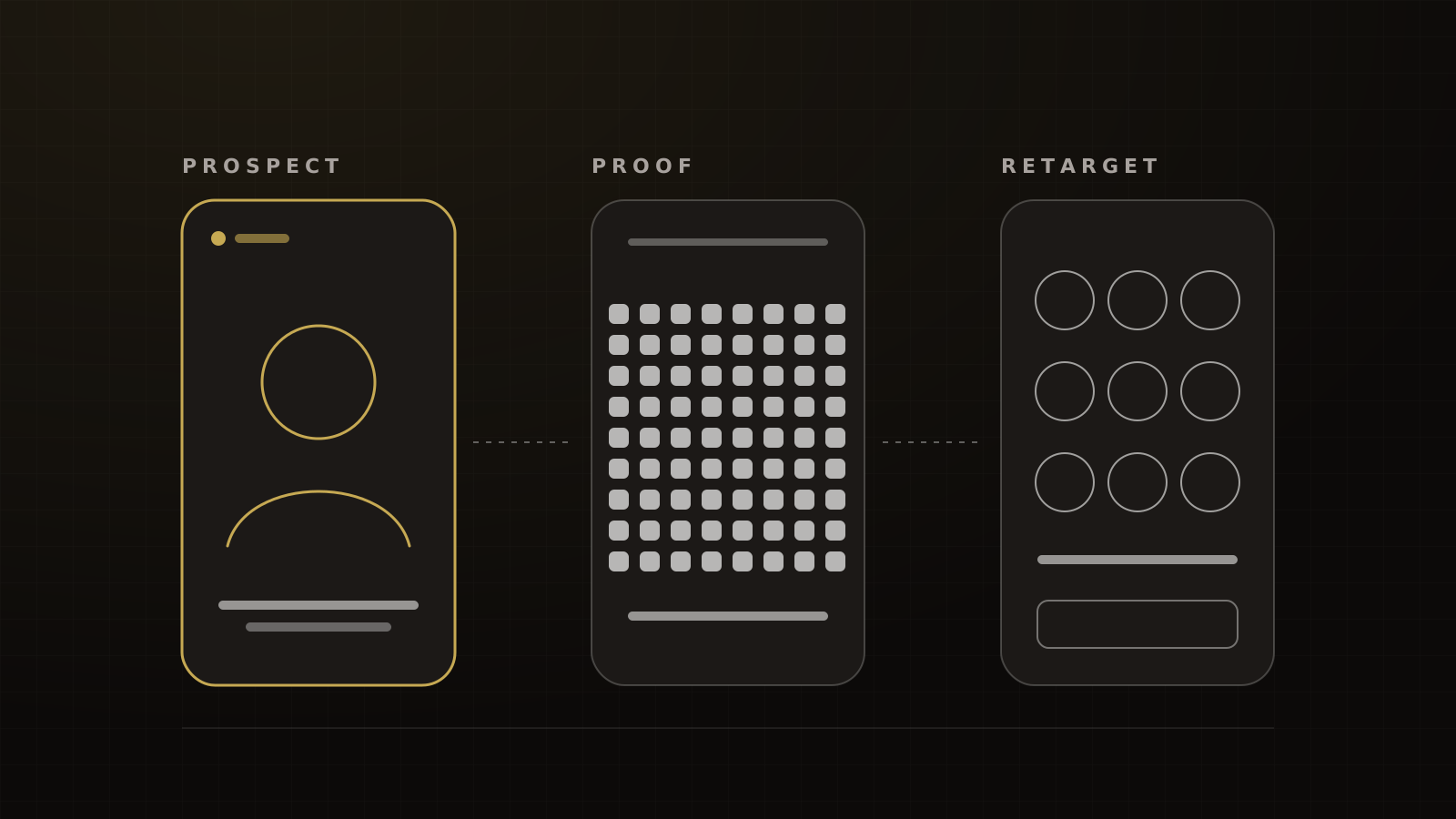
- Match the format to the audience. Selfie-style and founder video prospect. Full-room testimonials prove the event is real. Statics and speaker lineups retarget.
- Meta's own dated tests favor creator-style video. In a 2025 lead-gen A/B test, adding creator partnership ads cut cost per lead by 53%.[1]
- Lo-fi means authentic, not sloppy. Shoot on a phone, but light the face, caption every word and make one point.
- Speaker lineups sell when the audience already knows the names. For a smaller brand they can be the weakest ad in the account, so test them against your own history.
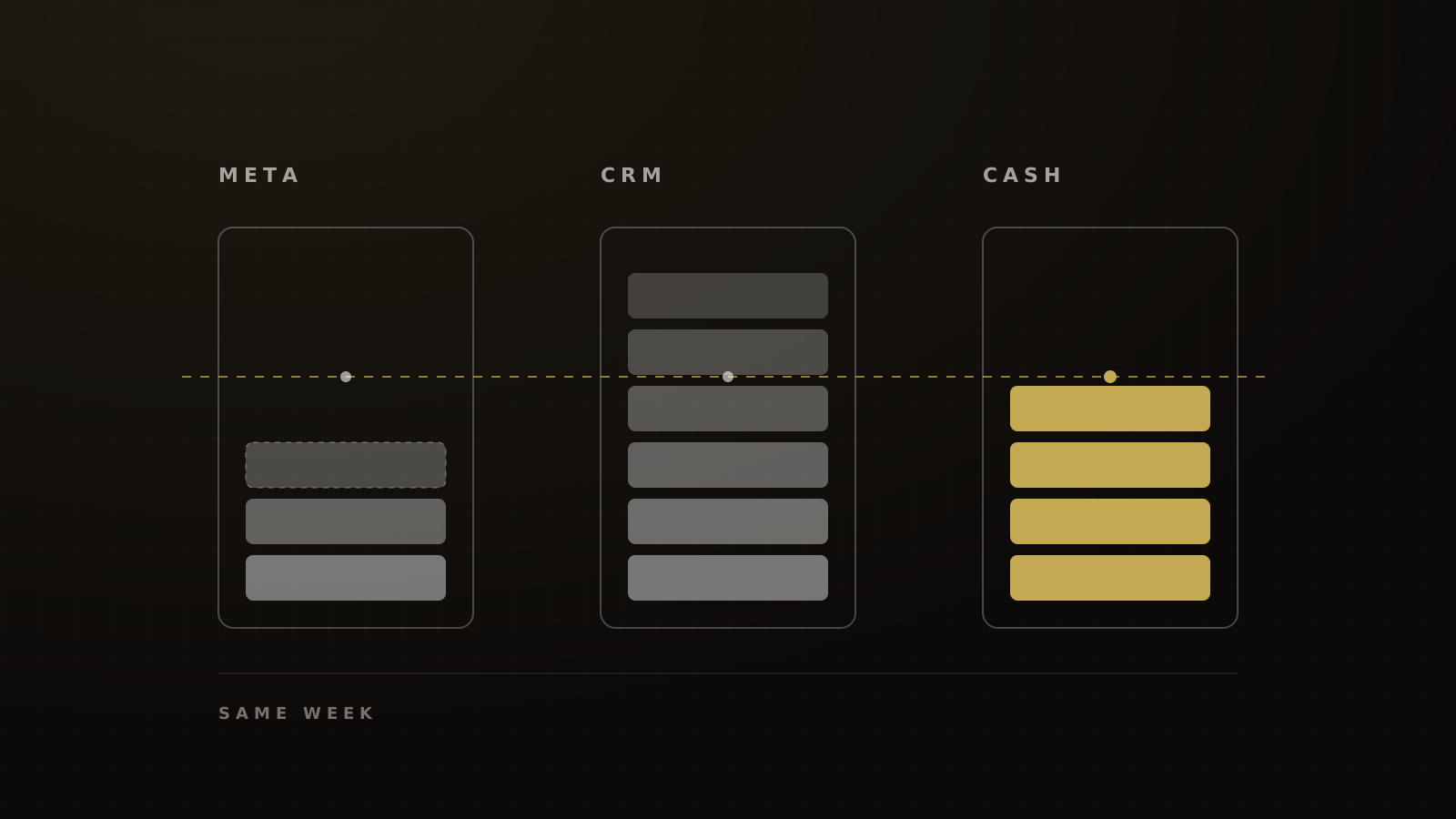
- Judge creative on cost per registration or ticket, not CTR. Direct ads get fewer clicks and can still sell more seats.
Run lo-fi founder or selfie-style video to cold audiences. Put statics and speaker-lineup graphics mostly in front of people who already know the event. And if you film one thing at your next event, film an attendee testimonial in a full room, with B-roll of the crowd.
That's what we see across the event accounts we run. The detail matters, though, because the winning format depends on who's watching and whether they recognize your speakers.
The short answer
- Prospecting: lo-fi founder or selfie-style video. It reads as a person, not an ad.
- Proof: a testimonial shot in a full room, cut with event B-roll. It's the strongest event content we have.
- Retargeting: statics and speaker-lineup graphics. They remind people of the date, the city, who's on stage and what VIP includes.
- Speaker lineups: they can top the account at a big multi-speaker event and fail for a smaller brand. Test them against your own account's history, not someone else's.
Three formats, three jobs
Most event advertisers judge every format with the same ruler at the same stage. That's the mistake. Each format has a different job.
| Format | Where it runs | Who sees it | What it has to prove |
|---|---|---|---|
| Selfie-style or founder video | Prospecting | People who've never heard of you | A real person with a clear point of view is behind this event |
| Full-room testimonial plus B-roll | Prospecting and retargeting | Cold and warm | The event is real, full, and worth a day |
| Statics and speaker lineups | Retargeting | Engagers, page visitors, registrants | Who's on stage, what's included, when it closes |
Our operating view from the event accounts we run. Judge every row on cost per registration or ticket, not on clicks.
A speaker grid shown to cold traffic asks strangers to recognize strangers. A selfie video shown to registrants re-sells something they've already bought. Put each format where its job is.
When one of them underperforms, Russell Brunson's Hook, Story, Offer is the quickest diagnosis. Either the hook didn't stop the scroll, the story didn't build enough value, or the offer wasn't clear. Find which one broke and fix that, not all three.
Selfie-style and founder video for prospecting
What Meta's own tests show
Nobody has published a method-disclosed test of speaker lineups against selfie video for ticket sales. Event-specific creative research is thin. The closest public evidence is Meta's dated A/B tests of creator-style video.
- A lead-gen advertiser (digital health). In an A/B test from June to July 2025, adding creator partnership ads to brand creative cut cost per lead by 53% and customer acquisition cost by 44%.[1]
- A fashion brand. In October 2025, creator-led partnership video ads beat its usual creative with 36% lower cost per result and 56% more online sales.[2]
- Meta's average. Adding partnership ads to business-as-usual campaigns delivered 19% lower CPA and 13% higher CTR on average, by Meta's account. The method isn't shown.[3]
Lower cost per lead when a lead-gen advertiser added creator partnership video to its brand creative
Read these for direction, not size. Each is one advertiser, reported by Meta about its own product. And they test adding creator-style video, not replacing everything else.
The largest dataset we trust points the same way. Motion analyzed 578,750 creatives across 6,015 accounts and $1.29B in spend. Founder-style creatives became winners 8.57% of the time and behind-the-scenes footage 8.64%, against 6.85% for cinematic B-roll and 6.57% for testimonials.[4] A "winner" there means an ad that drew at least 10 times the account's median spend and $500. It's a holiday, mostly ecommerce window, and it measures where Meta put budget, not cost per ticket.
What it does show: lo-fi isn't a handicap. Meta's delivery funds founder footage at least as often as polished footage.
People scroll past when they see an ad that's higher production.
Creative is the lever either way. Nielsen's three-year modeling for Meta across 41 consumer brands found campaigns with high-quality creative were 35% more effective.[5] It's 2022 data from packaged goods, not coaching. And "high quality" there means creative that does its job, not creative with a big budget.
Lo-fi isn't sloppy: the production rules
There's a real tension here. We've had a client wince at ad graphics that looked homemade, and they were right to. Lo-fi means the viewer feels like a person is talking to them. It doesn't mean dark, mumbled or misspelled.
Selfie-style video rules we hold
- Shoot vertical, 9:16. Keep the top 14%, bottom 35% and 6% on each side clear of text and faces, so the Reels interface doesn't cover them.[6]
- Caption every word. Meta calls sound optional but strongly recommended, and recommends captions.[6]
- Light the face. A window in front of the speaker is enough.
- One speaker, one point, one call to action.
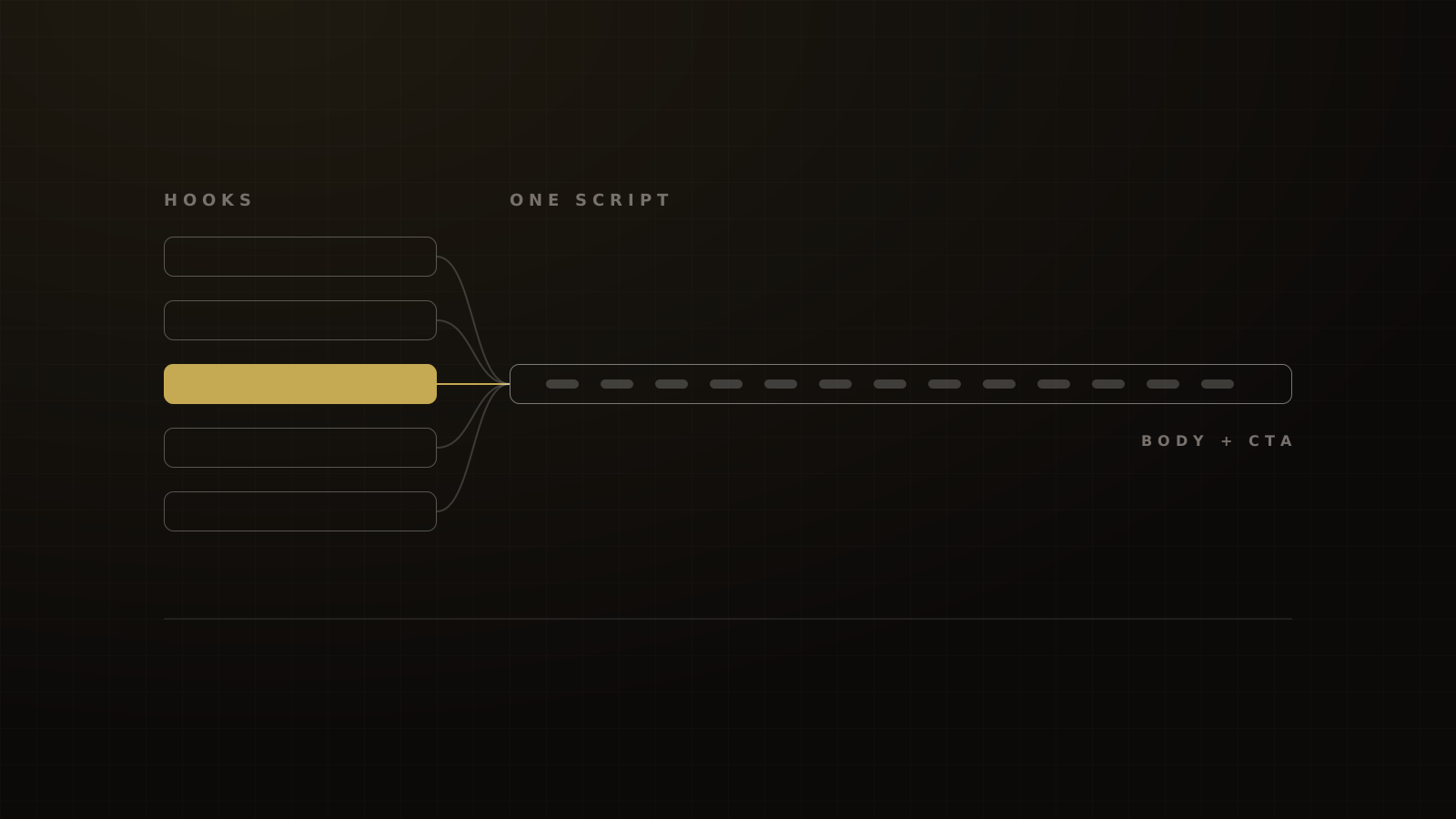
- Say the hook in the first line, and film several hooks for each script. Our hook formats for coaches are where we start.
- Show it's an event early: the city, the date, the room.
Full-room testimonials and B-roll: the best event content
The strongest event creative we run is an attendee testimonial filmed in a full room, cut with B-roll of the crowd, the stage and the breakout moments. It answers the two questions a cold prospect has about a free event: is this real, and will people like me be there?
Proof has always sold. Spiegel Research Center found that showing five reviews instead of none lifted purchase likelihood by up to 270%, across about 15.5 million page views.[7] That's ecommerce data from 2017, so treat it as background. Meta reports a newer, narrower version: a creator testimonial shown as a featured comment on partnership ads gave 7.5% higher offsite conversion rates and 9.6% higher offsite CTR on average.[3] That's a Meta feature, not filmed attendee footage.
Motion's lower hit rate for testimonials fits how we use them. A testimonial works best as the proof after a strong hook, not as the hook itself. So we open on the room or a single sharp line from the attendee, then let the story run.
The full room is the hard part. You can only film one if people show up. On the free one-day events we run well, 35% to 45% of registrants attend. Plan the room size and camera angles around that number, not the registration count. Our event show-rate playbook covers how to get there.
Speaker lineups: the best ad at big events, a dud for some
At big multi-speaker events, speaker-lineup statics have been among the best-performing ads in our accounts, run in many variations. For one smaller brand, the same format underperformed almost everything else we tested.
Why: names only sell when people know them
People do buy access to expertise. In Freeman's 2025 networking research, 63% of 2,326 attendees said subject-matter experts matter most to the networking they value.[8] In a separate Freeman survey, 84% of 1,022 attendees rated connecting with experts at their most important business event as very or extremely important.[9] Both are B2B samples.
A grid of faces sells that access only if the viewer recognizes the faces, or the ad tells them why each one matters. At a big event with known names, the lineup is the offer. For a smaller brand with speakers the audience hasn't heard of, it's a grid of strangers.
When a lineup underperforms, we try three fixes before dropping it:
- Lead with the one name the audience knows, large.
- Replace job titles with what each speaker will teach.
- Move the lineup to retargeting, where people already know the event.
Test against your own account history
Don't import another promoter's winners. Run the lineup next to your current best prospecting ad, in the same campaign and over the same days, and compare cost per registration or ticket.
Give Meta real variety while you do it. Meta's Andromeda retrieval engine improved recall by 6% and ads quality by 8% on selected segments, and Meta says more ad diversity can improve outcomes.[10] That's an argument for genuinely different concepts, not twenty recolors of one image.
Statics for retargeting
Event retargeting pools are small and short-lived. On the free in-person events we run, paid ads run for 10 to 14 days, with warm email and SMS starting about 21 days out. For comparison, Zoom found the 1,000 best-attended webinars on its platform had a 13-day median promotion window, against 9 days for the rest.[11]
That's not much time to warm anyone up, so retargeting has to be specific. Brunson and his ads lead, John Parkes, split it into three audiences, each sold differently:
Framework
Three retargeting audiences for an event
- People who engaged with an ad or video. Sell the click: the date, the city, the one reason to come.
- People who reached the registration page and left. Sell the registration: the speakers, the agenda, the deadline.
- People you already own: registrants and past buyers. Sell the next step: the VIP upgrade, the calendar add, the reminder.
Audience split credited to Russell Brunson and John Parkes; event application is ours.
Statics fit this job because the viewer already knows the story. A static only has to remind. Speaker-lineup statics are at their best in audience 3, selling the VIP upgrade, and that seat is worth the spend. In our experience, paid VIP tickets in the $100 to $297 range show at 85% to 90%. PheedLoop's 2026 data puts the median no-show at paid events at about 17%, or roughly 83% check-in.[12]
When retargeting results fade, follow Alex Hormozi's fatigue order: change the creative first, then the copy, then the headline, and touch the offer or price last.
Make the test readable
You can't test creative you can't track. Eventbrite's Meta pixel integration tracks PageView and Purchase automatically, plus up to four mapped standard events. Its domain can't be verified in your Business Manager, and pixels are off for embedded checkout in Europe and the UK.[13] If ticket sales by creative matter, run checkout on your own domain or send purchases to Meta through the Conversions API. Meta says advertisers using the Conversions API for web events see 17.8% lower cost per result on average. It doesn't publish the method.[14]
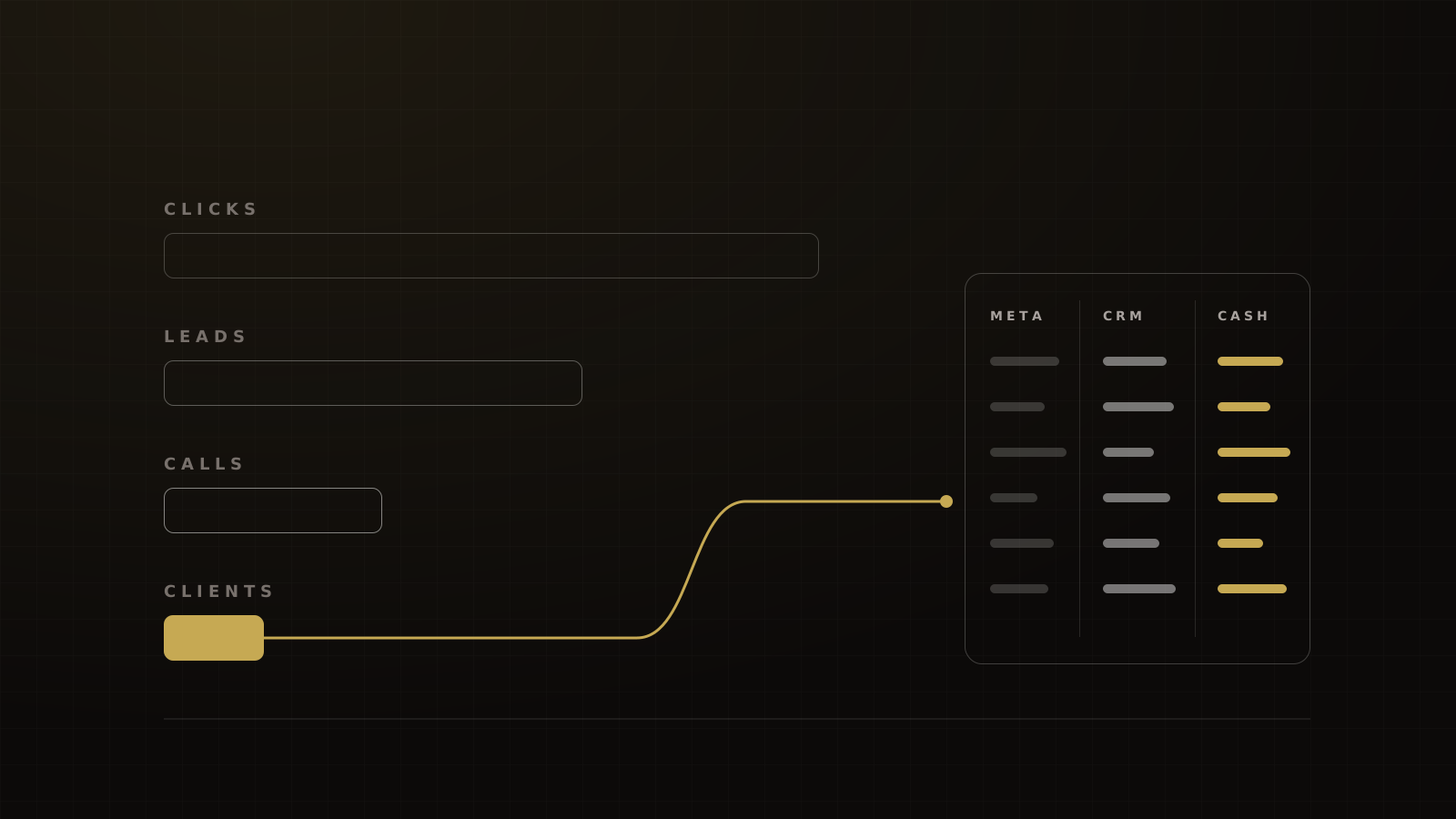
Then read the right number. On a working event ad, we typically see a cold link CTR of 1.8% to 2.5%. LocaliQ's 2026 average for Education and Instruction lead campaigns is 1.74%.[15] But there's a catch we see in every account: the more direct the ad, the lower the click rate. A direct ad pre-qualifies the clicker, so CTR alone can't pick a winner.
Cost per registration can. Our target for a free in-person event registration from Meta is $18 to $24. LocaliQ's 2026 lead-campaign averages are $26.31 for Education and Instruction and $14.59 for Arts and Entertainment.[15] Our Meta ads benchmarks break those figures down further.
Numbers to stop repeating
- "UGC gets several times the CTR of brand ads." We looked for the original study behind the multiplier that circulates in UGC roundups and couldn't find one. Use Meta's dated tests instead.
- "Video gets hundreds of percent more engagement." We found no Meta source for it.
- "Polished creative always wins." Not in Motion's data, where founder footage won budget more often than cinematic B-roll, and not in our accounts.[4]
If you want a second pair of eyes on your event creative before the next launch, book a strategy call.
Frequently asked questions
Sources
- 1.Mosh: creator partnership ads A/B test. Meta for Business, success story, 2025 (test 2025-06-01 to 2025-07-17).
- 2.FARM Rio: creator-led partnership video ads A/B test. Meta for Business, success story, 2025 (test 2025-10-02 to 2025-10-23).
- 3.New AI-powered tools to scale creator and brand partnerships. Meta for Business, 2025-12-11, updated 2026-01-30.
- 4.Creative Benchmarks 2026. Motion, 2026.
- 5.Six tips and best practices to drive better ROI outcomes. Nielsen, 2022-08.
- 6.Instagram Reels video ad specs. Meta Ads Guide, living doc, checked 2026-10-04.
- 7.How online reviews influence sales. Spiegel Research Center, Northwestern Medill, with PowerReviews, 2017-06.
- 8.Trends Report, Summer 2025: Networking. Freeman, 2025-07.
- 9.Future of Commerce Report 2025. Freeman, 2025-04.
- 10.Meta Andromeda: supercharging Advantage+ automation with the next-gen personalized ads retrieval engine. Meta Engineering, 2024-12-02.
- 11.How to promote a webinar: your pre-event strategy guide. Zoom, 2026-08-19.
- 12.Event Data Lab #05: no-show rates by ticket type and event size. PheedLoop, 2026-04-29.
- 13.How to create a tracking pixel with Meta. Eventbrite Help Center, undated, checked 2026-10-04.
- 14.Conversions API. Meta for Business, 2026-04-15.
- 15.Facebook advertising benchmarks. LocaliQ, 2026-09-23.
Written by
Marius BulaiCMO & Head of Paid Media
Marius runs all paid media strategy and execution at Victory. Before Victory he was Head of Analytics at Hyros, inside the data of some of the largest ad accounts in the world.
Part of the guide: Paid Ads for Coaches, Course Creators and Event Businesses: Meta, Creative and Attribution Tied to Cash