Hyros Review From an Agency That Runs It: Attribution for High-Ticket Funnels
An operator's Hyros review: when it's worth it, how it compares with Meta CAPI and GoHighLevel, the failure points we fix, and what it costs in 2026.
 Marius BulaiCMO & Head of Paid Media
Published 10 min read
On this page
Key takeaways
- Hyros is worth it when a sale is high-ticket and multi-step: ad, webinar, email, booked call, closer, payment plan. That's where Meta's pixel and a CRM's first and latest source can't connect the cash to the creative.
- It doesn't replace Meta's Conversions API or a clean CRM. It sits on top of both.
- It only tells the truth if the script is on every step (including embedded forms and iframes), each sale comes from one source, and you've tested the chain before you spend.
- Pricing on Hyros's own pages doesn't agree. One page starts at $230 a month, another at $69. Get a dated quote.[1][2]
- Reconcile every report to cash collected, net of refunds, not to platform ROAS.
Disclosure: Marius Bulai, who wrote this review, was Head of Analytics at Hyros before he joined Victory. We implement Hyros for clients. There are no affiliate or referral links in this article.
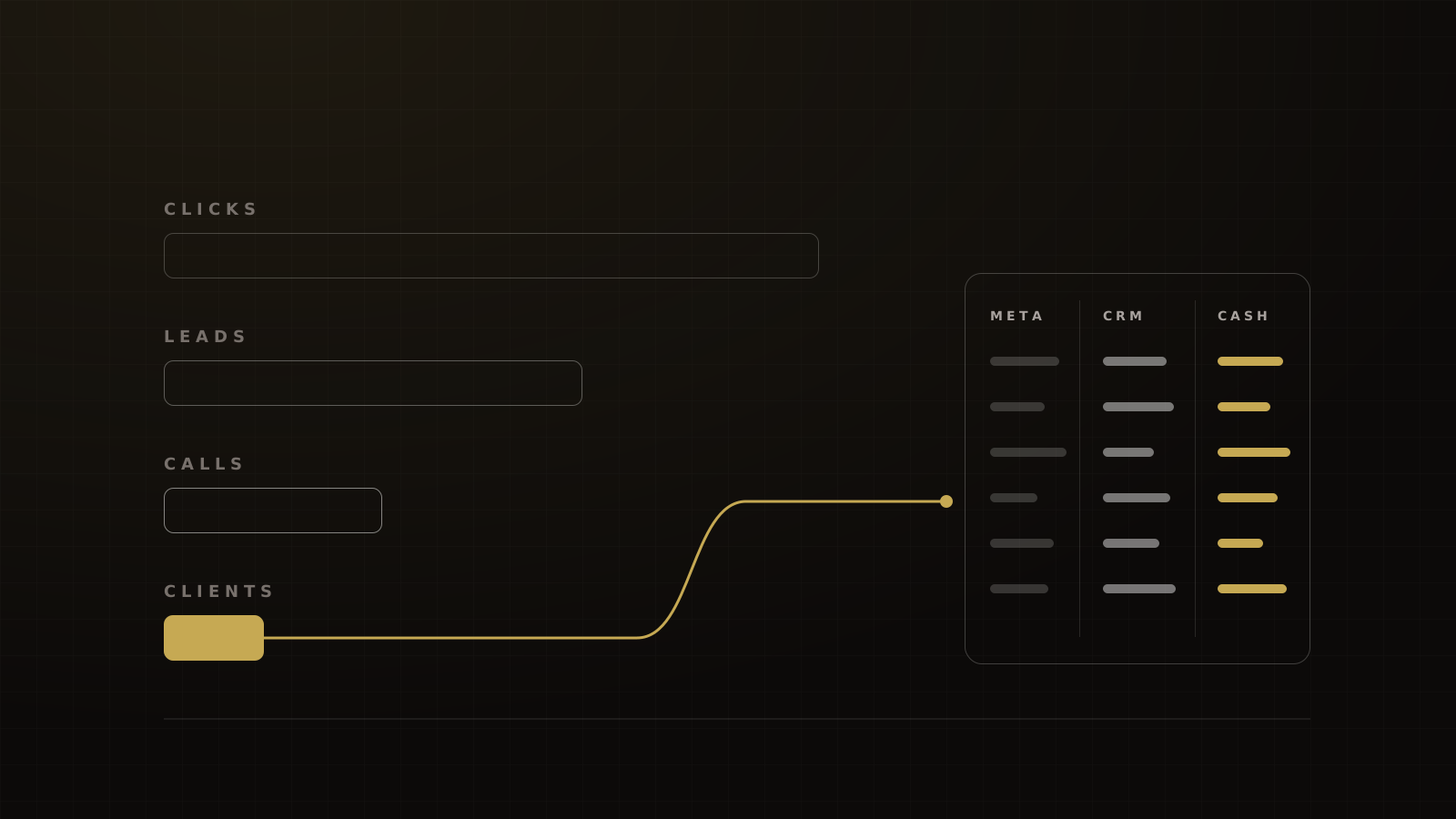
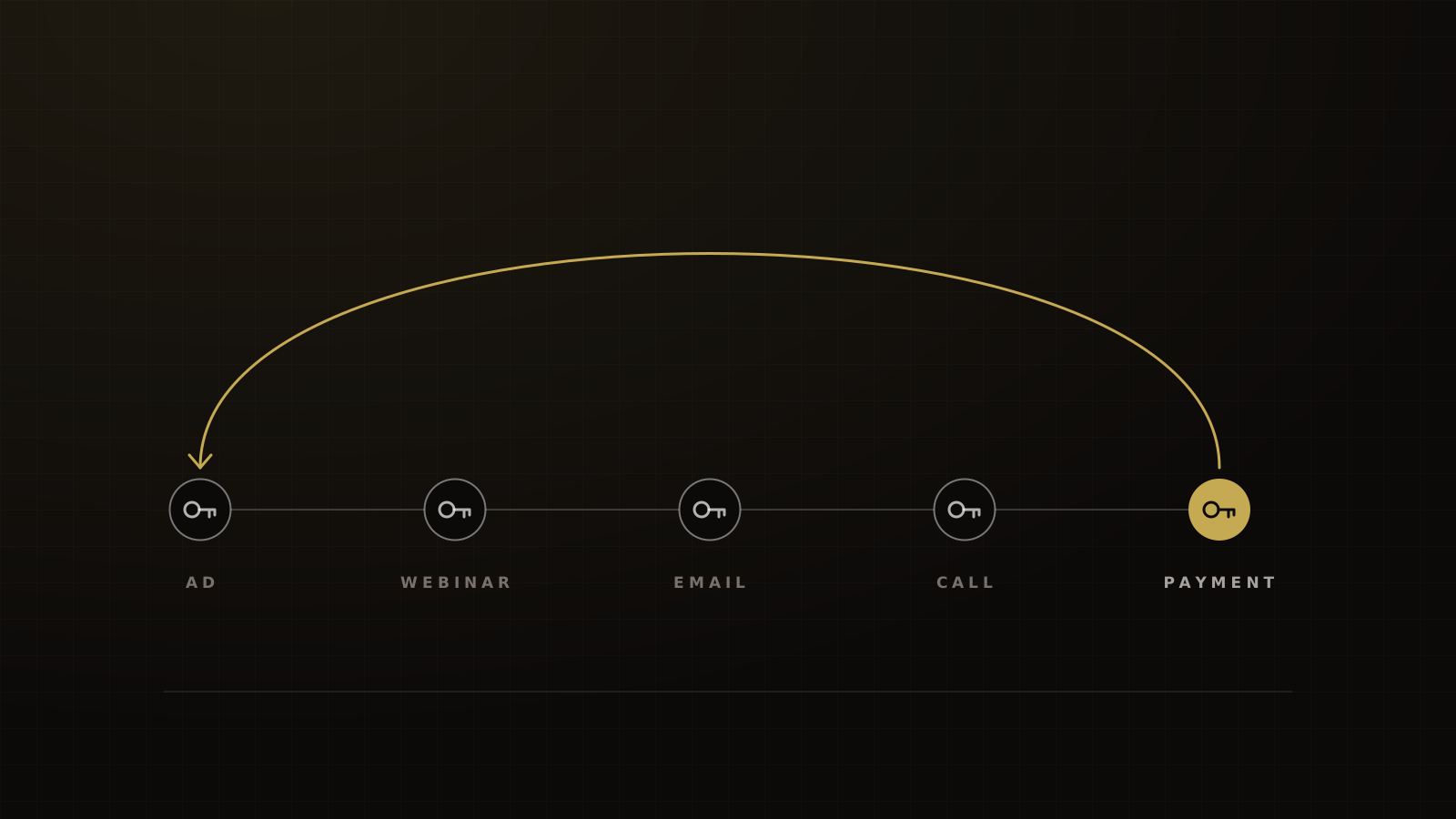
Hyros is worth it for high-ticket, multi-step funnels, and mostly a waste for simple ones. If your sale goes from an ad to a webinar to an email to a booked call to a closer to a payment plan, Meta's pixel and your CRM's source fields can't tell you which ad produced the cash. Hyros can, if it's installed properly.
It's not a replacement for Meta's Conversions API or a clean CRM. And it only tells the truth when three things hold: the script is on every step, every sale enters from one source, and you've tested the whole chain before you spend. Here's how we judge it, where it breaks, and how we fix it.
Verdict: when Hyros is worth it (and when it isn't)
Worth it when:
- the offer is $1,000 or more and most sales close on a call or after follow-up;
- buyers touch several channels before buying (ads, email, SMS, webinar replays);
- you run payment plans and need revenue tied to the original click;
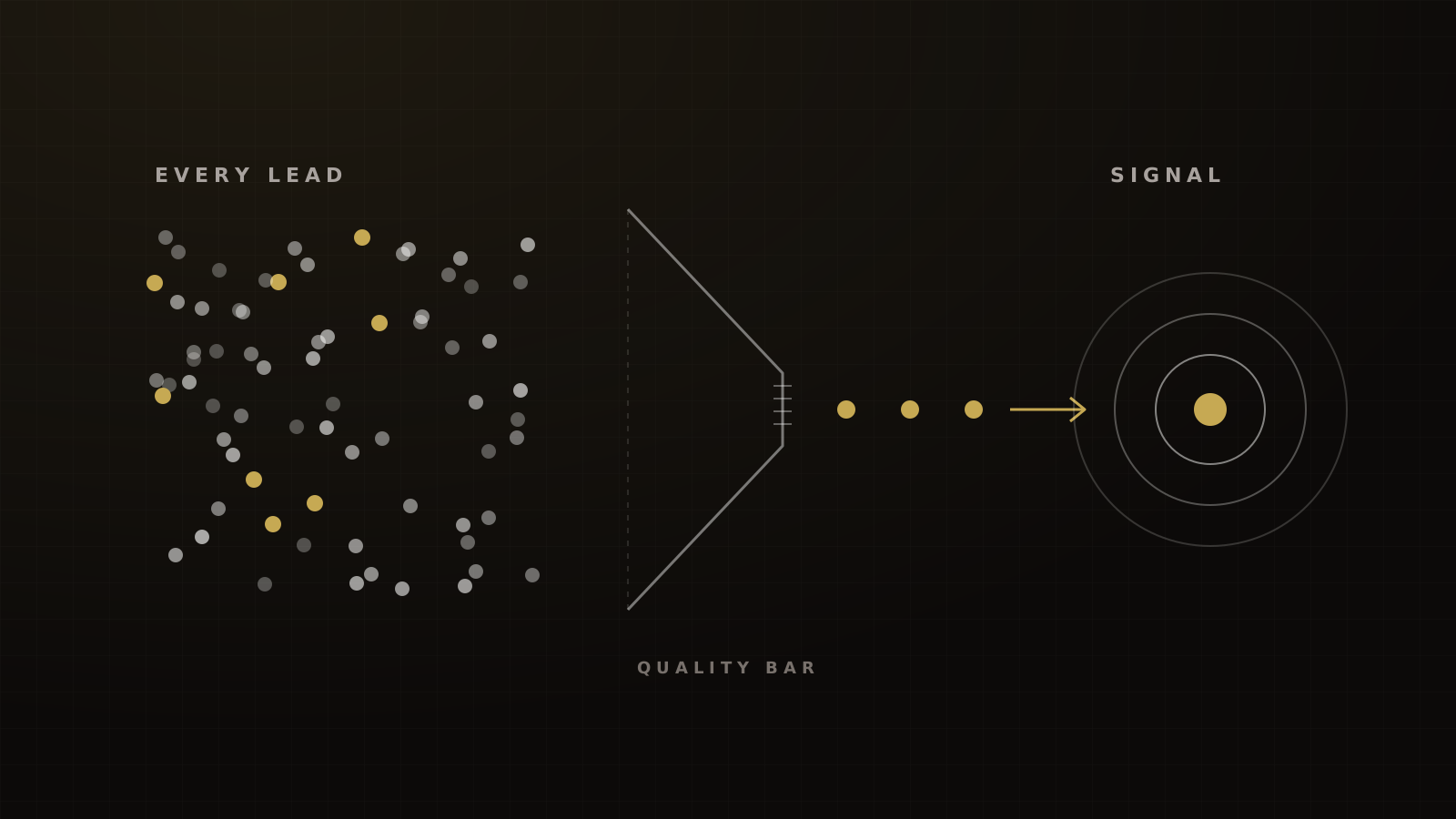
- you spend enough on ads that sending even a small share of it to the wrong campaigns costs more than the tool.
Not worth it when:
- you sell a single low-ticket product on a one-page checkout. Meta's Pixel plus Conversions API covers that.
- your CRM data is a mess. Hyros will faithfully report the mess.
- nobody will read the reports and change budgets because of them.
The timing problem is real in coaching. In our experience, 30–50% of a webinar's sales close after the live session, during the replay and follow-up window. That's our experience, not an industry benchmark. Those sales land days after the click, through channels Meta never sees.
What Hyros actually does
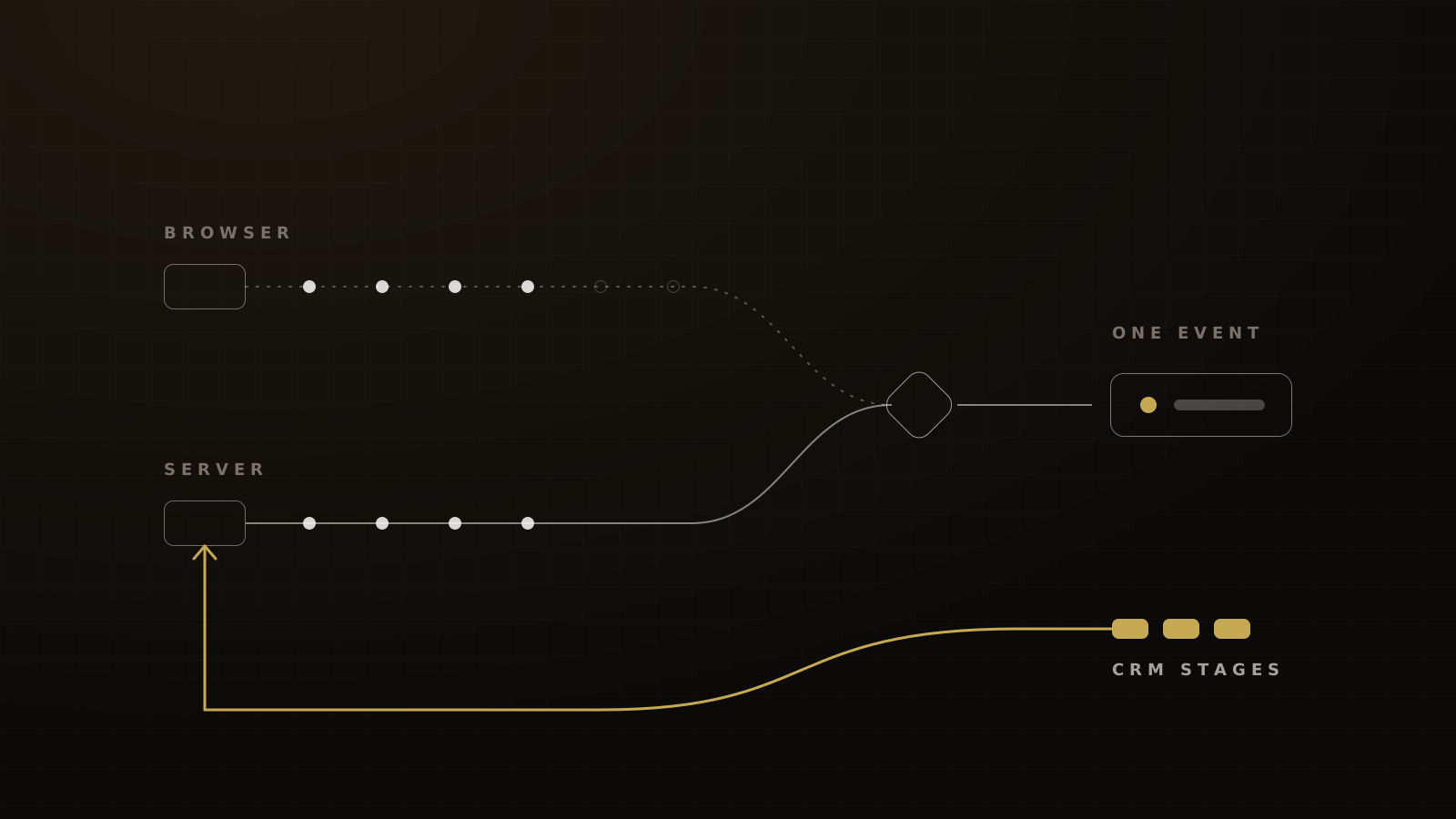
Hyros puts one universal script on every page you own. It identifies each visitor by email when they opt in, then stitches every later touch to that person: ad clicks, email clicks, calendar bookings, purchases. It pulls sales from your processor and scheduler integrations and can send conversions back to the ad platforms.
The idea is old. Claude Hopkins keyed every ad with a coupon or a traced return so he could judge it by cost per customer, not by replies. Hyros is the modern coupon code: a key on every touch, tied to the sale.
Hyros vs Meta Conversions API vs GoHighLevel attribution
These three tools answer different questions. Most accounts need at least two.
| Hyros | Meta Conversions API | GoHighLevel attribution | |
|---|---|---|---|
| Question it answers | Which ad, email or CTA produced this sale, including later payments? | Did Meta get the conversion, so it can optimize? | Where did this contact first and last come from? |
| How it identifies people | Email, across every page carrying the script | Hashed customer data matched to Meta accounts | HighLevel forms, calendars, chat and order forms |
| Blind spot | Pages and iframes without the script; duplicate sale sources | Only reports what you send; no multi-touch view | Third-party forms unless External Tracking detects them; only first and latest touch |
| Cost | Paid, by tracked revenue tier | Free to use; gateway hosting costs extra | Included in the plan |
Hyros pricing varies by page and tier. CAPI Gateway costs depend on your cloud or partner.
Hyros vs CAPI. CAPI is how Meta learns. Meta deduplicates Pixel and server events when event name and event ID match within 48 hours.[3] Meta says advertisers with a CAPI web setup saw a 17.8% lower cost per result on average, a figure with no disclosed method.[4] Whatever the lift, you still want CAPI running with Hyros, because Hyros reports truth to you while CAPI feeds truth to the algorithm. Pick one owner for each event Meta receives, or you'll double-count. Our Conversions API guide for GoHighLevel covers that split.
Hyros vs GoHighLevel. HighLevel records first and latest attribution, captured by its own forms and surveys, calendar bookings, chat widget and order forms. Third-party forms aren't captured unless External Tracking detects a supported form.[5] It's good enough to know a lead came from Facebook. It isn't built to tie a fourth installment back to the ad that started it.
The failure points we fix first
Sales came in, but they didn't show "the origin source, like, which creative," as Marius put it on one rebuild. That's the most common complaint we hear about Hyros, and it's almost always installation, not the tool.
Embedded forms and iframes
An iframe is a separate page. If your form, checkout or calendar is embedded from another domain, the script on your page can't see inside it. The fix is the universal script in the head of every page you own, plus the script inside the embedded page's own head. Hyros's install guides say to place it once per page.
For GoHighLevel calendars, Hyros's guide adds the contact's email and phone as parameters on the calendar's redirect URL and embeds the calendar on your own domain.[6] That works, but it puts personal data in URLs, where it lands in logs and analytics tools. Use hashed or server-side alternatives where you can.
Duplicate sales: checkout plus processor, pixel plus API
Hyros's Stripe guide warns against integrating both a checkout platform and the processor behind it, because the same sale arrives twice.[7] Its troubleshooting docs list duplicate orders from code firing twice, or from "both pixel and API sending data".[8]
The rule: one source per sale. Usually that's the processor, because that's where refunds and installments live too. Hyros dedupes leads by email, so a second opt-in isn't a disaster. A duplicated pixel on a purchase page is.
Rep-run checkouts and hosted payment pages
On a $1,000–$10,000 webinar offer, 40–60% of sales close through the "talk to a closer" door rather than pay-now checkout, in our experience. That's not an industry benchmark; it's what we see. When the closer sends a payment link or takes the card on a call, there's no ad click in that session at all.
Stripe-hosted payment pages can't carry the universal script, so Hyros says attribution there "may be difficult".[7] Hyros still matches the sale by email, but only if the email on the payment matches the email from the opt-in. Train closers to use the lead's original email, and never let a rep check out on their own card or account.
Test the chain before you spend
We pause ad spend until tracking is live and tested. The test has three steps:
- Run a 100%-discount order through every path: ad click, opt-in, booking, checkout. Check that Hyros shows the source. Watch the $0 setting: Hyros can ignore $0 subscription events, so a free test order may not appear if that toggle is on.[7]
- Run one small real payment, then refund it. It proves the processor connection and the refund sync.
- Filter the test orders out. Hyros lists test orders as a common reason revenue doesn't match.[8]
Reconcile to cash collected
Attribution tools disagree with your bank for predictable reasons. Know them before you trust a dashboard.
- Payment plans. A $6,000 program on six installments is $1,000 collected this month. Decide whether you report contracted or collected revenue, and never mix them.
- Refunds. A refund belongs to the original sale's cohort, not the month it was issued. Hyros lists unsynced refunds as a cause of mismatches.[8]
- Webhook timing. Stripe retries webhooks for up to three days, can send duplicates and doesn't guarantee order.[9] Daily totals won't tie out; monthly totals should.
- Attribution windows. Meta stopped returning 7-day-view and 28-day-view data through its Ads Insights API on January 12, 2026.[10] If platform ROAS dropped this year with no change in sales, check that before you check the ads.
We keep a three-column ledger for each monthly cohort: contracted, collected, and collected net of refunds and chargebacks. Our target is a dispute ratio under 0.5% on event sales with a next-day kickoff. Visa's US excessive-merchant line is 1.5% from April 2026, and acquirer portfolios get flagged at 0.5%.[11]
Then two decision rules. The front end is judged on whether it recovers spend: our target is 0.8–1.2x front-end ROAS, a target with no public benchmark. The account is judged on 30-day cash: we want at least 1.5x fully loaded acquisition cost back in the first 30 days before raising spend. Hormozi's stated real-life minimum for customer-financed acquisition is 2x; we treat 1.5x as our floor. Our article on the KPIs that matter for event and webinar funnels covers how we report them.
What Hyros costs in 2026
Hyros's own pages don't agree, so get a dated quote in writing.
- One pricing page shows $230 a month for up to $20,000 of tracked revenue, with higher tiers listed but not priced.[1]
- Another shows $69 a month for up to $5,000 of tracked monthly revenue.[2]
- Hyros's explainer, dated "as of April 2026", says Organic starts at $49 a month and Business at $230 a month on an annual plan.[12]
- A competitor reports tiers up to about $1,499 a month at around $750,000 of tracked revenue, labelled reported, not official.[13]
Count it in acquisition cost. Hormozi's rule is to count CAC fully: ads, media buying, creative and software. Hyros is its own line. By our list-price estimate, a 10-person agency's core software stack runs roughly $900–$1,400 a month before usage, and that's excluding Hyros. Ask about annual terms, what happens when tracked revenue crosses a tier, and the satisfaction guarantee on the pricing page.[1]
When you're ready to set the budget that Hyros will measure, the Meta ads budget calculator works backward from what a client is worth.
What other operators say
Hyros holds a 4.9 TrustScore on Trustpilot from 701 reviews.[14] Reviews there are self-selected, so that's a satisfaction signal, not an accuracy measure.
The most candid independent review we found, from an operator with no affiliation, says tracking "still isn't 100% accurate (no attribution tool is)" and warns about false confidence.[15] An affiliate review lists demo-gated pricing and cost against alternatives as drawbacks.[16]
Be careful with uplift claims. Hyros publishes an example where Facebook showed 42 booked calls and Hyros tracked 116, with no method or dates.[17] That shows what under-reporting can look like in one account. It doesn't tell you what Hyros will find in yours.
How we run it at Victory
Not sure your tracking would pass the test order? Get a funnel audit and we'll trace a sale from click to cash with you.
Frequently asked questions
Sources
- 1.Pricing: AI tracking. Hyros, living page, checked 2026-10-04.
- 2.Pricing. Hyros, living page, checked 2026-10-04.
- 3.Handling duplicate Pixel and Conversions API events. Meta for Developers, living doc, checked 2026-10-04.
- 4.Conversions API (product page). Meta, 2026-04-15.
- 5.Understanding attribution source (ad reporting). HighLevel Support Portal, 2026-08-26 (modified).
- 6.Install guide: GoHighLevel scheduler. Hyros Docs, synced 2026-01-03.
- 7.Install guide: Stripe. Hyros Docs, synced 2026-01-03.
- 8.Troubleshooting: common issues. Hyros Docs, undated, checked 2026-10-04.
- 9.Receive Stripe events in your webhook endpoint. Stripe Docs, living doc, checked 2026-10-04.
- 10.Ads Insights API metric availability updates. Meta for Developers blog, 2025-10-16.
- 11.Visa Acquirer Monitoring Program (VAMP) fact sheet. Visa, 2025 (thresholds from 2025-06-01; 150 bps from 2026-04-01).
- 12.What is Hyros?. Hyros, 2026 (pricing as of April 2026).
- 13.Hyros pricing. mbuzz (a competing attribution vendor), 2026-08-10 (updated 2026-09-08).
- 14.Hyros reviews. Trustpilot, snapshot 2026-10-04.
- 15.Hyros review. Profitable Ads (Zachary J. Radford), 2026-05-08.
- 16.Hyros. Head West Guide (affiliate), 2025-04-30 (updated).
- 17.Info product tracking. Hyros, 2026 (exact date not shown).
Written by
Marius BulaiCMO & Head of Paid Media
Marius runs all paid media strategy and execution at Victory. Before Victory he was Head of Analytics at Hyros, inside the data of some of the largest ad accounts in the world.
Part of the guide: Paid Ads for Coaches, Course Creators and Event Businesses: Meta, Creative and Attribution Tied to Cash