Webinars vs Virtual Summits: Why We Run Masterclasses Before One Big Event
A summit buys one concentrated pitch after a big spend. A webinar every week or two buys dozens of pitch reps a year. When to run each, and in what order.
 Ray GillespieCo-Founder & COO
Published 8 min read
On this page
Key takeaways
- A summit is one concentrated launch. A webinar every week or two is about 25 to 50 live tests of the same offer a year.
- Each webinar is a pitch rep: a fresh read on the offer, the price and the objections. A summit gives you one read after the money is spent.
- Our best weekly program buys registrations at $4 to $5 and has run at 4x to 7x ROAS week over week, with ads only in the two days before each session.
- Let the small sessions choose the offer that runs at the big event.
- Run a summit when you have a proven offer, a big warm list, a strong lineup and a paid tier or sponsors. Free multi-day turnout falls fast without them.[1]
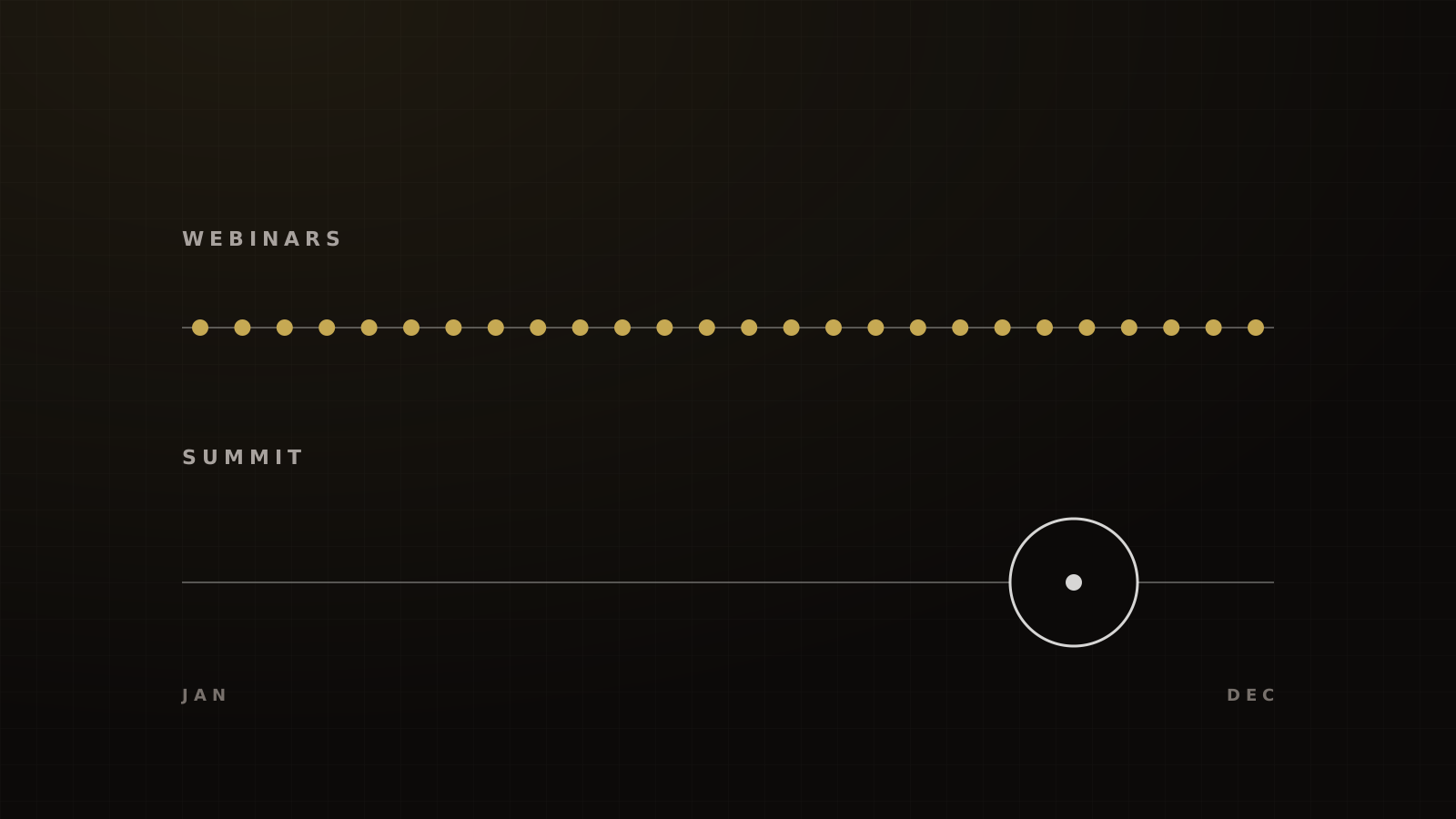
Run the webinars first. A summit buys you one big pitch after a heavy spend to fill the room. A webinar every week or two gives you dozens of pitches a year, steady data, steady income, and the audience a big event will need later.
That doesn't make summits a bad idea. It makes them a second step. Use small sessions to find the offer that converts, then take that offer to the big room.
The rep math: one launch vs about 25
Be fair to summits first. A summit isn't literally one pitch. Hosts sell an all-access pass at registration, push it in daily emails, and pitch on stage. The honest contrast is one concentrated launch against repeated live tests of the same core offer.
The difference is in how much you learn and how fast.
| One summit a year | Webinar every two weeks | |
|---|---|---|
| Live pitches of the main offer | One launch window | About 25 |
| Reads on the offer, price and objections | One, after the spend | One every two weeks |
| When cash arrives | In one spike | Every session |
| If the offer misses | You find out after the spend | You fix it next session |
| Audience built for later | One big list, once | A list that grows weekly |
Pitch counts are calendar arithmetic, not a study.
On a client call earlier this year, Ray described the summit problem this way: spend heavily on one long day to "get one rep in to actually pitch the thing, we're just not working that muscle enough."
Every rep is scored against a bar. On a $1,000 to $10,000 offer, our rule of thumb is that 6% to 10% of live attendees buying is good and 1% to 3% is failing. There's no public benchmark for this. A summit tells you which side of that line you're on once. A biweekly webinar tells you 25 times, and lets you change one thing between each.
Public summit numbers show how thin one data point is. A 2016 first summit drew 2,854 registrations and sold 135 all-access passes, about 4.7%.[2] A free three-day creator summit in July 2026 sold VIP to 621 of 8,018 registrants, 7.7%, against the host's usual 6% or so.[3] Both are self-reported single events. That's the point: one launch, one number, and a year to wait for the next.
Jason Fladlien makes the same case from the other side. Many of his early webinars were rough and still sold, because the offer was right, and he improved by running, watching and rerunning. A webinar is far easier to fix and relaunch than a launch sequence.
Frequency is normal, too. B2B teams on Goldcast averaged 4.7 webinars a month in 2025, about 56 a year, up from 3.9 the year before.[4] That doesn't prove cadence causes results. It does show that running often is ordinary practice, not a brand risk.
What a weekly program looks like in practice
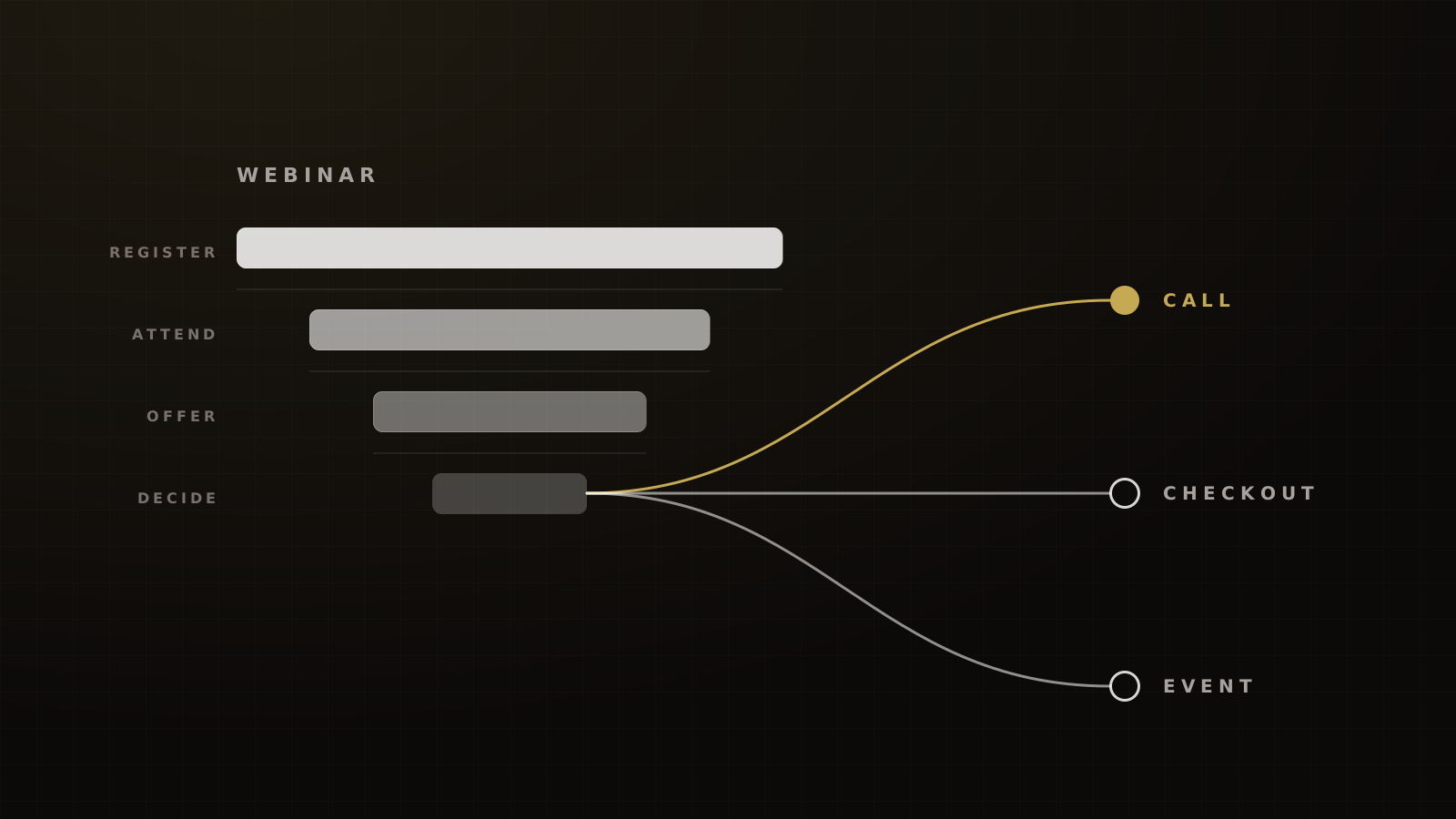
Our best webinar program is a single-date evening webinar that runs every week. Ads run only in the two days before each session. On that program, registrations now cost $4 to $5, our lowest ever, and it has run at 4x to 7x ROAS week over week.
For comparison, the public Meta yardstick for an education lead is a $28.22 median cost per lead.[5] That's a lead-form figure, not a webinar registration, but it shows what a tuned program is up against.
Three things make a weekly program work:
- A short paid window. Registrations cluster late anyway. Livestorm found 49.6% of registrations happen in the final 7 days and 15.3% on the day itself.[6] Running ads two weeks out raises cost per registration and lowers show rate in our experience.
- A single date each week. Each session is its own event, with its own registration and its own pitch. It is not a multi-part series, which is a show-rate trap we break down in why multi-part webinar series kill show rate.
- Small rooms are fine. Goldcast's 2025 data shows Monday webinars averaging 106 registrants and 47.2% attendance, against 486 registrants and 38.7% on Thursdays.[4] Smaller sessions tend to post higher rates. That's a correlation, not a law, but it means you don't need a huge room to get a clean read.
For a free single-date webinar on cold traffic, we plan on 25% to 35% of registrants attending live. Demio's 2023 data puts hosts under $1M in revenue at 22%.[7] For how to structure the pitch you'll be repeating, see our webinar pitch structure.
Let small sessions pick the summit offer
If you already have a summit on the calendar, use the webinars to decide what it sells.
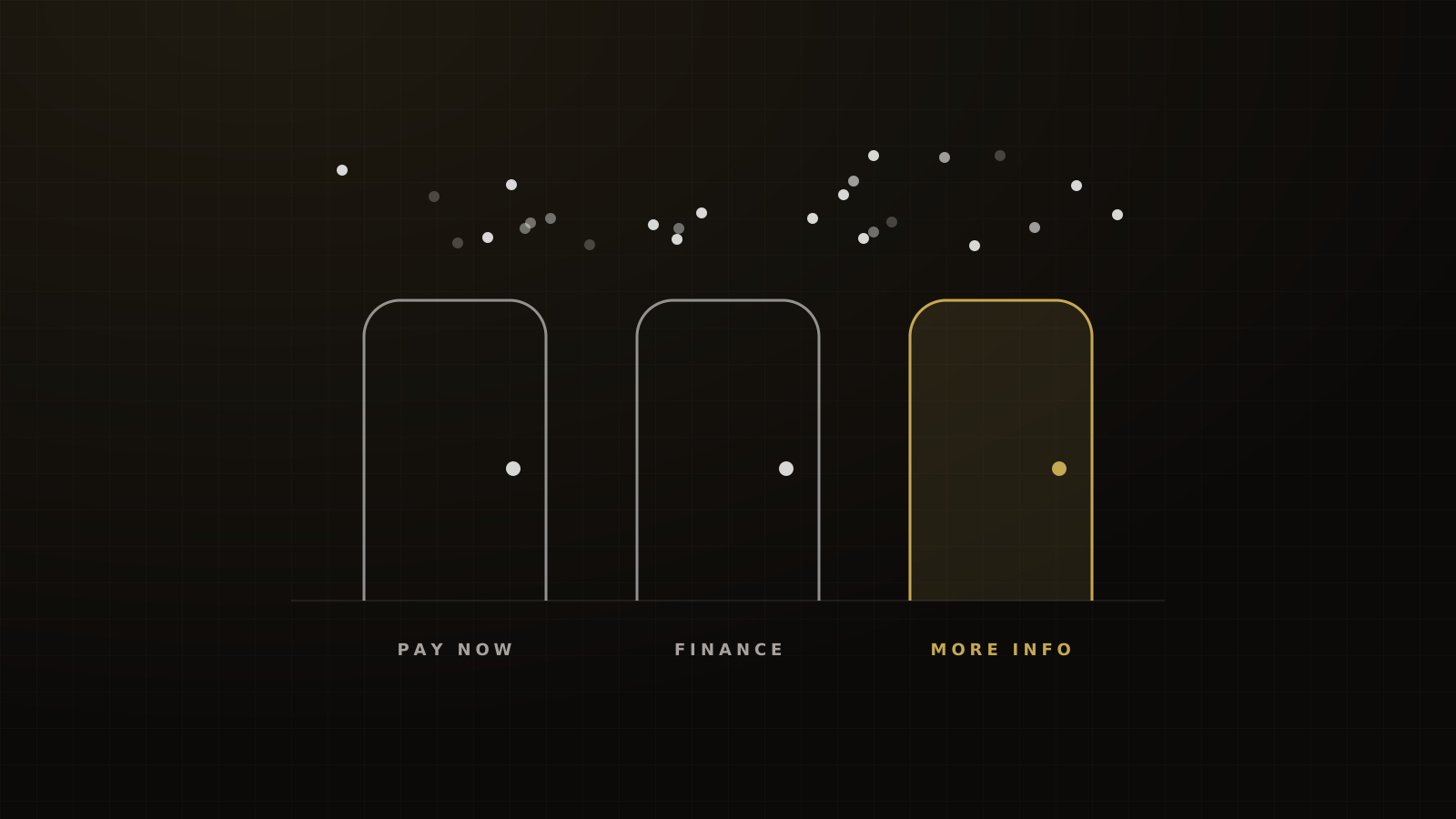
Run two candidate offers, or two versions of one offer, across the small sessions. Change one thing at a time: the price, the bonus stack, the payment plan, the "more info" path. Whichever converts better in the small rooms is the one that runs at the big event. The summit then becomes a scale-up of a proven pitch, not a test of an unproven one.
This also changes how you read the summit. If the offer converted at 8% of live attendees across the webinars and converts at 3% at the summit, the problem is the room or the run of show, not the offer. Without the small sessions, you can't tell which it was. Our webinar conversion benchmarks explain how to read each rate.
When a summit is worth it
A summit is worth running when you have the firepower to fill it and keep people there. We look for four things:
- A proven offer. It has already converted in smaller sessions.
- A large warm list. Cold traffic to a free multi-day event thins out fast.
- A lineup people will show up for. Each day needs its own reason to attend.
- A paid tier or sponsors to carry the cost of filling the room.
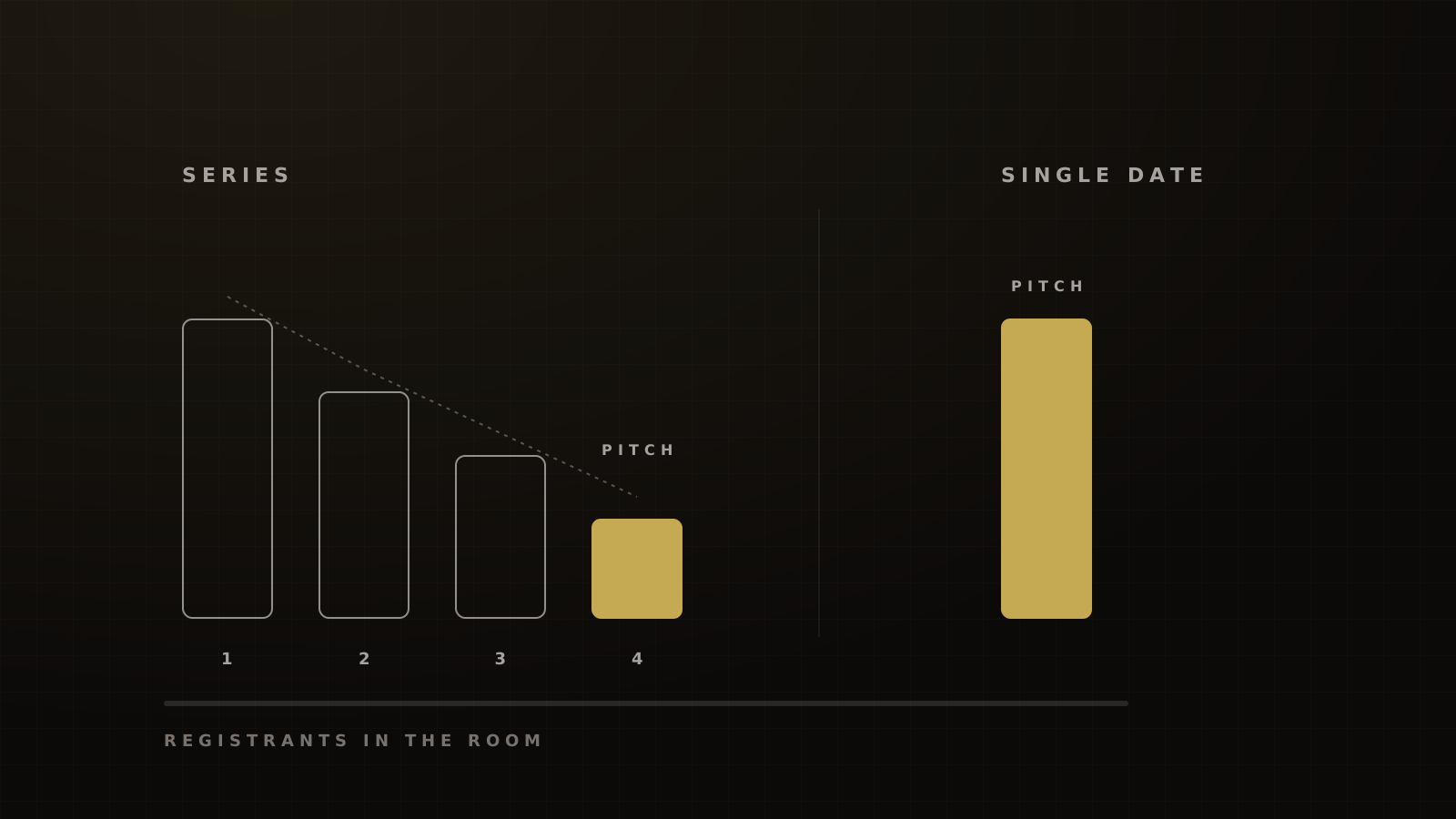
The attendance problem is real. A free three-day virtual symposium saw daily turnout of 58%, then 45%, then 31% of registrants.[1] A two-day academic conference drew 277 people on day one and 199 on day two.[8] Our in-person numbers point the same way: a free one-day event shows 35% to 45% of registrants in our experience, while a free three-day event gets 10% to 15% of unique registrants to attend even one day. No one publishes a multi-day curve for free cold-traffic events.
Length is part of it. Bizzabo's mature event organizers average 11.8 hours of content across 7.5 sessions per event.[9] Our house rule for a free one-day event is about five hours of content, maximum.
Money changes it. PheedLoop's 2026 data on more than 1,070 in-person events found a median no-show of about 28% for free events and about 17% for paid.[10] Our paid VIP tickets in the $100 to $297 range show 85% to 90%, and our house standard is that the VIP tier recovers its own ad spend, net of fees and refunds. Sponsors can carry a summit too: one six-day niche-health summit reported $13,000 in sponsor money on top of 469 sales of $49 replay access.[11]
Ignore cost-per-registration comparisons across summit types. The July 2026 creator summit above bought Meta registrations at $1.65 each,[3] cheaper than our webinar program, but that's a low-ticket creator audience with affiliate promotion. It's a different economy, not a better ad account.
Alex Hormozi's three-day virtual summit pitches at the end of day two and again on day three, and his rule is that the more time people spend with you, the more they spend. His own book launch, as we reconstructed it, ran a long pre-launch to drive registrations, a multi-day live event that gave away value before the offer, and a backend community for buyers. Both assume an audience that turns up. That's the part most people don't have yet.
Before any big event, we also run the money test. Our target is at least 1.5x 30-day cash on fully loaded acquisition cost before raising spend on a funnel. If the webinars can't clear that, a summit won't fix it.
Paid masterclass vs free webinar
Charging for the session raises commitment and cuts volume. On cold traffic we'd rather keep the volume and add the commitment afterwards.
So we keep registration free and offer a low-priced paid upgrade right after sign-up: a VIP seat, replay access or a workbook. On the funnels we run, 5% to 12% of free registrants take it. The summit world shows the same pattern at a larger scale: VIP and all-access take rates of about 5% to 8% in the summit P&Ls above. All of those are self-reported results, not typical ones. The FTC warns consumers that glowing success stories in coaching offers can be misleading,[12] so treat any single P&L, including these, as an illustration.
For the in-person version of the free-plus-paid model, see our event marketing and show rates guide.
For the full build, start with our webinar funnel playbook. If you're weighing a summit against a webinar program, book a strategy call and we'll run the numbers with you.
Frequently asked questions
Sources
- 1.Ten Steps to Organize a Virtual Scientific Symposium. Global Challenges (via PMC), 2022-06-26.
- 2.Case study: my first virtual summit. Jon Schumacher, 2016-04-11.
- 3.Free virtual summit revenue numbers. Destini Copp (Creator's MBA), 2026-07-28.
- 4.B2B Webinar Benchmark Report 2026. Goldcast, 2026.
- 5.Facebook Ads Benchmarks 2025. WordStream by LocaliQ, 2025, modified 2026-09-14.
- 6.Webinar Benchmark Report 2026. Livestorm, 2026-09-01.
- 7.Webinar Statistics 2024. Banzai (Demio), 2024-01.
- 8.Organizing a two-day online academic conference (arXiv 2305.09403). arXiv (via ar5iv), 2023.
- 9.Event Program Benchmarks 2026. Bizzabo, 2026-03-05.
- 10.Event Data Lab #05: no-show rates by ticket type and event size. PheedLoop, 2026-04-29.
- 11.How the Ultimate CIRS Summit drove 1,600 registrations and $35,000 in revenue. HeySummit, 2025-01-15, updated 2026-09.
- 12.How to spot and avoid business coaching scams. FTC Consumer Advice, 2026-04-24.
Written by
Ray GillespieCo-Founder & COO
Ray runs day-to-day operations across every Victory engagement, building the systems, automations and AI-powered workflows that hold the machine together. He has overseen operations behind more than $120M in revenue.
Part of the guide: The Webinar Funnel Playbook: Live, Automated and Hybrid Webinars That Sell (2026)