1,000 Leads, 16 Sales: Why Lead Gen Isn't Closing and How to Fix the Intake Bottleneck
A service business got 1,000+ qualified leads and closed 16. Why leads pile up uncalled, what intake audits show, and the fix we run before scaling ads.
 Devin AlexanderCo-Founder & CEO
Published 9 min read
On this page
Key takeaways
- When leads pile up and sales don't, the bottleneck is usually intake, not lead quality. Nobody calls fast enough or often enough, and the calendar can't absorb the volume.
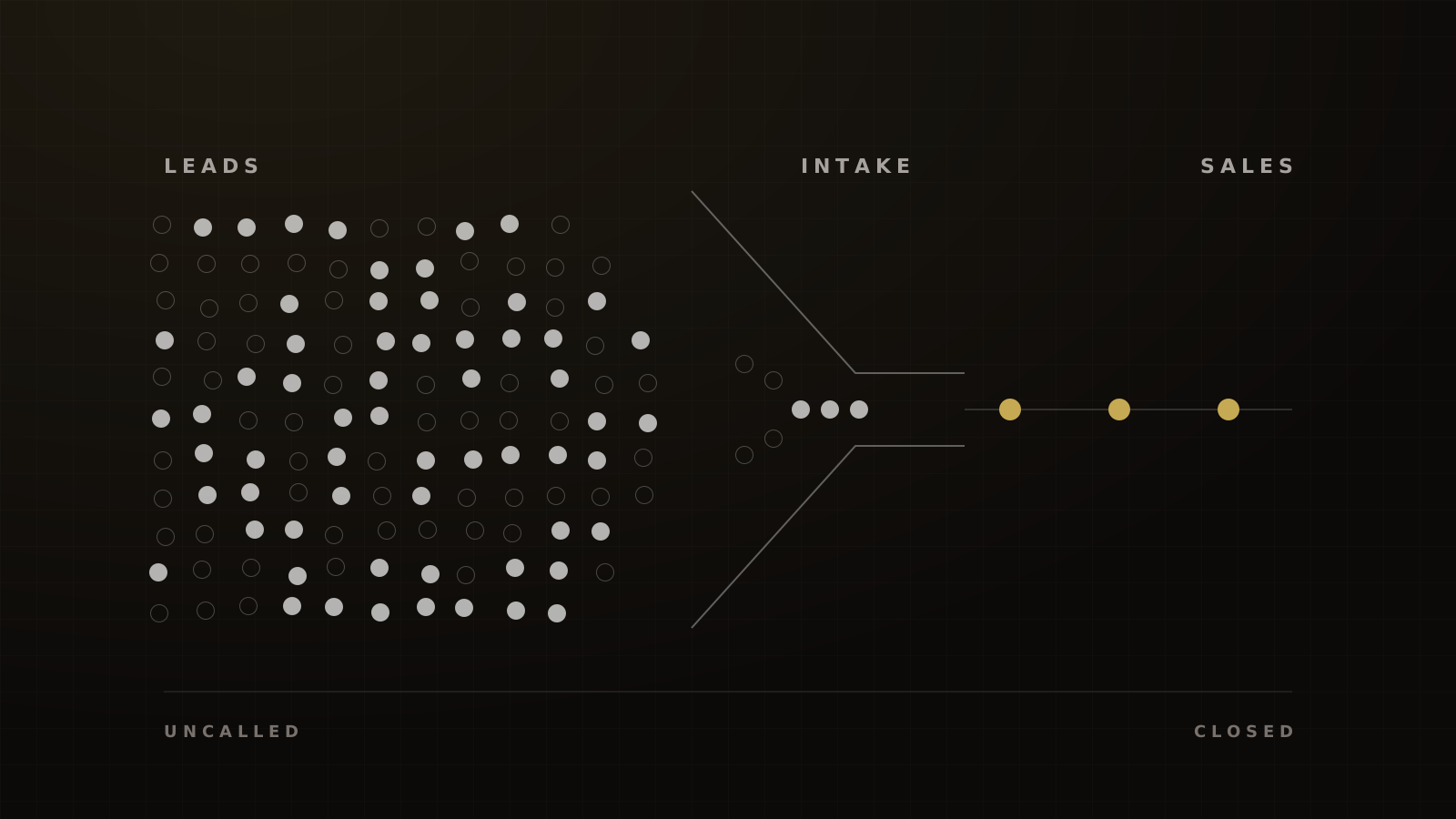
- One service business we worked with got more than 1,000 warm, qualified leads and closed about 16. That's under 2%. The ads were working. The follow-up wasn't.
- This is common. A 2016 audit of 4,723 companies found 77% of leads were never called.[1]
- The fix: real-time alerts, a first dial inside the hour, six attempts in two weeks, booking on the form, and a daily call-coverage report.
- Scale lead volume only as fast as intake and closing capacity grow. Lead gen and closing are two engines.
When leads pile up but sales don't, look at intake before you touch the ads. Often the leads are fine. Nobody called them fast enough, nobody called them often enough, and the closers' calendars couldn't absorb the volume.
So fix intake first. Call every lead within the hour, make at least six attempts, book at the point of intent, and measure call coverage every day. Then raise lead volume only as fast as your closing capacity grows.
Here are two cases where it went wrong, what the industry data says, and the fix we run.
The case: 1,000 qualified leads, 16 sales
A service business selling a high-ticket offer came to us for leads. We generated more than 1,000 warm, qualified, relevant leads for it. The business closed about 16 of them.
That's a close rate under 2% on leads that matched the profile the client asked for. On paper, the campaign worked. In the bank account, it didn't.
When results look like that, the instinct is to blame lead quality and ask for "better leads". That's almost always the wrong first move. Better leads poured into the same intake process close at the same rate.
The ads can be as great as possible, but if the rest of the system is flawed, the outcome will be flawed.
The problem sat between the form and the sale: how fast leads were called, how many times, by whom, and whether there were enough open slots to book them. The business ended up hiring a new sales team.
We see the same pattern elsewhere. On one account, hundreds of leads were never called because the only closer worked booked appointments and nobody owned the rest. On another, a commission-only rep had hundreds of leads at a good price point and never dialed them.
The second case: a referral-only firm turns on ads
The second case is a law firm that had grown entirely on referrals. Its intake team was built for a steady trickle of warm introductions. Then it turned on paid ads.
Intake drowned. Calls stacked up, forms sat unanswered, and the leads it was paying for went cold before anyone spoke to them. The firm's problem wasn't the ads. It had never needed an intake system that could handle volume.
Before we ran a pilot, the firm brought in a third-party intake partner paid per signed retainer. Ray's rule on that call was simple: "as the intake side improves their systems and capacity, then we can contribute more on the lead gen side."
Law firms are a clear example of how common this is:
- In the Clio 2024 Legal Trends Report's secret-shopper test of 500 US firms, 40% answered the phone and 33% answered email. 48% neither answered nor called back.[2]
- Hennessey Digital sent web inquiries to 1,333 US law firms in early 2025. 26% didn't respond within seven days.[3]
- A 2025 audit of 1,200 business-hours calls to small and mid-sized firms found 34.8% went completely unanswered.[4]
- After hours it's worse: 40.9% of 1,000 personal-injury firms sampled in February 2026 gave no live answer.[5]
This isn't rare: most businesses never call their leads
Every audit we can find, across a decade and several industries, says the same thing. A large share of leads never get a call.
| Year | Source | Sample | Finding |
|---|---|---|---|
| 2014 | InsideSales/XANT[6] | 9,538 companies | 47% never responded to a web lead; only 22% ever phoned |
| 2016 | InsideSales[1] | 4,723 companies | 77.17% of leads never called; 50% got no personalized response |
| 2017 | Drift[7] | 433 B2B SaaS companies | 55% didn't respond within five business days |
| 2024 | RevenueHero[8] | 1,000 B2B websites | 635 never replied to a demo request |
| 2025 | CallRail[9] | 1.1M conversations | 32% of healthcare and 28% of legal calls missed |
| 2026 | Denim Marketing[10] | 50 home builders | Only 58% ever phoned the inquirer |
Each audit uses its own method and sample. Compare the direction, not the exact values.
The home-builder result matters for high-ticket sellers. Those are buyers about to spend more than almost anyone else in this article, and 42% of builders in that mystery shop never picked up the phone.[10]
Why an uncalled lead dies fast
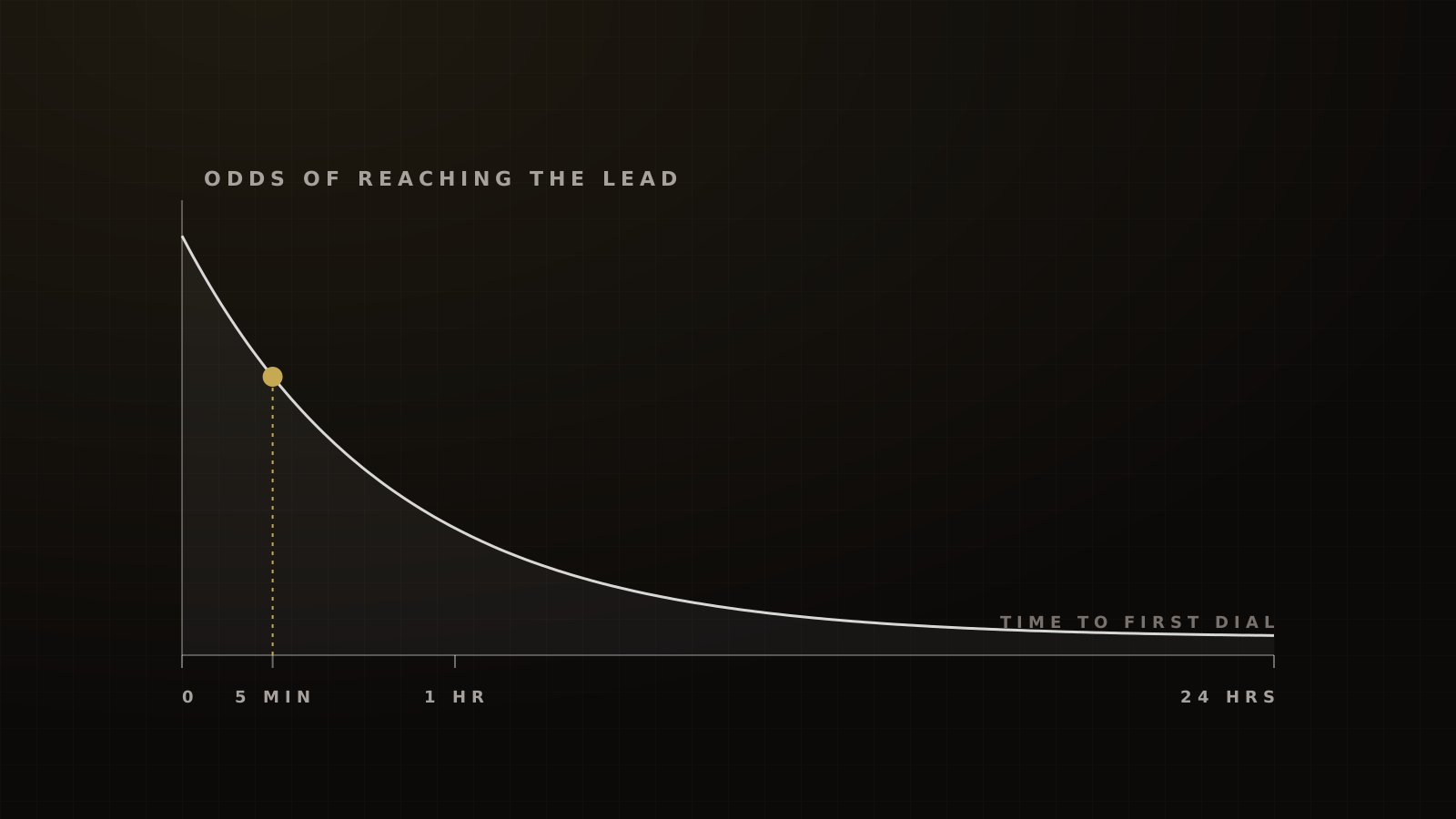
Harvard Business Review's 2011 analysis of 1.25 million leads found firms that tried to reach a lead within an hour were nearly 7 times as likely to qualify it as firms that waited an hour longer, and more than 60 times as likely as firms that waited 24 hours or more.[11] That measured qualification, not closed sales, and it's 15 years old. The direction hasn't changed.
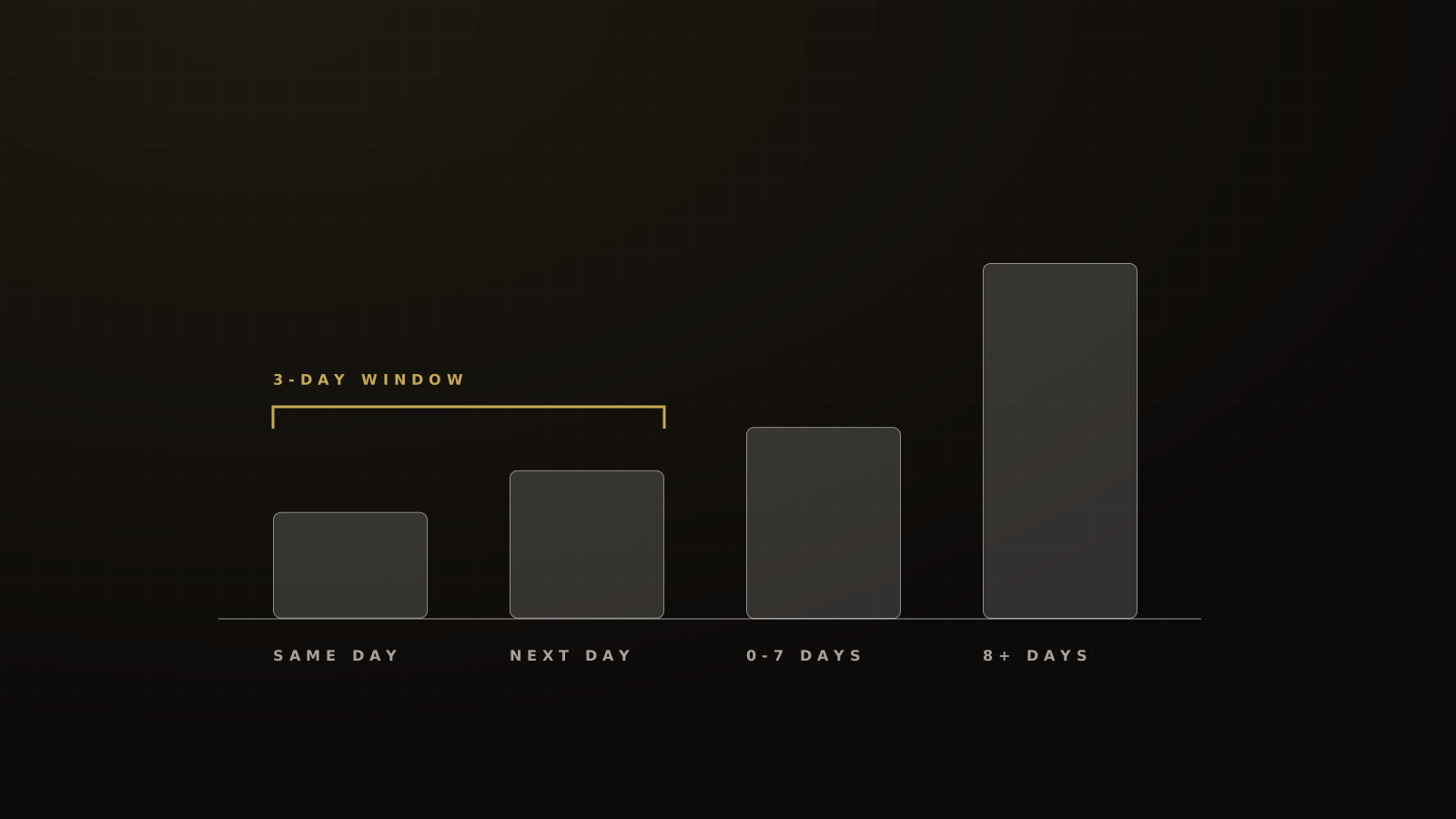
Persistence matters as much as speed. Velocify found 93% of converted leads were reached by the sixth call attempt, yet half of leads never got a second call.[12] Cognism's 2025 cold-calling data shows the returns flatten: 93% of conversations happened by attempt three and 98.6% by attempt five.[13] That's cold B2B outbound, not inbound leads, but it shows where the extra dials stop paying.
One 2026 vendor dataset of 939 B2B companies reported a 32% close rate when the first response came within 5 minutes, against 12% after 24 hours.[14] It isn't adjusted for lead quality, so treat it as an association, not proof.
Two engines: lead gen and closing capacity
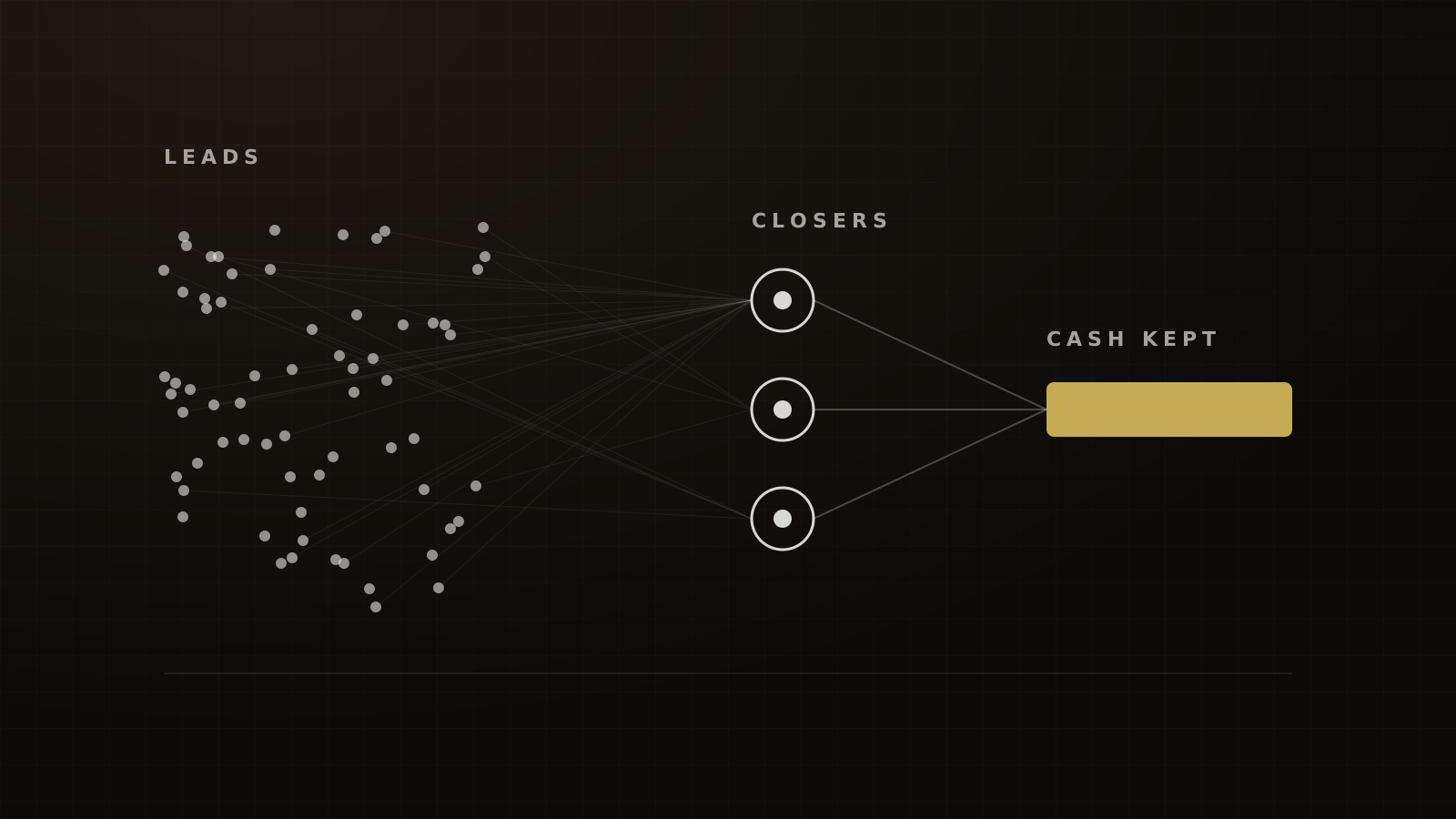
Here's how we think about it. A business runs on two engines. One generates leads. The other turns them into cash: intake, setting, closing and follow-up. Most founders only ever tune the first.
Alex Hormozi's lead stages make the diagnosis sharper. He splits leads into uncontacted, contacted, engaged, qualified and sold. If engaged leads don't have the problem or the money, he calls it an advertising problem. If they qualify and still don't buy, it's a sales problem.
An uncalled lead is neither. It's stuck at stage one. You can't judge lead quality on leads nobody reached, which is why "the leads are bad" is so often wrong.
Closing capacity is a hard number, so size it before you set the ad budget. In our experience one full-time closer holds 4 to 6 high-ticket calls a day, and we cap closer calendars at 75% to 80% of available slots so there's time left for follow-up.
Run the math once (an illustration, not a client result). One closer at 5 calls a day, five days a week, has 25 call slots. At an 80% cap, that's 20 booked calls a week. If 250 leads arrive that week, the calendar can hold 8% of them. The rest wait, go cold, or never get called.
That's the ceiling that produced 16 sales from 1,000 leads. Our sales team capacity calculator runs the same math with your own inputs.
The intake fix, step by step
Framework
The intake fix we install before scaling leads
- Alert in real time. Every new lead triggers an instant text to the rep on shift, with the contact's details. Nobody waits for a CRM refresh or a morning list.
- Dial inside the hour. Our target is a median time to first dial under one hour during staffed hours, and 100% of leads dialed within 24 hours.
- Make six attempts. At least six call attempts on every unconverted new lead within its first two weeks, as an automated task sequence, not a reminder in someone's head.
- Book at the point of intent. Put the calendar on the form or the thank-you page, so the lead books while they still care.
- Cover the hours leads arrive. Staff evenings and weekends, or route them to an intake partner. Unanswered after-hours calls are paid leads lost.
- Report call coverage daily. For every lead: submitted, assigned, attempted, reached, booked, attended, offered, sold, each with a timestamp.
- Scale spend only when coverage holds. If more than about 20% of leads are still uncalled after 24 hours while calendars sit at 75% to 80%, add intake before you add leads.
Victory's operating rules. Lead-stage diagnosis credited to Alex Hormozi.
Booking on the form is worth the setup. Chili Piper's 2025 data on nearly 4 million mostly B2B form submissions found 66.7% of qualified submissions booked a meeting when scheduling sat on the form.[15]
Coverage hours matter more than most teams think. ServiceTitan's 2026 data shows 14.1% of June HVAC calls arrived outside business hours.[16] That's a trade business, but the lesson carries: leads arrive when buyers are free, not when your team is.
The daily coverage report is the step almost nobody runs. Most CRMs will show you closed deals. Very few teams can say, lead by lead, how long each one waited and how many times it was dialed. That's where the leak hides.
As Acquisition.com's $100M Scaling Roadmap puts it: "Pick the biggest problem, fix it well, then move on to the next one." When leads go uncalled, intake is the biggest problem.
Numbers to stop repeating
Some follow-up statistics travel without a source. Don't build a sales process on these:
- "80% of sales happen on the 5th to 12th contact." Sales & Marketing Executives International traced it to a 1942 survey by one chapter, with fewer than 40 respondents.[17]
- "391% more conversions if you call within a minute." It comes from Velocify's 2012 report, which never says what the lift is measured against.[12] Our speed-to-lead research traces it and the other famous numbers.
Common mistakes
- Buying more leads to fix a low close rate. More volume into a full calendar lowers the close rate further.
- Letting closers work only booked calls. Unbooked leads need an owner, or nobody calls them.
- Judging lead quality before contact. You can't grade leads nobody reached.
- Stopping after one or two attempts. Most converted leads take several.
- Hiring before measuring. Run the coverage report first. It tells you whether you need a setter, an intake partner or your first closer.
Lead gen and closing are two engines, and the slower one sets your ceiling. For the full picture of building the sales side, read our guide to building a high-ticket sales team, and for what breaks next as you grow, see the scaling roadmap. If you want us to look at your intake numbers with you, book a strategy call.
Frequently asked questions
Sources
- 1.Companies are getting slower at lead response. InsideSales.com (XANT), 2016-10-20.
- 2.2024 Clio Legal Trends Report: fixing the first-impression problem for law firms. Clio, summarized by 2Civility (Illinois Supreme Court Commission on Professionalism), 2024-11-01.
- 3.2025 Lead Form Response Time Study. Hennessey Digital, 2025.
- 4.Silent Lines: new study shows 35% of calls to law firms now go unanswered. Law Leaders / LegalNavigator, 2025-08.
- 5.Legal Intake Report 2026. ClaireAI, 2026.
- 6.Annual 2014 Lead Response Report. InsideSales.com (XANT), 2014.
- 7.Lead response survey. Drift (hosted by Salesloft), 2017-02-27.
- 8.B2B lead response times. RevenueHero, 2024-03-20.
- 9.CallRail Benchmark Report. CallRail, 2025-01-15.
- 10.6th Annual Online Homebuyer Mystery Shop. Denim Marketing, Melinda Brody & Co. and Blue Gypsy, 2026-01-12.
- 11.The Short Life of Online Sales Leads. Harvard Business Review (Oldroyd, McElheran, Elkington), 2011-03.
- 12.The Ultimate Contact Strategy. Velocify, 2012-12 (approx.).
- 13.State of Cold Calling 2025. Cognism, 2025.
- 14.Lead response time benchmark. Optifai, 2026-04-20.
- 15.2025 Benchmark Report on Demo Form Conversion Rates. Chili Piper, 2025-02-18.
- 16.HVAC summer after-hours call spike (State of the Trades). ServiceTitan, 2026-06-03.
- 17.Sales statistics. Sales & Marketing Executives International, 2021-08-04.
Written by
Devin AlexanderCo-Founder & CEO
Devin architects Victory's revenue systems: team structure, comp plans, scripts and the accountability frameworks that make sales floors predictable. He has generated more than $150M in sales and trained more than 250 closers.
Part of the guide: Building a High-Ticket Sales Team: Setters, Closers, Comp Plans and Show Rates