Do You Need a Sales Team? When to Hire Your First Closer and Get the Founder Off the Calls
Two rules decide when to hire your first closer: a price-point rule and a calendar rule. Who to hire, and how to hand off without losing your close rate.
 Devin AlexanderCo-Founder & CEO
Published 9 min read
On this page
Key takeaways
- Two rules decide it. Price: below about $1,000, let checkout sell; from about $1,000 to $50,000, put reps on calls. Calendar: once your own calendar caps revenue, hire.
- Even full-time B2B reps spend only 40% of their week selling.[1] A founder on calls loses the long blocks of time it takes to build the business.
- Hire experience first. The average B2B account executive takes 6.2 months to ramp.[2] In our experience, an experienced placed closer reaches a full call load in 2 to 4 weeks.
- Hand off with recordings, shadowing in both directions and a 60-day watch on refunds and follow-up. Our target is 70% to 90% of the founder's close rate by day 60.
- A remote phone closer isn't an "outside salesperson" under federal wage rules. Get the classification and the commission contract right.
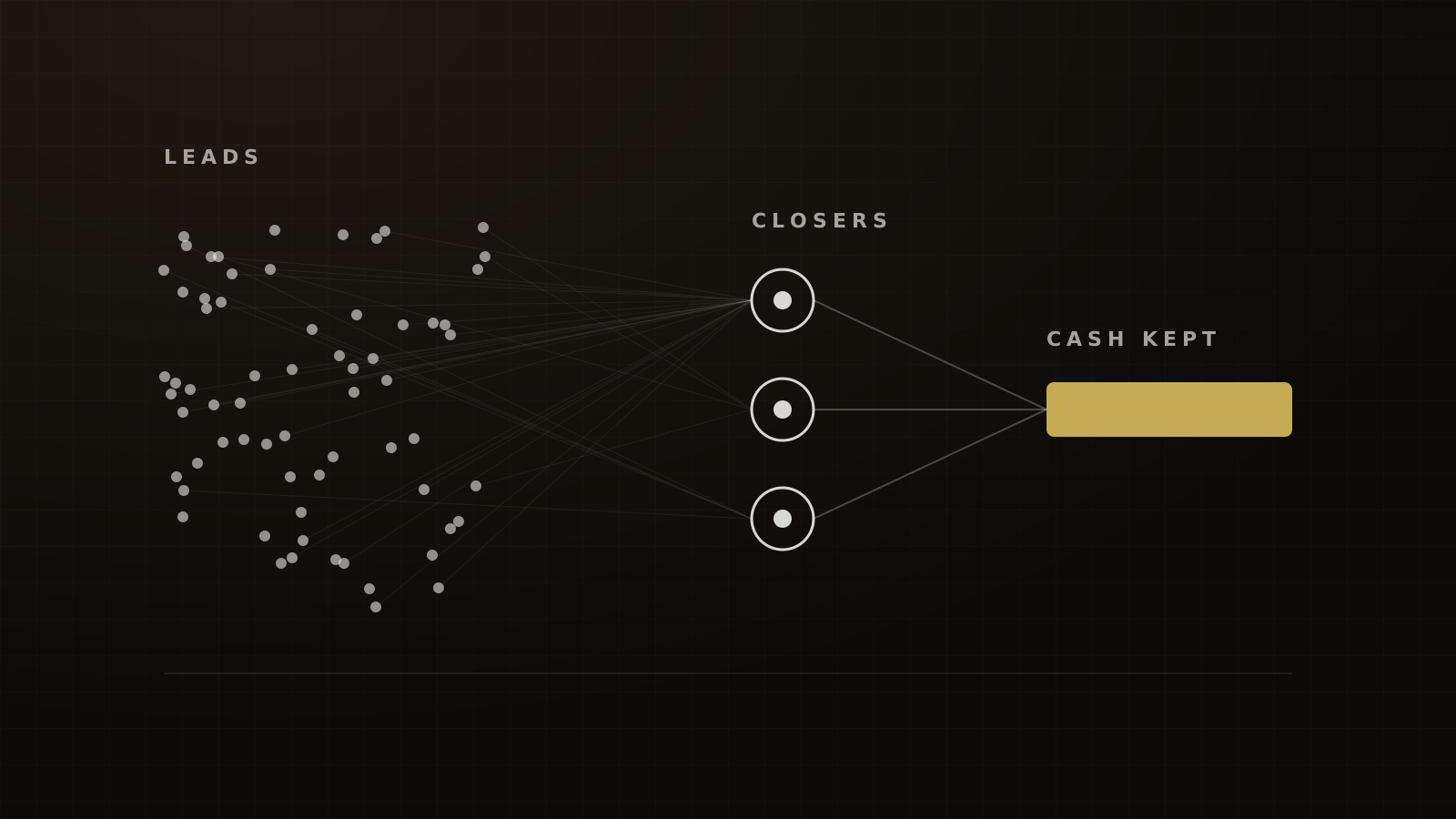
Hire your first closer when your own calendar becomes the ceiling on revenue, and only if the offer is priced for a sales call. Below about $1,000, a rep costs more than they add, so let checkout do the selling. From about $1,000 to $50,000, put reps on calls.
Then hand off carefully. Record your best calls, have the closer shadow you, shadow them back, and watch refunds and follow-up for 60 days.
Here is how to tell when you're there, who to hire, and how to keep your close rate when you step away.
The price-point rule: checkout, application or call
A sales call is a cost. It only makes sense when the order value can pay for it.
On cheap offers, it can't. Ray's line on free or $50 tickets: "just let the ads print." A rep earning 10% of a $50 sale makes $5 a deal. No good closer dials for that, and you shouldn't ask them to.
From about $1,000 up, the math flips. A human on the phone handles the doubts a sales page can't, and the commission is worth a closer's hour. In our experience, 40% to 60% of a $1,000 to $10,000 webinar offer's sales close through the "talk to a closer" door rather than pay-now checkout. There's no published industry benchmark for that split; it's what we see on the programs we run.
The same logic shows up in SaaS. Christoph Janz's well-known framework argues that small-account businesses can't afford sales reps, while accounts around $10,000 can support an inside sales team.[3] It's an illustration from 2014, built on annual software contracts. Our line sits lower because a coaching or education sale usually closes on one call, not over a months-long cycle.
Russell Brunson makes a related point in his high-ticket application funnel: the expert shouldn't be the one on the phone. The application pre-qualifies the buyer, and someone else runs the call.
Applications are a middle option. Use one only where the extra friction earns you better calls. We cover that choice in detail in checkout, application or booked call.
The calendar rule: when the founder is the cap
The price rule tells you whether reps belong on the offer. The calendar rule tells you when.
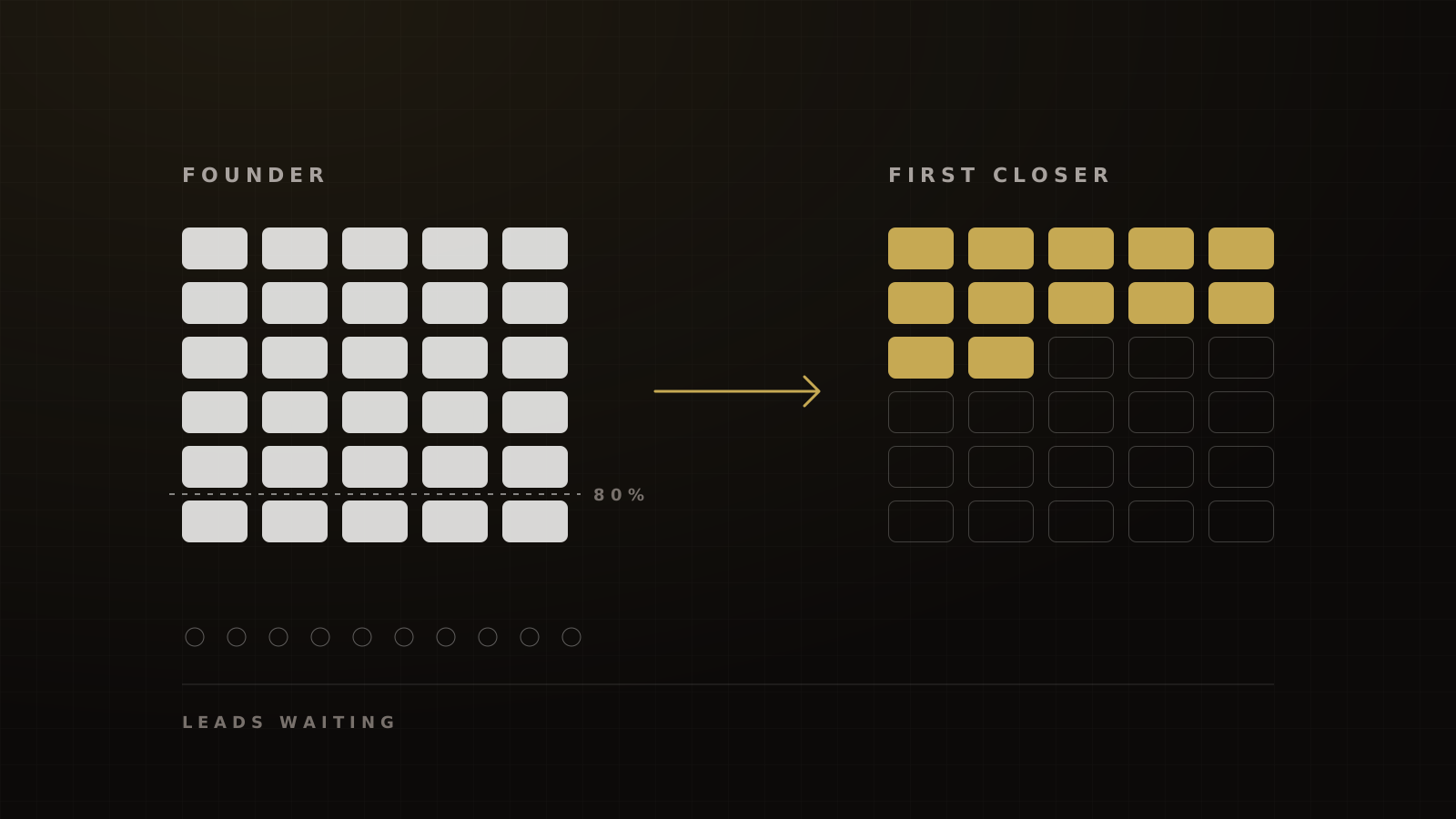
Here's the trigger we use. We cap any closer's calendar at 75% to 80% of available slots, so there's time for follow-up. When the founder's own calendar sits at that ceiling and leads are waiting for a slot, the founder has become the constraint. That's the moment to hire.
Size the load honestly. In our experience, one full-time closer holds 4 to 6 high-ticket calls a day. With prep and follow-up, that's most of a working day. A founder carrying that load isn't doing much else.
And the founder's time is worth more elsewhere. Paul Graham's essay on the maker's schedule argues that people who build things need time in units of at least half a day, and that a single meeting can break an afternoon.[4] Alex Hormozi expands the idea for operators. A founder with three sales calls spread across a day has no maker time left to build the offer, the content or the team.
Small-business owners already lose much of their week before selling starts. A 2024 survey of 837 US businesses with five or fewer employees found admin and compliance took 22.4% of owner time, 79% more than marketing and sales combined.[5] By our arithmetic, that puts marketing and sales at about 12.5%.
In Acquisition.com's $100M Scaling Roadmap, Stage 3 is the point where the work becomes too much for one person and the way through is getting help. Our reading, not theirs: the first closer usually lands somewhere between that stage and the next.
A different expert rule
Jason Lemkin of SaaStr advises B2B founders to close their first 10 deals themselves, then hire two reps, not one, so they can tell a rep problem from a process problem.[6] We agree with the first half. Close enough deals to know what a good call sounds like, and record them.
The second half is a SaaS luxury. Most coaching founders can't fund two closers at once. One experienced closer plus every call scored gives you the same answer: you can see whether the rep or the process is the problem.
The hidden cost: a single point of failure
When the founder is the only closer, every absence stops the sale. A week away means no calls, no follow-up on warm prospects and nobody to answer a nervous new buyer.
That last one is the expensive part. A buyer who can't reach anyone in the first days after paying is the one who asks for a refund. We've seen a founder's short absence nearly turn one refund request into several. Devin's rule since then is short: no single point of failure.
Watch for the symptoms: follow-ups that slip when you travel, refund requests that sit unanswered, and buyers who go quiet before onboarding. Each one is a revenue leak that a second person on the phones closes.
Who to hire first (and who not to)
Hire experience. We never install a closer into an offer unless they have extensive high-ticket sales experience, and we vet them with live call audits, not interviews alone.
The ramp data shows why. Bridge Group's 2026 survey of 158 B2B companies put the average account executive ramp at 6.2 months, with 3.7 years of experience required at hire.[2] In its 2024 SaaS study, ramp averaged 5.7 months and median annual AE turnover was 30%.[7] Those are B2B teams selling far bigger deals than a coaching offer, but the lesson carries: a new closer won't match you in week one, and a green one will take much longer.
In our experience, an experienced closer placed into a working offer reaches a full call load in 2 to 4 weeks. An inexperienced one is a training project you're running on live leads.
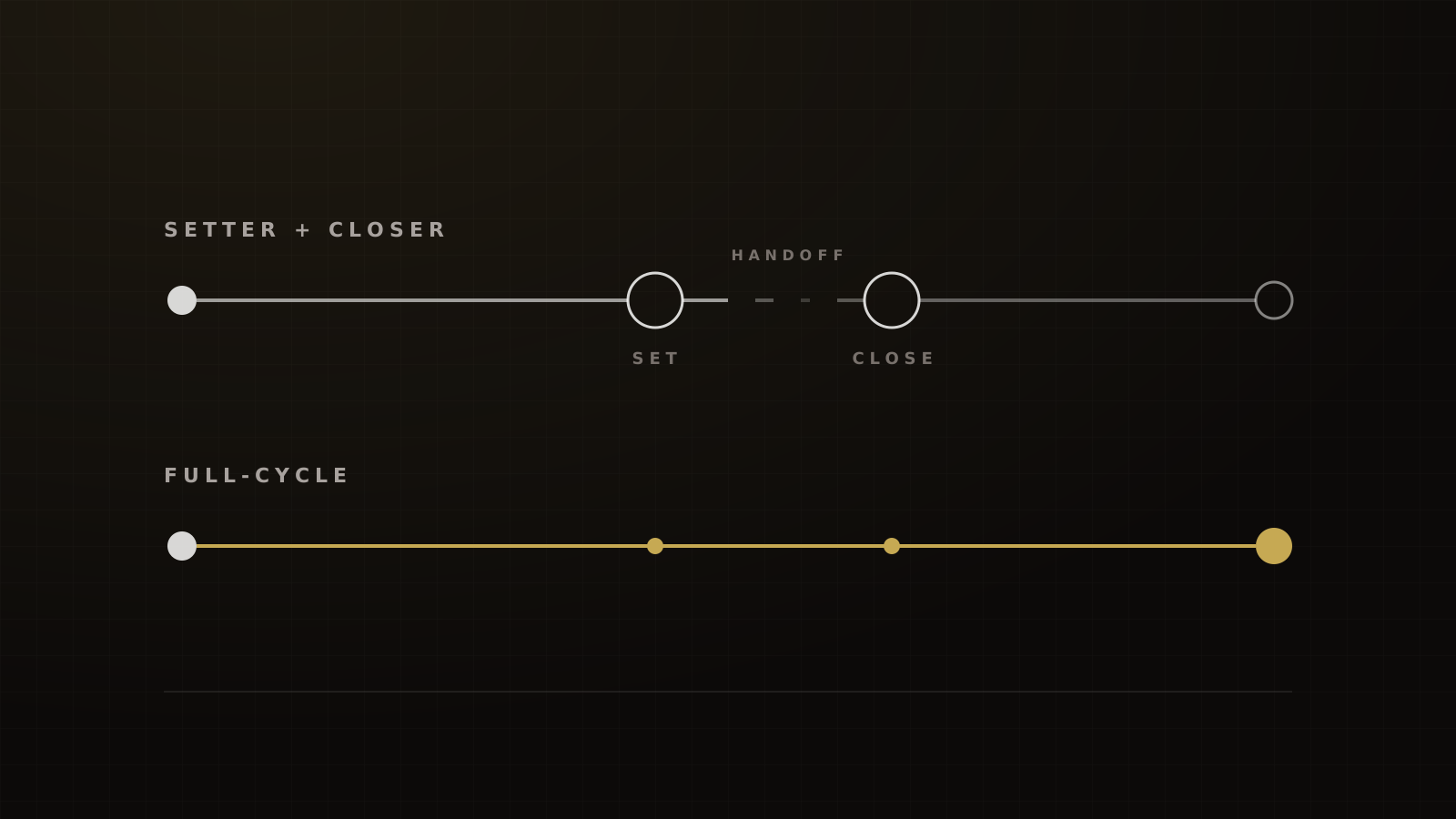
Don't promote your best setter by default either. Booking calls and closing them are different jobs.
Know what a wrong hire costs. SHRM's 2025 benchmarking put the average cost per nonexecutive hire at $5,475, and that's recruiting cost only.[8] Build your own number: recruiting, plus paid ramp, plus your coaching time, plus the deals a weak closer loses.
For reference, the US median wage for sales representatives of services was $69,990 in May 2025.[9] That figure includes commissions and production bonuses.[10] How you split base and commission shapes behavior, which we cover in how to pay high-ticket closers and setters. And if you're wondering whether to add setters too, read the setter-closer model first. Usually the answer is not yet.
The handoff: keep the founder's close rate
Most founders lose close rate in the handoff, not the hire. Run it as a process.
Framework
The 60-day founder handoff
- Document. Record your best calls, won and lost, and note what made each one work. That library is the closer's script.
- Let them get a win. Have the closer go through your program and get a small result of their own. They sell with more conviction when they've felt it work.
- Demonstrate. The closer listens in on your live calls for the first days.
- Duplicate. Swap seats. You listen to theirs and fix what's missing until their calls sound like yours.
- Hand over a share, not the whole calendar. Start the closer on part of the new calls and widen it as their numbers hold.
- Score every call. Every recorded call gets scored within 24 hours, with a weekly scorecard per rep.
- Watch refunds and follow-up for 60 days. A closer who closes but leaves buyers confused shows up in refunds a few weeks later.
Victory's onboarding sequence, built on Alex Hormozi's Document, Demonstrate, Duplicate method.
The evidence for structured onboarding is consistent. Sales Management Association research with more than 100 B2B sales organizations found reps in well-rated onboarding programs reached productivity in 5.7 months on average, against 9.1 months for poorly rated ones.[11] That's an association, not proof, but the direction is clear.
The call library isn't our invention. Gong describes a customer whose new account executives study a curated set of 30 annotated won and lost calls.[12] The method matters more than the tool.
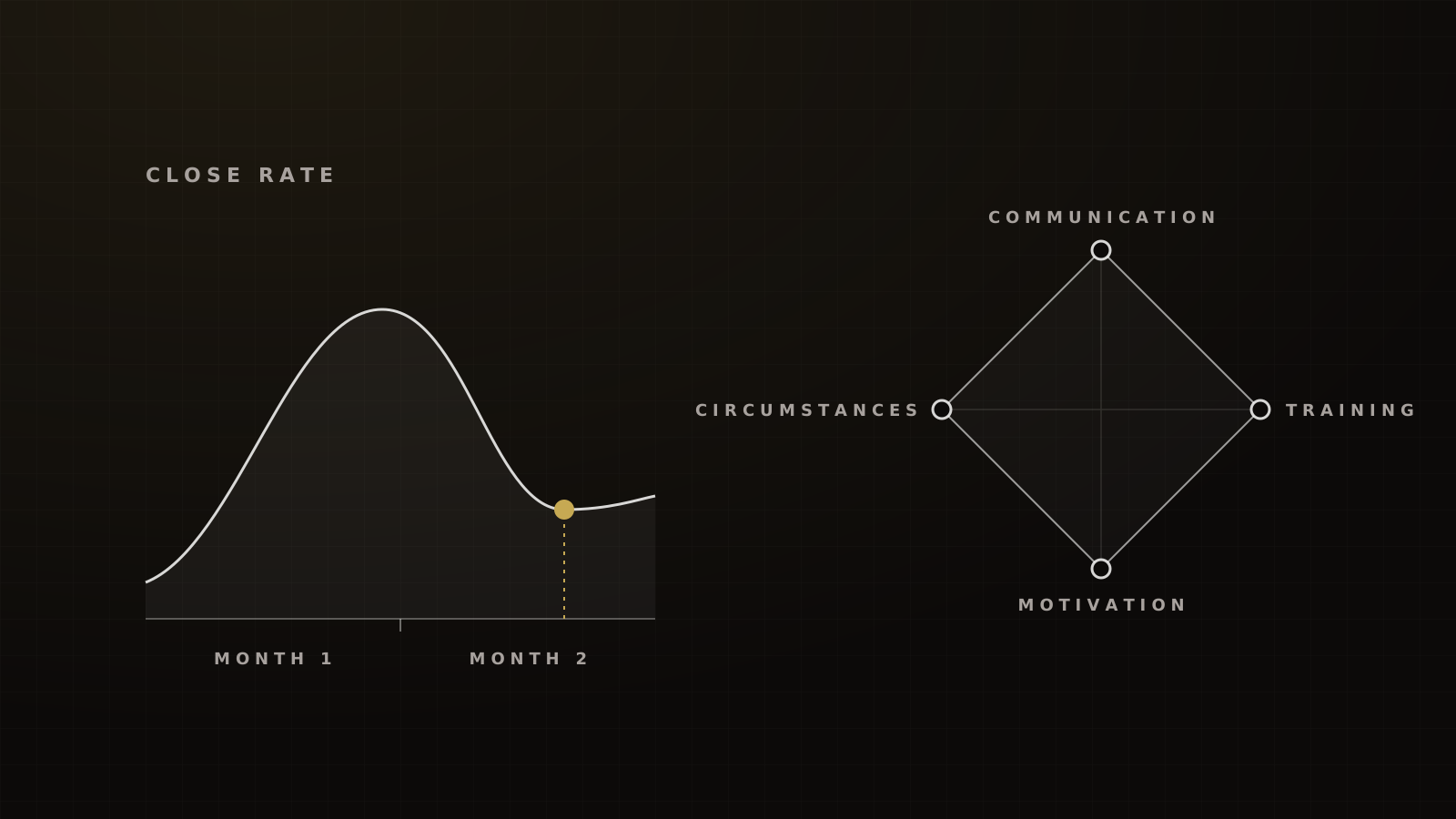
Our target is that a trained closer reaches 70% to 90% of the founder's close rate by day 60. No industry benchmark exists for founder-to-closer transfer, so treat that as the bar we hold, not a statistic. We track it with automated call scoring, which we explain in using AI to audit every sales call. If numbers dip after a strong start, our guide to diagnosing a month-two slump walks through the causes.
One more thing transfers in the handoff: your claims. In January 2025 the FTC proposed extending its Business Opportunity Rule to money-making opportunities such as business coaching.[13] It's a proposal, not a final rule. Either way, every income or results claim your closer makes is your claim. Give them the approved language in writing.
Employee or contractor?
Many first closers are paid on commission and work remotely. That raises classification questions most founders skip.
- Phone closers aren't "outside sales." The federal outside-sales exemption requires the person to be customarily and regularly away from the employer's place of business. A home or office used for phone selling counts as a place of business.[14]
- The contractor test is in flux. The Department of Labor proposed rescinding its 2024 independent-contractor rule on February 26, 2026, and says it no longer applies that rule in its investigations.[15] Check the current status before you decide.
- Put commission plans in writing. California requires a written commission contract that explains how commissions are computed and paid, with a signed copy to the employee.[16] Other states have their own rules.
The short version
Price decides whether reps belong on the offer. Your calendar decides when. Hire experience, hand off in stages, and score every call until the numbers hold.
For the full picture of setters, closers, comp and show rates, read our guide to building a high-ticket sales team. For what breaks next as the company grows, see the scaling roadmap. If you want help deciding whether you're ready, book a strategy call.
Frequently asked questions
Sources
- 1.State of Sales, 7th edition. Salesforce, 2026.
- 2.AE Models, Motions & Metrics, 10th edition. The Bridge Group (Matt Bertuzzi), 2026-06-22.
- 3.Five ways to build a $100 million business. Christoph Janz, 2014-10-05.
- 4.Maker's Schedule, Manager's Schedule. Paul Graham, 2009-07.
- 5.How microbusiness owners spend their time. UENI, 2024-05.
- 6.Dear SaaStr: when should I hire our first sales person, and who should I hire?. SaaStr (Jason Lemkin), 2025-04-08.
- 7.SaaS AE Metrics & Compensation 2024. The Bridge Group, 2024.
- 8.SHRM releases 2025 benchmarking reports. SHRM, 2025-10-15.
- 9.Occupational Employment and Wages, May 2025: 41-3091 Sales Representatives of Services. US Bureau of Labor Statistics, 2026 (May 2025 data).
- 10.OEWS technical notes. US Bureau of Labor Statistics, current, checked 2026-10-04.
- 11.Onboarding's impact on sales productivity. Sales Management Association, 2018.
- 12.Dreamdata scaled onboarding and increased average deal sizes. Gong (customer case study), undated, checked 2026-10-04.
- 13.FTC proposes rule changes and new rule to deter deceptive earnings claims. Federal Trade Commission, 2025-01-13.
- 14.Fact Sheet #17F: Exemption for outside sales employees under the FLSA. US Department of Labor, Wage and Hour Division, current, checked 2026-10-04.
- 15.2026 independent contractor rulemaking. US Department of Labor, Wage and Hour Division, 2026-02-26.
- 16.California Labor Code section 2751. California Legislature, current, checked 2026-10-04.
Written by
Devin AlexanderCo-Founder & CEO
Devin architects Victory's revenue systems: team structure, comp plans, scripts and the accountability frameworks that make sales floors predictable. He has generated more than $150M in sales and trained more than 250 closers.
Part of the guide: Building a High-Ticket Sales Team: Setters, Closers, Comp Plans and Show Rates