The Setter-Closer Model Explained (and When One Closer Should Own the Prospect)
Setters pay off only when lead volume outruns your closers. Our volume test, where handoffs leak, and why full-cycle closers fill their own no-shows.
 Devin AlexanderCo-Founder & CEO
Published 8 min read
On this page
Key takeaways
- Start full-cycle. One closer who books, follows up and closes keeps the context and trust a handoff loses.
- Add a setter when closers' calendars sit at 75–80% and more than about 20% of new leads are still uncalled after 24 hours. That's our trigger, not an industry rule.
- Handoffs leak context, rapport and time. In one vendor's data, demo no-shows rose from 6.9% same day to 23% when booked 8 or more days out.[1]
- The famous 1 SDR to 2.4 AE ratio comes from B2B SaaS.[2] Don't copy it into a coaching sales floor.
- A full-cycle closer's no-show slot isn't downtime. It's lead-calling time.
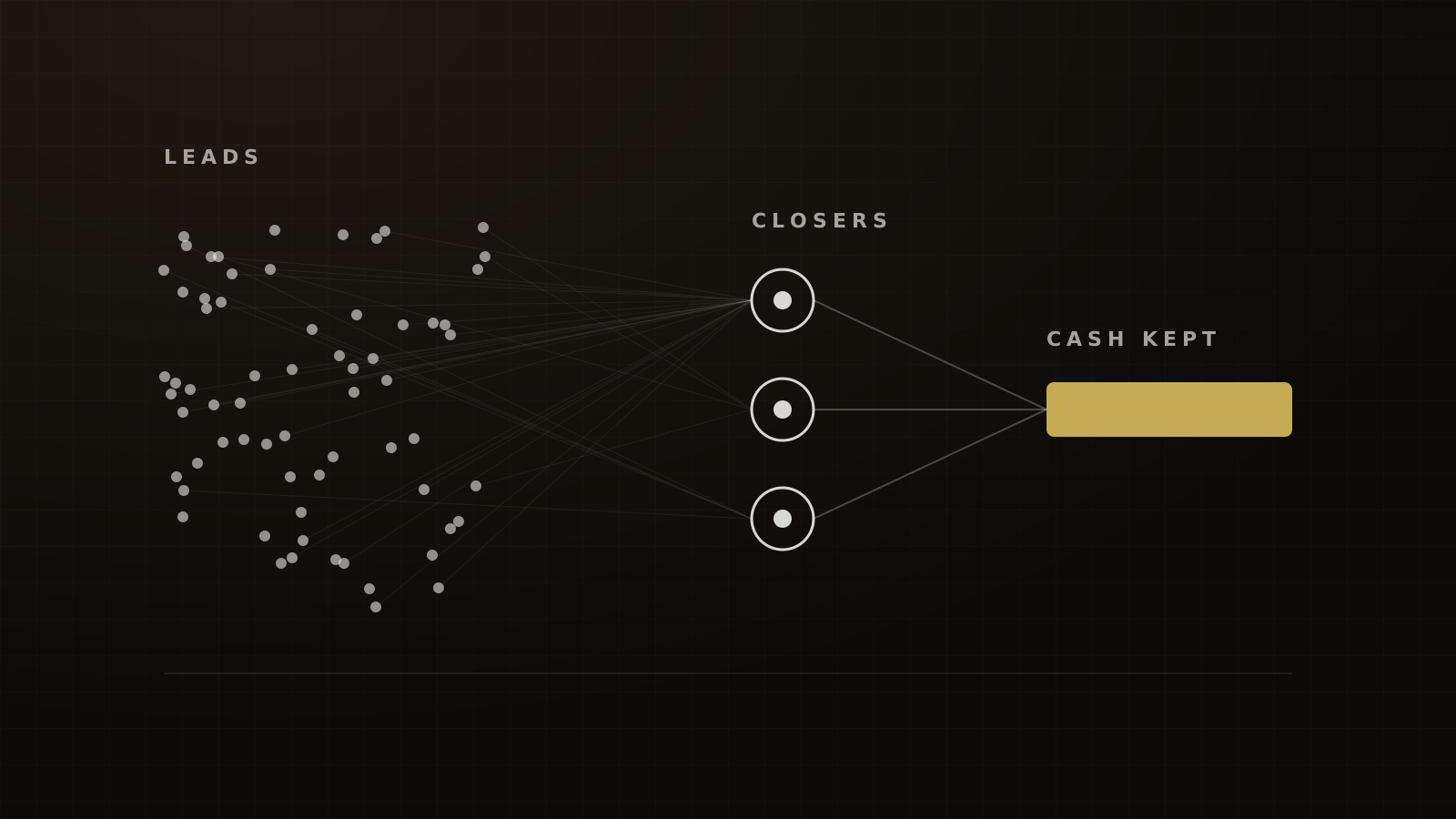
A setter makes sense only when lead volume is too high for your closers to work the list themselves. Below that point, one closer who books, follows up and closes does better. They keep the context and trust a handoff loses, and they fill every no-show slot by calling the lead list.
So start full-cycle. Add setters when closers' calendars are full and leads are still going uncalled. We sell both setters and closers, so this isn't an argument against setters. It's an argument about timing.
What setters and closers each do
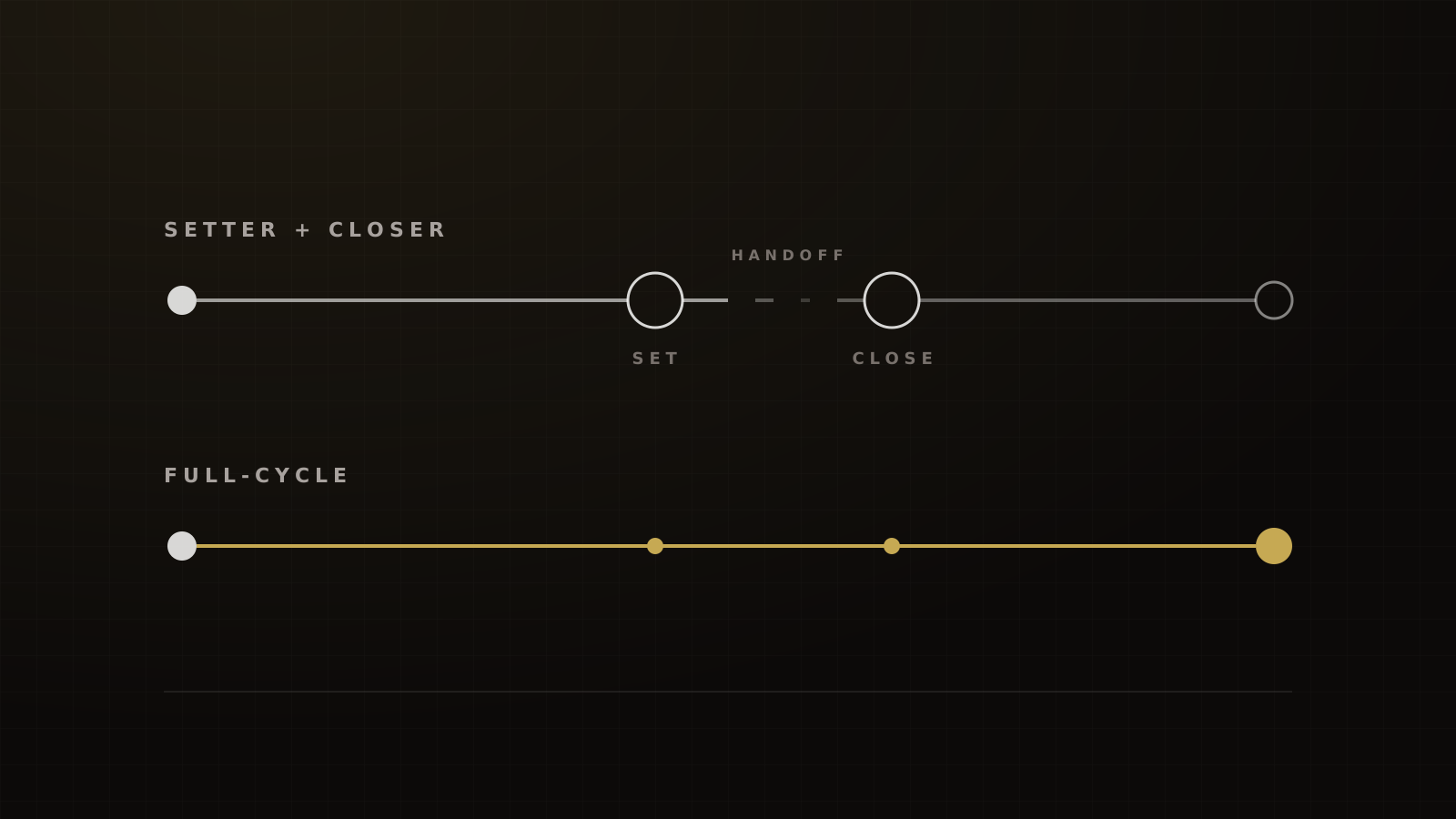
- Setter: calls new leads, qualifies them and books the sales call. On a split team, the setter owns every uncalled lead.
- Closer: runs the sales call, handles objections and takes payment.
- Full-cycle closer: does both, from first touch to cash, including follow-up and rebooking.
The split has two roots. In B2B software, Aaron Ross's Predictable Revenue (2011) made the sales development rep a standard role. In coaching, Russell Brunson's high-ticket application funnel popularized it: an application pre-qualifies the buyer, a setter gathers background and goals, and a closer runs the sale. Brunson's core point is sound. The expert shouldn't be the one on the phone.
What doesn't follow is that every team needs two people per sale. That depends on volume.
Where handoffs leak
Every handoff costs something. The question is whether volume makes the cost worth paying.
| Stage | Split team (setter + closer) | Full-cycle closer |
|---|---|---|
| Lead to first call | Setter dials; speed depends on setter coverage | Closer dials between calls; speed depends on calendar slack |
| The booking | Set by one person, run by another | Booked by the person who'll run it |
| Context | Passed in notes; the buyer repeats themselves | Already known |
| Rapport | Restarts on the sales call | Carries straight over |
| Set-to-call gap | Set by the closer's calendar, often days | Can be same day |
| No-show | Back in the setter's queue | Closer calls and rebooks within minutes |
A qualitative comparison of where each design loses or keeps ground. No public study compares the two models on consumer high-ticket offers.
Context
Buyers hate repeating themselves. In Salesforce's 2023 survey of 11,000 consumers and 3,300 business buyers, 56% said they often have to repeat or re-explain information to different representatives.[3] A 2024 survey went further: 34% of consumers said they'd work with an AI agent instead of a person just to avoid repeating themselves.[4] That's customer service, not a setter test, but it's the same irritation. Every handoff restarts the story.
Timing
Speed matters before the booking and after it. InsideSales.com and MIT's James Oldroyd found that calling a web lead within 5 minutes instead of 30 gave 21 times the odds of qualifying them.[5] Booking at the moment of intent helps too: in Chili Piper's 2025 data on nearly 4 million form submissions, 66.7% of qualified demo forms booked a meeting, and 69.2% when a live-call option was offered.[6]
Then the set-to-call gap starts costing shows. Reply.io's demo no-shows went from 6.9% same day to 9.6% next day, 12.4% within a week and 23% at 8 or more days.[1] A split team that books into a closer's calendar a week out pays that tax on every call. In our experience, phone calls booked no more than about three days out show at 82–88%.
Yield
B2B quota data hints at the handoff loss. Bridge Group's median SDR quota is 10 held meetings a month, against 6 converted to a qualified opportunity.[2] That's quota math, not a tracked cohort: it implies roughly 60% of held meetings survive the handoff at quota. Treat it as a direction, not a measured rate.
Having first to last touch be handled by one person builds a better relationship… therefore increasing conversions.
The volume test: when a setter is worth it
Framework
The setter volume test
- Measure closer fill. Average booked slots as a share of available slots over the last four weeks.
- Measure uncalled leads. The share of new leads with no dial attempt 24 hours after they arrived.
- Add a setter only when both trip. Closers at 75–80% fill and more than about 20% of new leads uncalled after 24 hours.
- Re-check after 30 days. If close rate per booked call falls, the handoff is costing more than the extra coverage returns.
Victory's trigger for adding setters. Lead stages credited to Alex Hormozi.
Lead volume per closer
In our experience one full-time closer holds 4–6 high-ticket calls a day at 80% calendar fill. That's a working assumption, not a benchmark. The nearest public figure is for setters, in B2B: SDRs average 4.1 quality conversations a day from 112 activities, and phone-centric teams average 56 dials and 4.6 conversations.[2]
So a closer with an open hour can do real intake work. A few dials between calls, every day, keeps the uncalled list short.
Calendar fill
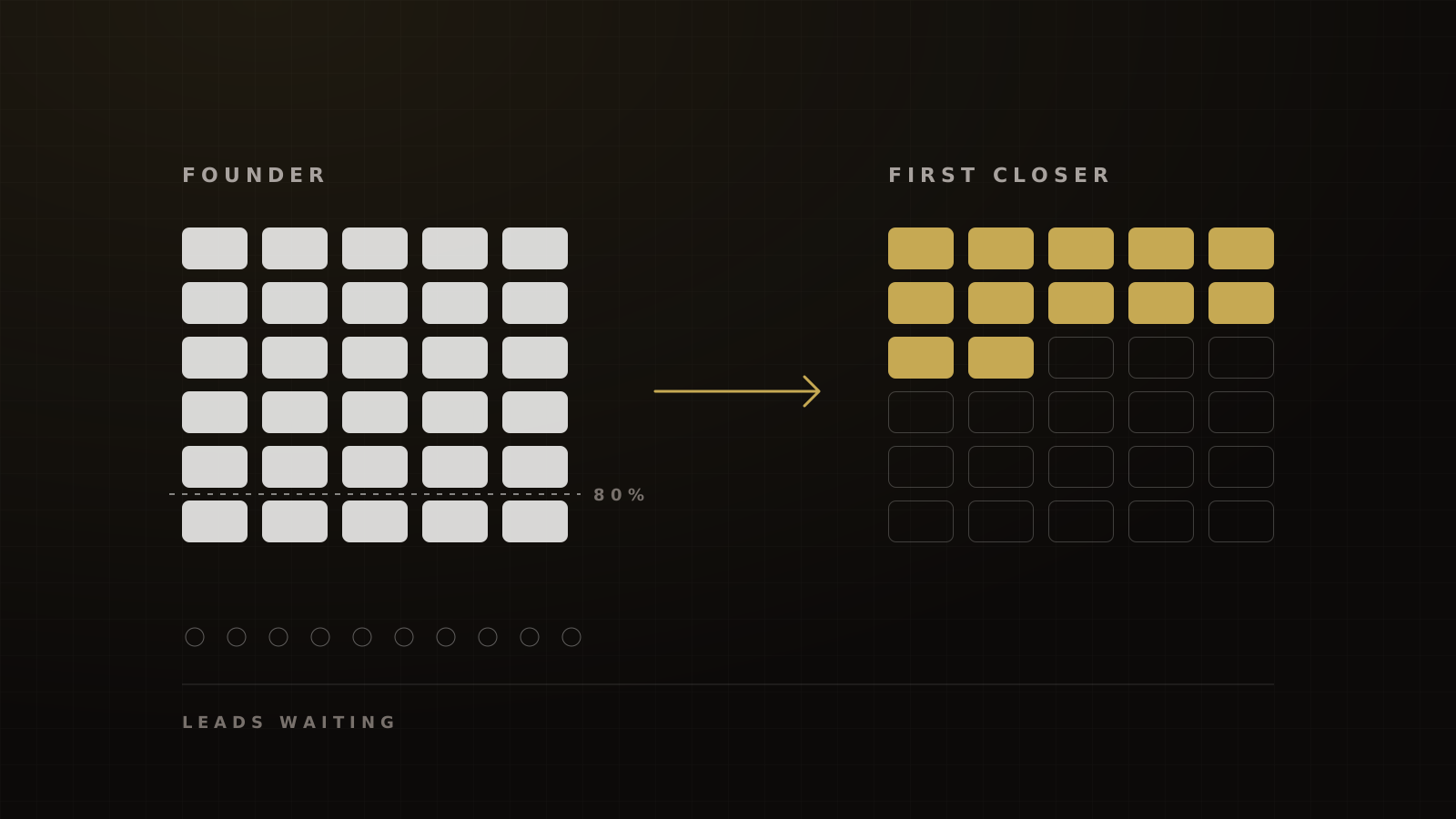
We cap closer calendars at 75–80% of available slots. The slack is where follow-up, rebooking and lead calling happen. When closers are below that line, they have time to set their own calls, and a setter only adds a handoff. When they're above it, they can't do both. That's when a setter starts to pay.
Uncalled-lead share
Before you hire a setter, hold the full-cycle team to the standard a setter would be measured on. Ours: median time to first dial under one hour during staffed hours, and 100% of new leads dialed within 24 hours. If closers meet it, you don't have an intake problem. If more than about a fifth of leads are still uncalled after a day, you do.
The case for splitting earlier
There's a real counterpoint. Bridge Group's 2016 analysis found SDR-supported account executives were 16% more productive, and that an average SDR team paid for itself once the average sale passed about $8,000.[7] That's B2B software, ten years old, and built on modeled costs. It argues for testing a split, not for skipping the test.
Company size matters too. In Bridge Group's 2024 SaaS survey, 68% of AE groups had SDR support, rising to 74% once companies under $5 million in revenue were excluded.[8] Smaller companies split less. Zoltners, Sinha and Lorimer made the general case in HBR years ago: how specialized a sales force should be depends on the business's stage.[9]
And the ratio people quote, 1 SDR for every 2.4 account executives,[2] describes B2B SaaS teams selling larger, slower deals. Use the volume test, not the ratio. Our sales team capacity calculator runs the numbers for your lead flow.
The full-cycle closer who fills their own no-shows
On a split team, a no-show is a dead hour. On a full-cycle team, it's an hour of lead calling.
Plan for it. RevenueHero's B2B customers averaged a 15.9% no-show rate,[10] so roughly one slot in six opens up unexpectedly. A closer who owns their own pipeline uses that hour two ways:
- Call the no-show within minutes. In our experience 30–40% of no-shows get rebooked within 48 hours. There's no credible industry benchmark for that, so treat it as our number.
- Work the lead list. Every unconverted lead gets at least six call attempts in its first two weeks. Velocify found 93% of converted leads were reached by the sixth attempt, yet half of all leads never got a second call.[11]
If you get a no-show, immediately go to lead list and start calling and setting appointments for yourself.
That's the habit that makes full-cycle work. A closer who waits for the calendar to fill itself is a closer who needs a setter.
Running a split team well
When volume does justify setters, design the handoff on purpose. Zoltners, Sinha and Lorimer's advice on splitting hunters from account managers applies here: define each transition step, who owns it and when the next person takes over.[12]
- Define "qualified" in writing. Hormozi's lead stages (uncontacted, contacted, engaged, qualified, sold) give you the vocabulary. The setter's job ends at "qualified," and the bar should be specific enough that two people would agree on it.
- Write a handoff brief. Goal, situation, budget signal, the objection they raised, and the exact words they used. The closer reads it before dialing, so the buyer never has to repeat themselves.
- Book same day or next day. Every extra day between the set and the call costs shows.
- Train with "document, demonstrate, duplicate." Hormozi's method from $100M Leads: write the script down, run calls in front of the new setter, then have them run calls in front of you.
- Automate the manual work. Reminders, confirmations, lead routing and rep alerts belong in the CRM, not in a setter's afternoon.
- Pay on shows that meet the bar. Per-booking pay rewards stuffed calendars. We cover setter and closer plans in how to pay high-ticket closers and setters.
Still deciding whether you need a team at all? Start with when to hire your first closer, and see the full build in our guide to building a high-ticket sales team. Or book a strategy call and we'll run the volume test on your numbers.
Frequently asked questions
Sources
- 1.How to fight demo no-shows. Reply.io, 2023-08-08.
- 2.2025 SDR Models, Motions & Metrics Report (10th edition). The Bridge Group, 2025-02-06.
- 3.What are customer expectations? (State of the Connected Customer, 6th edition). Salesforce, 2023-08.
- 4.AI agents statistics: consumer survey. Salesforce News, 2024-10-29.
- 5.Lead Response Management Study. InsideSales.com and James Oldroyd, 2007-10-16.
- 6.2025 Benchmark Report on Demo Form Conversion Rates. Chili Piper, 2025-02-18.
- 7.What's the minimum ASP where sales development makes sense?. The Bridge Group, 2016-05-17.
- 8.SaaS AE Metrics & Compensation 2024. The Bridge Group, 2024.
- 9.Match Your Sales Force Structure to Your Business Life Cycle. Harvard Business Review (Zoltners, Sinha, Lorimer), 2006-07.
- 10.Ways to reduce no-show rates in sales calls. RevenueHero, 2025-08-18.
- 11.The Ultimate Contact Strategy. Velocify, 2012-12 (approx.).
- 12.What Subscription Business Models Mean for Sales Teams. Harvard Business Review (Zoltners, Sinha, Lorimer), 2018-06-22.
- 13.Complying with the Telemarketing Sales Rule. Federal Trade Commission, current, checked 2026-10-04.
Written by
Devin AlexanderCo-Founder & CEO
Devin architects Victory's revenue systems: team structure, comp plans, scripts and the accountability frameworks that make sales floors predictable. He has generated more than $150M in sales and trained more than 250 closers.
Part of the guide: Building a High-Ticket Sales Team: Setters, Closers, Comp Plans and Show Rates