Low-Ticket Funnels: How to Turn $27 Buyers Into High-Ticket Clients
What happens after a $27 sale: a consumption gate before the booking link, soft qualifiers, progress-based upsells, downsells and the GoHighLevel build.
 Ray GillespieCo-Founder & COO
Published 9 min read
On this page
Key takeaways
- A low-ticket funnel makes its money after the first purchase. On Kajabi, 53.8% of expert earnings came from second and later purchases.[1]
- Put the booking link after video one, not on the receipt page. In our experience each training video keeps about half the previous one's viewers.
- Qualify quietly: two or three soft questions saved to CRM fields tell the closer who they're talking to.
- Trigger the upsell off progress. GoHighLevel has no course-progress percentage trigger, so pick the lessons that mark roughly 40% and 70%.[2]
- Give every buyer who doesn't qualify a downsell or a free tier, not a closer's time.
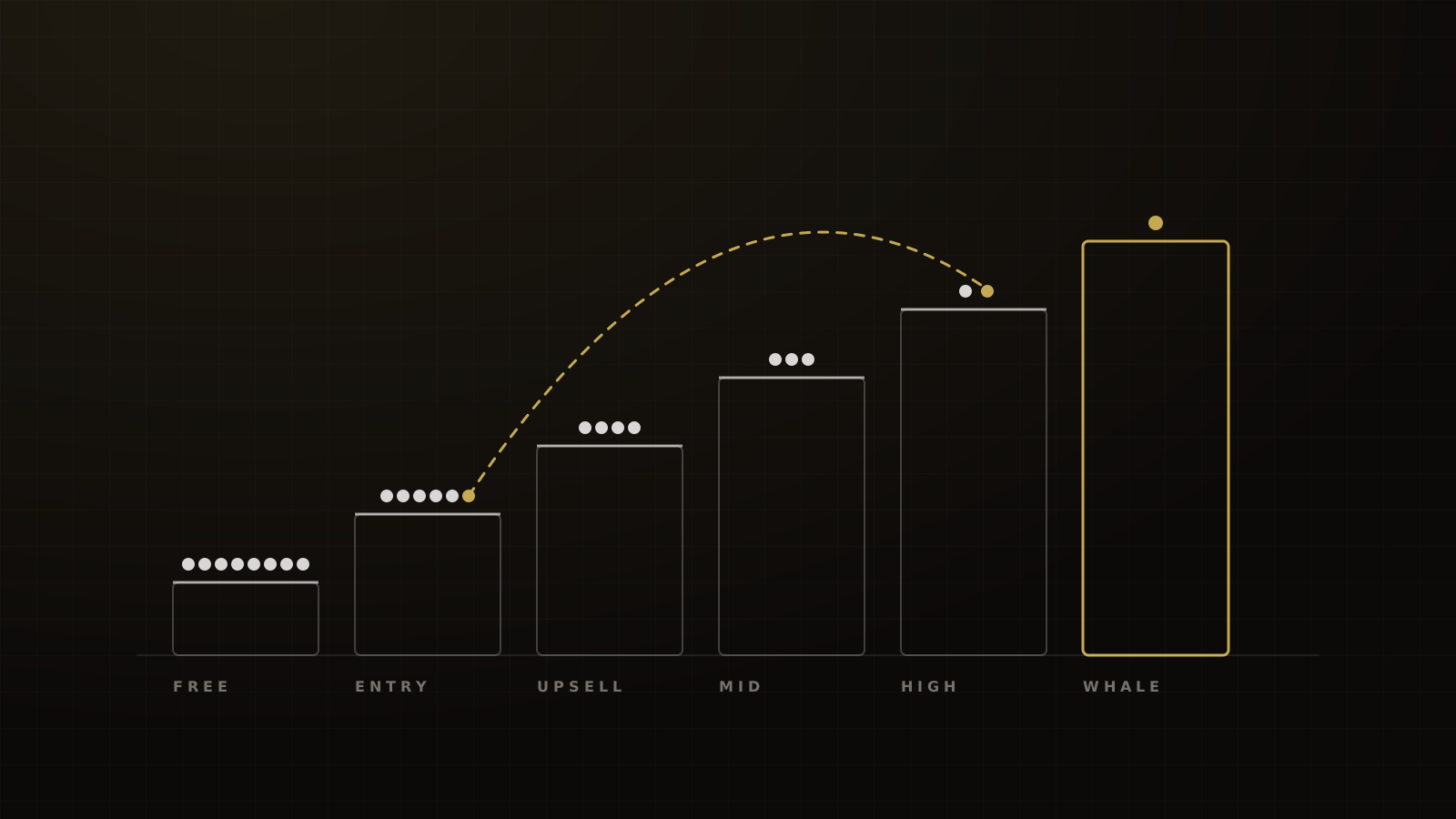
A low-ticket funnel makes money after the first purchase, not on it. A $27 buyer becomes a high-ticket client when you do four things in order: make them consume before they can book, qualify them quietly with fields saved to the CRM, trigger the upsell off their progress, and give anyone who doesn't qualify a downsell instead of a closer's time.
Ray's phrase for the first purchase is that it "breaks the seal". Once someone has paid you anything, the next yes is a smaller step. The job of the funnel is to make that next step the right one.
In GoHighLevel that's an order form with a bump, a one-click upsell, a course, and workflows on Lesson Completed. Here's the sequence, the build and what to measure.
Why low-ticket buyers book bad calls
Most low-ticket funnels put a calendar on the receipt page. It feels efficient. It produces calls with people who bought a $7 or $27 product a few minutes ago and don't yet know why they'd talk to you about a $3,000 one.
ClickFunnels' own public case shows the shape. A December 2015 campaign produced 469 leads and 23 sales at $7 on $935 of ads, and the write-up notes that not everyone from the 23 sales was booked in for a call.[3] That's the honest version: buying the entry offer and being ready for a call are different moments.
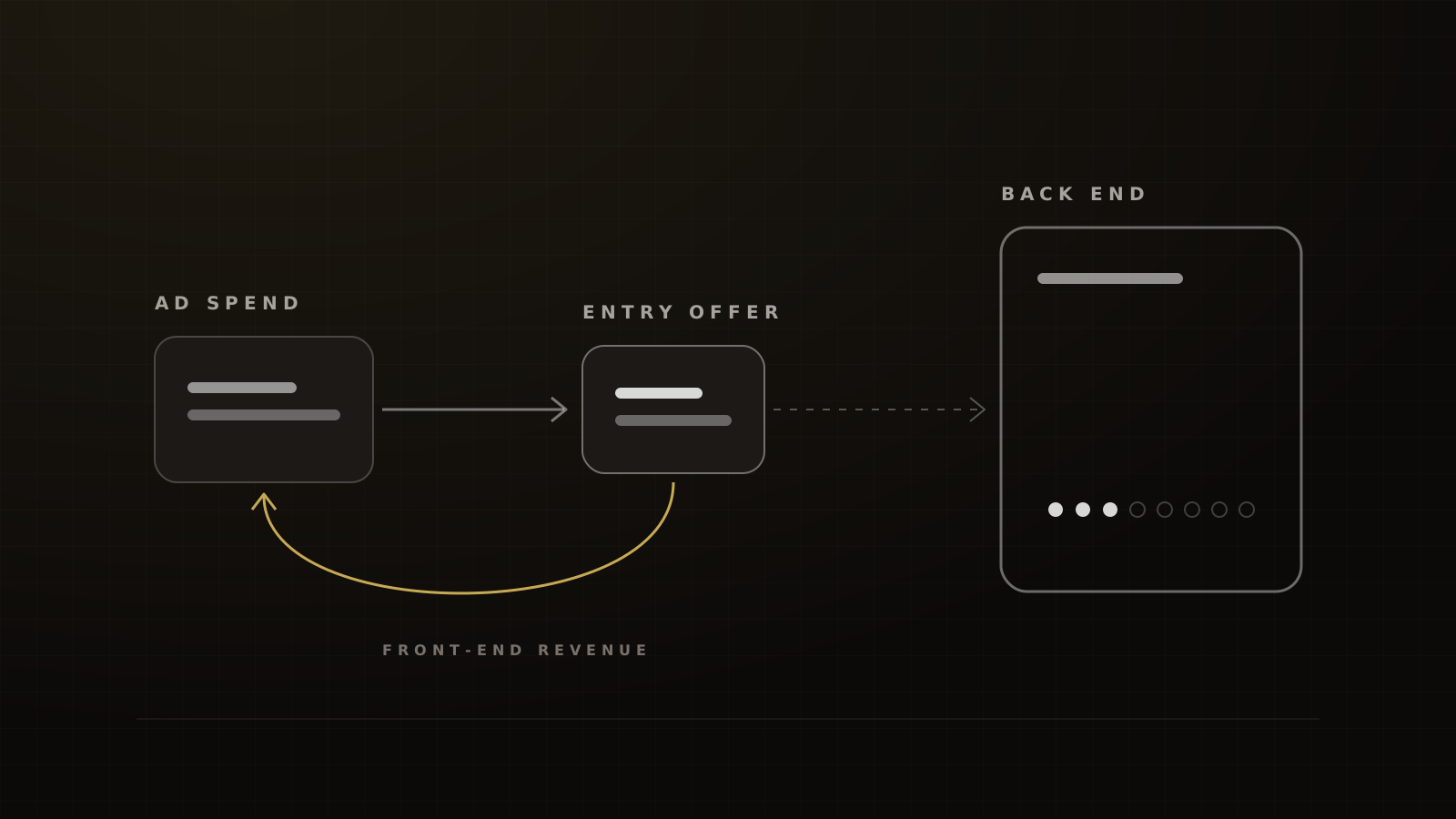
The front end doesn't need the calendar to rescue it, either. The target we hold for a self-liquidating front end is 0.8–1.2 front-end ROAS, judged on back-end CPA. If the entry offer roughly pays for the ads, you can afford to slow the path to the call down and make every call better. The self-liquidating offer funnel covers that math.
The ascension sequence, step by step
Step 1: order form, bump and one-click upsell
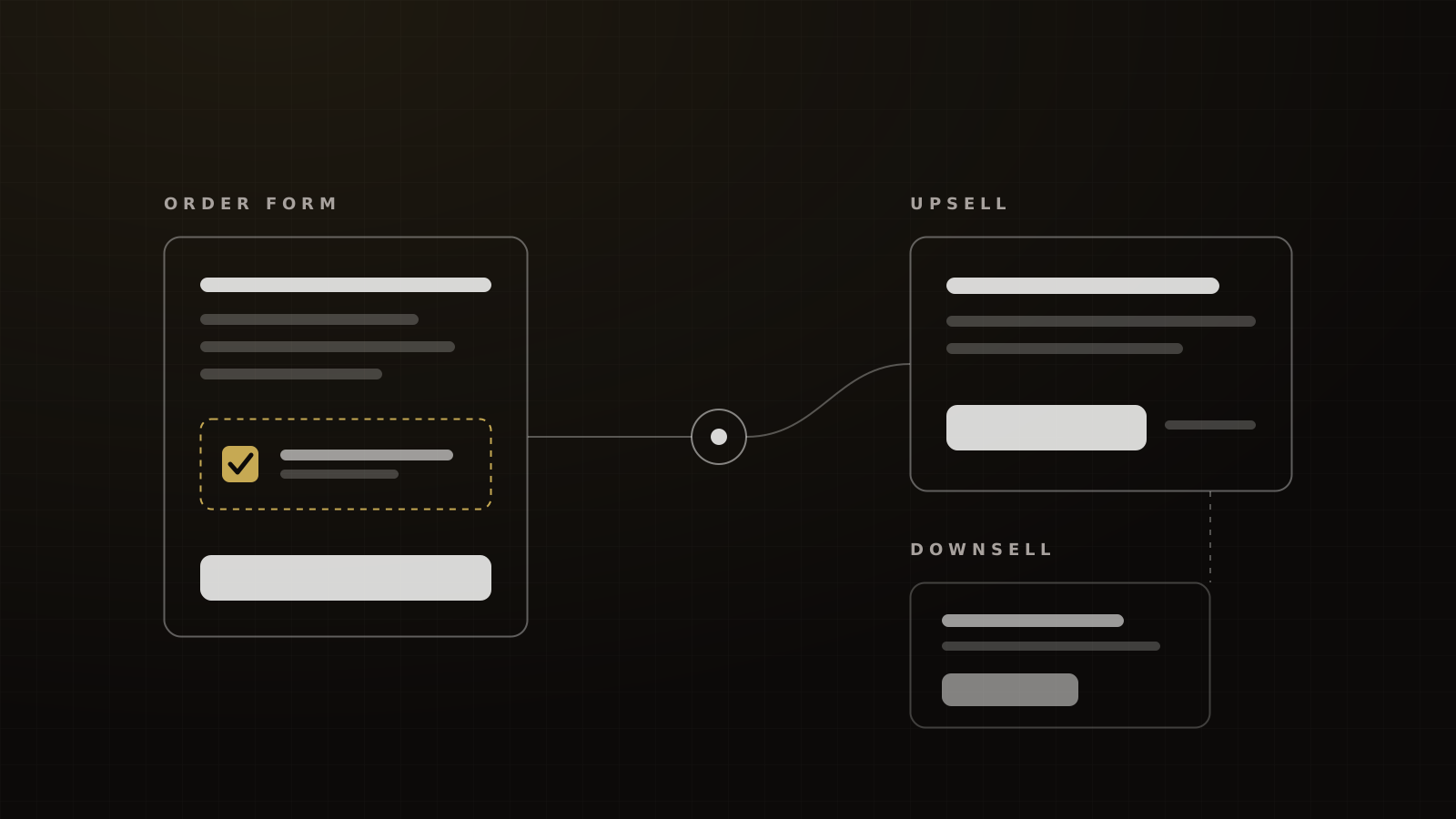
Keep the front of the funnel short: one order form, one order bump, one one-click upsell. Fees matter at this price. Stripe's standard 2.9% + $0.30 is about 4% of a $27 sale before any refund.[4]
The bump and upsell lift order value at peak intent. SamCart's featured seller ran a $47 product, a $47 bump and a $497 upsell for $154 per customer, with a 56% bump and a 6.87% upsell.[5] SamCart calls the 56% unusually high. In our experience, a one-click upsell on a sub-$100 coaching front end takes 8–12%.
Placement and focus matter more than the product. In Rokt Aftersell's 2026 data from 17 million Shopify sessions, the same post-purchase offer converted 6.96% at its best placement and as low as 0.18% at its worst. One offer converted 2.55%, against 1.67% when several were shown.[6] Show one thing at a time. When to use a bump and when to use an upsell is covered in order bumps vs upsells.
Step 2: the consumption gate
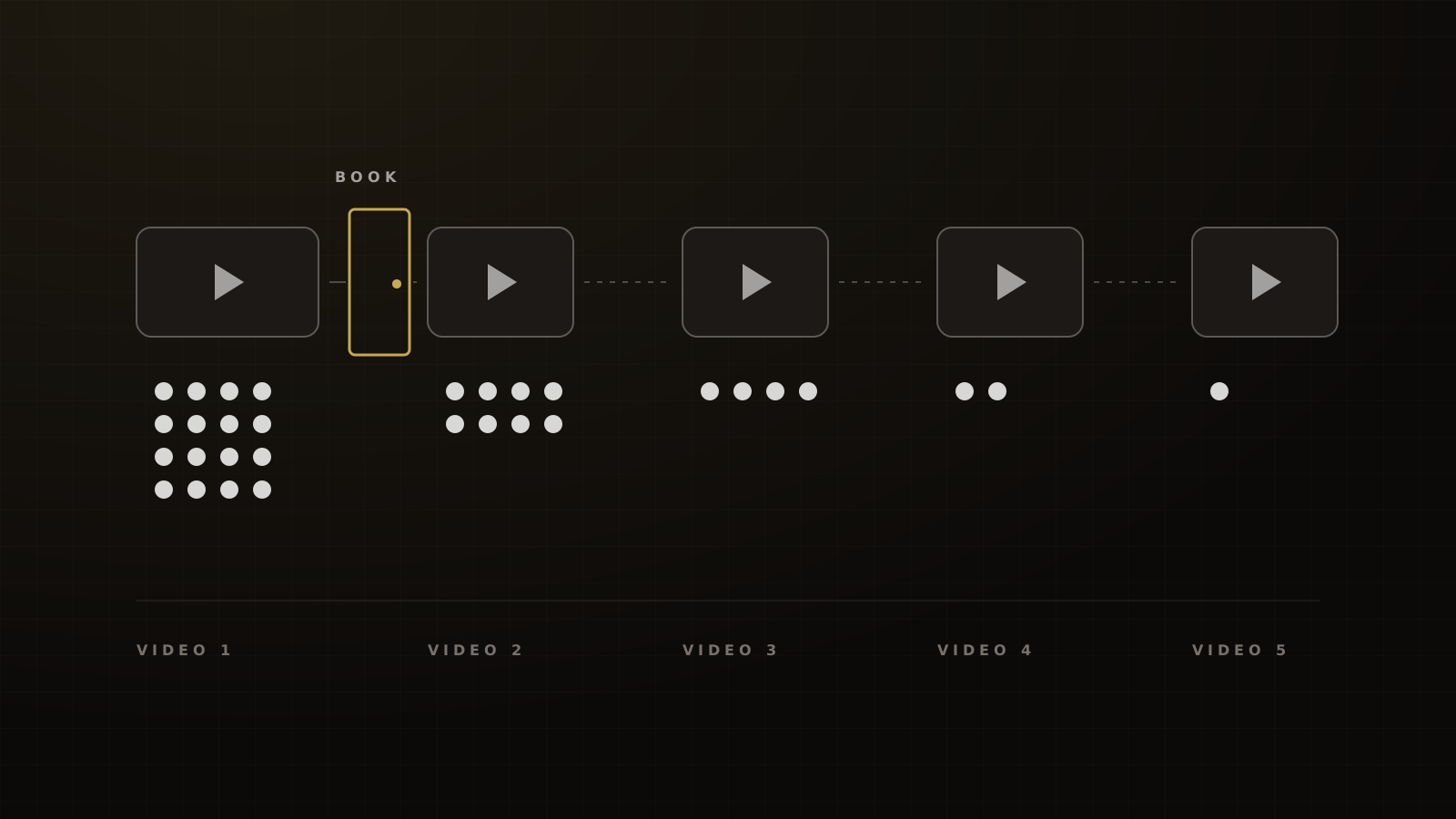
This is the step most funnels skip. The receipt page sends buyers to the first training video, not to a calendar. The booking link appears after video one.
Why after video one, and not after the whole series? Because the series loses people fast. In our experience, each video in a post-purchase training keeps about half the previous video's viewers. Put the call to action at the end of video four and most buyers never see it.
The public data is a different metric but points the same way. Wistia's 2025 report put average engagement, the share of a single video people watch, at 50% for videos under one minute, 46% at one to three minutes and 45% at three to five minutes.[7] A September 2026 study of 27 course videos found an average of 57.82% of viewers reached the end, with one-to-three-minute videos at 63.46% against 53.94% for three-to-six-minute ones.[8] Keep video one short, and make the booking invitation part of it.
The trade-off is real. In Ray's words: "we might get fewer booked calls from here, but they'll be less confused when they show up."
Paying is itself a filter. In MIT and Harvard's edX data for 2017–18, 3.13% of all participants completed their courses, against about 46% of verified, paying learners.[9] A buyer who has paid and watched is a different lead from one who has only paid.
Step 3: soft qualifiers saved to the CRM
Add two or three indirect questions to the booking form and save each answer to a custom field. Good ones ask about the situation, not the budget: programmes they've tried before, their current role, what they want to fix first. The closer reads them before the call. The CRM uses them to route.
Qualifying doesn't have to cost bookings. In RevenueHero's 2025 benchmark of more than a million B2B form fills, a median 62% of qualified leads booked a meeting, and the top 10% booked 78%.[10] That's demo requests, not course buyers, but it shows a qualified form and a fast calendar can coexist.
Then follow up fast. Our standard is a first dial on every new buyer in under an hour during staffed hours, and at least six attempts in the first two weeks. InsideSales' 2014 audit found a median of 3 hours 8 minutes to first call among companies that called at all.[11] Velocify's 2012 data found 93% of converted leads had been reached by the sixth attempt.[12]
Step 4: completion triggers
Devin calls it drinking the Kool-Aid: the more of your content someone consumes, the more likely they are to buy the bigger thing. So time the upsell off progress, not off the calendar.
Our rule of thumb is a warm-up message (a case study, an invitation to a live Q&A) when a buyer is about 40% of the way through the course, and the offer itself at about 70%. That's a working rule, not a measured benchmark.
Step 5: downsells and a free tier
Some buyers won't qualify for the high-ticket offer. They still have a problem you can solve at a lower price. Give them a smaller yes: a group tier, a self-paced course, or a free community where they keep consuming. Hormozi's offer stacking makes the same point: every no should lead to a smaller offer, not a dead end.
A small paid step can lead into a recurring one. Recurly's 2026 subscription report found micro-offers converted 13% of buyers into recurring plans.[13]
The GoHighLevel build
Here's how the sequence maps to HighLevel's own features. We'd test each piece end to end before sending traffic.
Order form and bump. HighLevel's one-step order form in funnels supports products, prices, an order bump and coupon codes.[14] Forms with order bumps need a main product in a Sell Products element, and a form can carry only one recurring product, whether it's the main product or the bump.[15]
One-click upsell. HighLevel's Order Upsell reuses the payment token from the form purchase, so the buyer doesn't re-enter a card. It works on V2 funnels only, not V1 funnels or websites, with Stripe, PayPal, Square, Authorize.net and NMI. It sells one unit, and every step must stay on the same domain.[16]
The course. Host it in Memberships. HighLevel's course triggers cover Lesson Started, Lesson Completed, Category Started and Completed, Product Started and Completed, User Login and Offer Access Granted. There's no trigger for a course-progress percentage.[2] So the 40% and 70% points are specific lessons: build a Lesson Completed workflow on each. Lesson auto-progression settings change when a lesson counts as completed, so test the trigger with your settings in place.[17]
The gate. Put the booking link in the lesson or on the page that follows video one. HighLevel also has a Video Tracking trigger that fires at a set percentage watched (for example 25, 50, 75 or 100%), but its docs cover funnel videos watched by known contacts, not course lessons.[18] If you host video one on a funnel page, it can work. Test it before relying on it.
Qualifiers and booking. Save each booking-form answer to a custom field. The Customer Booked Appointment trigger can filter by calendar, so the closer's calendar gets its own workflow, and the Appointment Status trigger handles no-shows.[19]
A day-one coaching or event sub-account goes live in 5–7 business days in our builds, with 12–20 workflows. We haven't found an industry benchmark for either; they're our build standards. More on the platform is in our GoHighLevel guide.
What to measure
Track five steps for each weekly or monthly cohort of buyers: bought, consumed video one, booked, showed, closed. Then revenue per original buyer at 30, 60 and 90 days.
Watch the denominators. In one DigitalMarketer tripwire walkthrough, 7.2% of sales-page visitors reached the cart and 2.4% reached the upsell page, but cart reach isn't a purchase, and the thank-you tracking was broken.[20] Count completed purchases, not page views.
Benchmarks to hold each step against:
- Purchase rate. On our funnels, cold traffic buys from a $7–$47 sales page at 3–6%. ClickFunnels estimates 3–5% for digital products under $50.[21]
- Show rate. Calls booked no more than about three days out show 82–88% for us. RevenueHero's 2025 data on high-volume B2B teams found an average no-show rate of 15.9%.[22]
- Rebooks. Our target is to rebook 30–40% of no-shows within 48 hours. We haven't found a credible industry benchmark for that.
No credible public benchmark exists for how many low-ticket buyers become high-ticket clients, and nobody has published a controlled test of "calendar on the receipt page" against "calendar after video one". Run that test yourself, by cohort. Our SLO calculator turns the result into a back-end CPA.
This funnel is one rung in a larger ladder. The offer architecture pillar shows how it fits, and our value ladder examples show what to sell above it. If you want to see how we'd build yours, book a strategy call.
Frequently asked questions
Sources
- 1.Is selling online courses profitable?. Kajabi, 2026-08-05.
- 2.A list of workflow triggers. HighLevel Support Portal, checked 2026-10-04.
- 3.High ticket coaching funnel that generated a 4,034% ROI. ClickFunnels, 2022-01-05 (campaign 2015).
- 4.Pricing. Stripe, undated, checked 2026-10-04.
- 5.How to increase average order value. SamCart, 2026-04-02 (updated).
- 6.2026 High Trust Revenue Report. Rokt Aftersell, 2026.
- 7.Wistia's 2025 State of Video Report. Wistia via PR Newswire, 2025-03-26.
- 8.Video length and completion in MOOC videos. Haugsbakken, Frontiers in Education 11, 2026-09-15.
- 9.Study offers data to show MOOCs didn't achieve their goals. Inside Higher Ed (reporting Reich & Ruipérez-Valiente, Science), 2019-01-16.
- 10.2025 Inbound Conversion Benchmark. RevenueHero, 2025.
- 11.Annual 2014 Lead Response Report. InsideSales.com (XANT), 2014.
- 12.The Ultimate Contact Strategy. Velocify, 2012-12 (approx.).
- 13.Analyzing trends of 76 million subscribers (State of Subscriptions 2026). Recurly, 2026-01-14.
- 14.How to add a one-step order form to a funnel. HighLevel Support Portal, checked 2026-10-04.
- 15.Forms: how to set up and use order bumps. HighLevel Support Portal, 2025-07-24 (updated).
- 16.How to use Order Upsell in forms. HighLevel Support Portal, 2026-04-28 (updated).
- 17.Courses: learner experience controls and lesson auto-progression. HighLevel Support Portal, checked 2026-10-04.
- 18.Workflow trigger: Video Tracking. HighLevel Support Portal, 2025-04-08.
- 19.Workflow trigger: Customer Booked Appointment. HighLevel Support Portal, checked 2026-10-04.
- 20.Google Analytics campaign tracking. DigitalMarketer, 2017-12-06.
- 21.Traffic but no sales: conversion estimates by offer type. ClickFunnels, 2026-09-17.
- 22.Ways to reduce no-show rates in sales calls. RevenueHero, 2025-08-18, updated 2026-04-24.
Written by
Ray GillespieCo-Founder & COO
Ray runs day-to-day operations across every Victory engagement, building the systems, automations and AI-powered workflows that hold the machine together. He has overseen operations behind more than $120M in revenue.
Part of the guide: Offer Architecture: Value Ladders, Grand Slam Offers and Self-Liquidating Front Ends