Event Landing Page CRO: Why We Moved Cold Traffic to an Opt-In First (Case Study)
A large event sent cold Meta traffic straight to ticket checkout. Why we moved it to a curiosity-led opt-in first, and rewrote the page to sell the why.
 Ray GillespieCo-Founder & COO
Published 9 min read
On this page
Key takeaways
- A large event was sending cold Meta traffic straight to a ticket checkout. Page views weren't being captured and the ticket cost per acquisition was far above target.
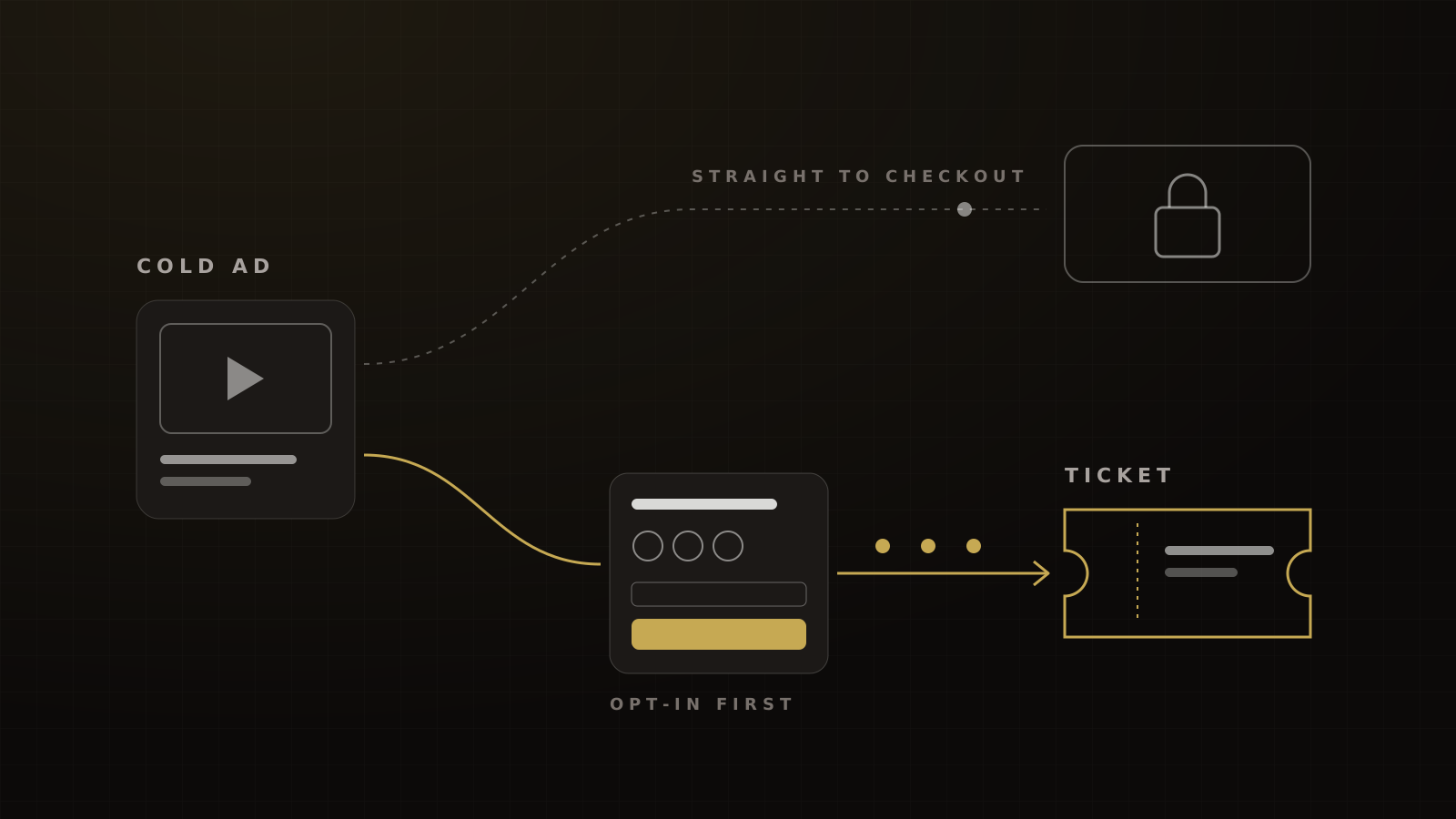
- We moved cold traffic to a curiosity-led opt-in first and sold the ticket to the people who opted in. The campaign's job changed from buying tickets to buying leads, and the KPI moved from CPA to CPL.
- Meta's ad sets usually need about 50 results in a week to exit the learning phase.[1] A lead event gets there. A high-priced ticket purchase on cold traffic rarely does.
- We rewrote the page to sell the why before the logistics, "clouds before dirt", and put the headliners right under the hero.
- A cheap CPL can hide weak ticket revenue. Judge the switch on visits, qualified opt-ins, buyers and net ticket revenue.
This is a case study about one event funnel, anonymized: a large multi-day industry event selling a high-priced ticket on cold Meta traffic. The short version is that we stopped asking strangers to buy on the first click.
The short answer: what we changed and why
We changed three things at once.
- The funnel. Cold traffic went to a curiosity-led opt-in page instead of the ticket checkout. The ticket offer moved to the confirmation page and the follow-up.
- The optimization event. Meta optimized for leads instead of ticket purchases, so the ad sets had enough results to learn from.
- The page. The copy led with the outcome, the headliners moved up, and the logistics moved down.
Because they happened together, we don't credit any single one of them with the result. That matters if you plan to copy this: copy the system, not one piece.
The starting point
The ads sent cold traffic straight to a ticket page with a price and a checkout. Three problems showed up in the data.
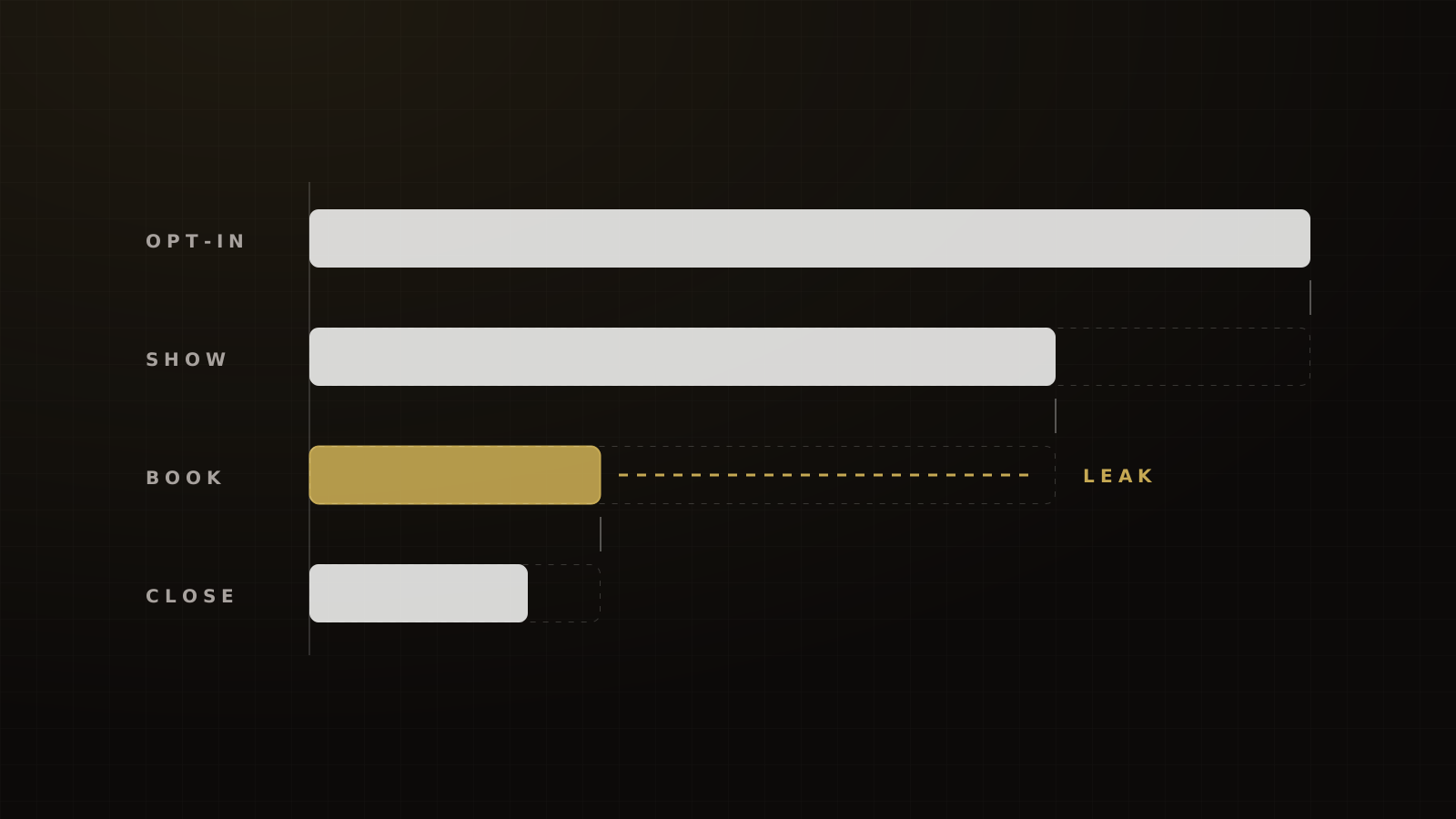
Page views weren't being captured. Visitors who didn't buy left nothing behind: no email, no phone, no way to follow up. Every non-buyer was a click paid for once and lost.
The ticket CPA was far above target. The client needed tickets at a cost the event's economics could carry, and cold traffic wasn't buying at that cost.
The leak was after the click. Check the ads before you blame the page. On the funnels we run, link click-through on a working cold event ad sits around 1.8% to 2.5%. Our head of paid media's caveat holds, though: CTR depends on the ad style, so don't judge a direct-offer ad against a curiosity ad. Here, people clicked, landed on a price and left.
Why cold traffic shouldn't hit a checkout first
The learning-phase math
Meta says ad sets usually exit the learning phase after about 50 results in the week after the last significant edit. While they're learning, CPA is higher and less stable.[1] An expensive ticket bought by cold strangers is a rare event. A lead is a frequent one.
Here's the arithmetic, using made-up numbers to show the method:
| Optimization event | Cost per result | Results per week | Exits learning? |
|---|---|---|---|
| Ticket purchase | $2,000 | 3.5 | No |
| Lead (opt-in) | $20 | 350 | Yes |
Hypothetical figures, not the client's. Swap in your own CPL and CPA.
At three or four purchases a week, the ad set never stabilizes. At 350 leads, it does, and Meta learns what a converting visitor looks like. Before we judge a new setup, we give it 7 days at the planned daily spend, or until it has about 50 optimization events. Meta's standard events give you the options: Lead, CompleteRegistration and Purchase.[2]
Temperature
Russell Brunson's funnel thinking starts with the temperature of the traffic: cold visitors need to become subscribers before they become buyers. A ticket checkout asks for the biggest commitment at the coldest moment.
Price shock compounds it. Among US shoppers who abandoned a checkout for reasons other than browsing, 40% cited extra costs and 12% said they couldn't see the total cost up front.[3] Baymard's 2026 event-ticketing research found users struggle with pricing communication, which leads to "numerous abandonments", and named late-revealed fees as a trigger.[4]
The KPI changes with the job
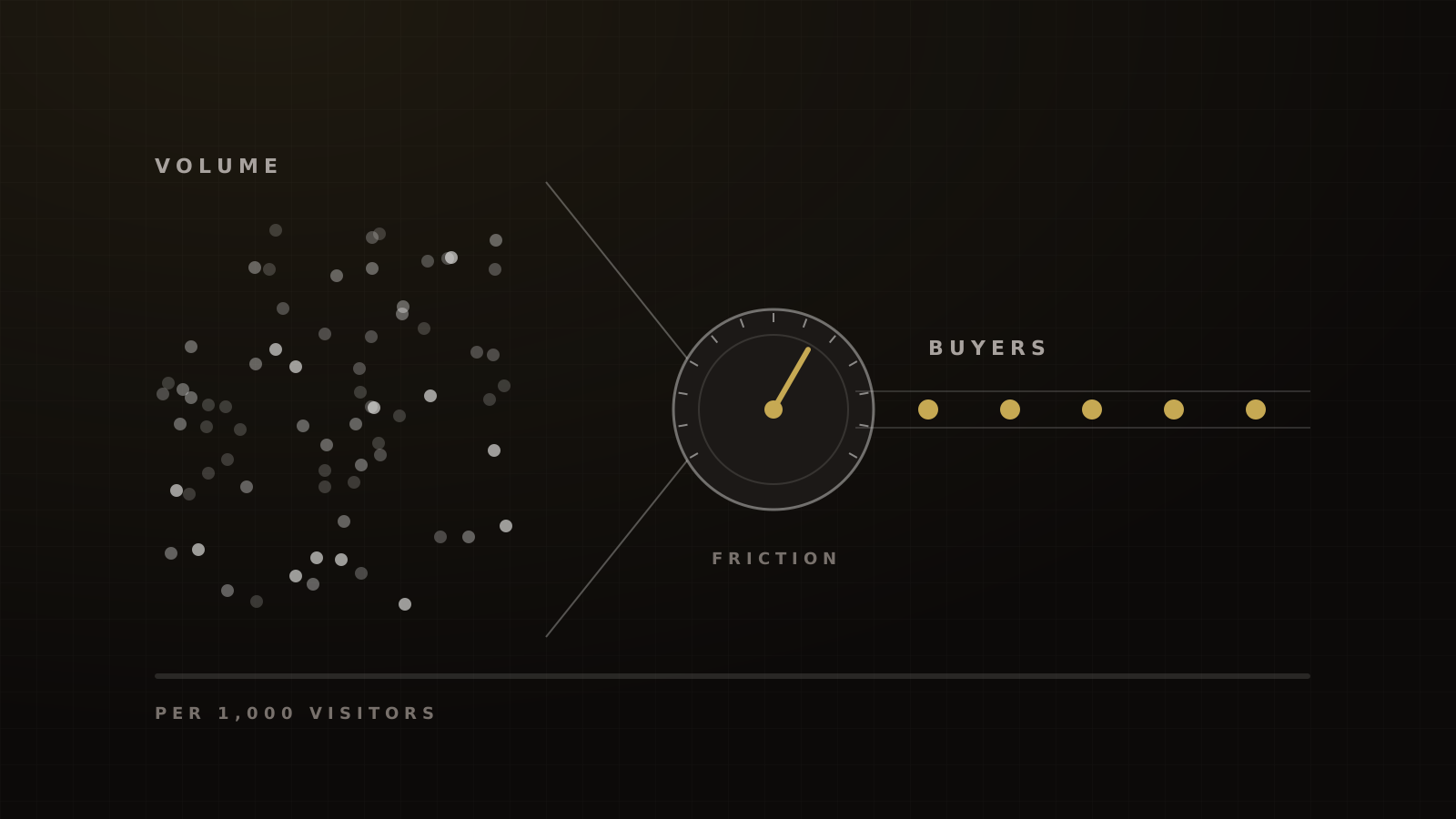
Once the campaign's job is buying leads, CPL is the number you manage day to day. On the funnels we run, a curiosity-led event opt-in on cold Meta traffic costs $15 to $25 per lead. LocaliQ's 2026 benchmarks put the all-industry Facebook lead-campaign average at $27.39, and Education & Instruction at $26.31.[5]
CPL is a steering number, not the scoreboard. The scoreboard is still ticket revenue.
The new page: clouds before dirt
The original page read like a logistics sheet: dates, venue, schedule, pricing. Our note in the review was that it had too much dirt (logistics and specifics) and not enough clouds (the reason to go). Logistics matter once someone wants to go. Before that, they're homework.
Lead with the outcome, not the agenda
The hero now says what an attendee walks away with. That's Hormozi's value equation in practice: the dream outcome first, then proof it's likely, then how little effort it takes. The agenda and venue went below the fold, where interested visitors look for them.
The rewrite also followed Brunson's hook, story, offer order: a hook that earns the next line, a short story of why the event exists, and the opt-in as the offer.
Headliners high
Speaker headshots went directly under the hero. For a large industry event, the lineup is the proof. If a visitor recognizes one face in the first screen, the rest of the page has a reason to exist.
An autoplay video player, not an embed
We replaced a YouTube embed with an autoplay video player. An embed invites people to leave for YouTube; a player keeps them on the page.
Don't expect a fixed lift from video. The widely quoted "video increases conversion 86%" figure traces to one vendor test on one tutoring site's page.[6]
Simple copy
Unbounce's 2024 analysis of 41,000+ landing pages found pages written at a 5th to 7th grade reading level converted at 11.1%, against 5.3% for professional-level copy.[7] That's a correlation, not a test, but it matches what we see. The same dataset found 83% of landing-page visits were on mobile,[7] so we wrote and reviewed every section on a phone first.
For the opt-in rate to aim for, cold Meta traffic to a generic opt-in page converts 15% to 22% in our experience. Registration pages run higher: Bizzabo's average visit-to-registration rate was 21.5%, with dynamic registration flows at 24.4% against 11.6% for static ones.[8] That's mostly B2B event data, and dynamic versus static is a correlation.
The opt-in → ticket path
The opt-in is the start of the sale, not the end of it.
The confirmation page sells the ticket. The page after opt-in confirms the sign-up and makes the ticket offer while interest is highest. The components we put on it are in what to put on a thank-you page.
A two-step order form. HighLevel's two-step order form captures contact details in step one and payment in step two.[9] Anyone who starts checkout and stops gets an abandoned-checkout follow-up. Show the full price, fees included, before the form, not inside it.
Don't confuse this with two-step opt-in forms. Across 10 Leadpages split tests, two-step and one-step opt-ins averaged 44% and 45%, and one-step won 6 of the 10.[10] Lead-first versus straight-to-checkout is a funnel decision; form layout is a separate test.
Timing. Ticket buyers decide late. Eventbrite's music data showed 57% of tickets sold a week or less before the show, with an 18.5-day average lead time.[11] That's music, not conferences, so read it as direction. For in-person events we run paid ads 10 to 14 days out and start warm email and SMS from about 21 days.
A VIP tier, if the event has one. We price it so VIP revenue covers 100% or more of the VIP ad spend. The model is in free vs paid event tickets.
Results
The results belong to the client, so this section waits for their approval. What we can say: the switch moved the campaign's daily KPI from ticket CPA to CPL, gave the follow-up a list to work, and gave Meta enough results to learn from.
The judgment rule we applied is the one to copy: visits → qualified opt-ins → ticket buyers → net ticket revenue. A CPL that falls while ticket revenue doesn't move is not a win.
For context, Eventbrite reports free events on its own ad network converted at 10% in early 2025, but it doesn't define the denominator.[12] We found no method-disclosed benchmark for cold Meta traffic buying a paid live-event ticket.
What we'd do differently
Test the creative earlier. Speaker-lineup statics are usually the strongest ads we run for big events. For this client they underperformed story-led video. We'd have tested both in week one instead of assuming.
Change one thing at a time where possible. We changed the page, the funnel and the optimization event together because the old setup was losing money daily. That was the right call commercially. It also means we can't say how much of the result each change produced.
Common mistakes
- Copying the CPL and ignoring revenue. A cheaper lead that never buys a ticket is an expensive lead.
- Optimizing for Purchase with a handful of sales a week. The ad set stays in learning.
- Leading with the venue and schedule. Nobody plans a trip to something they don't want yet.
- Hiding fees until checkout. Show the full price before the form.
For stage-by-stage benchmarks, start with the funnel CRO guide, and for page-level numbers see landing page conversion rate benchmarks. If you're not sure where your own event funnel leaks, the funnel diagnostic is the place to start, and the event marketing guide covers what happens after the ticket. To see how we'd build yours, book a strategy call.
Frequently asked questions
Sources
- 1.About the learning phase. Meta Business Help Center, living doc, checked 2026-10-04.
- 2.Meta Pixel reference: standard events. Meta for Developers, living doc, checked 2026-10-04.
- 3.Cart abandonment rate statistics. Baymard Institute, 2025-09-22.
- 4.Event ticketing UX research launch. Baymard Institute, 2026-09-24.
- 5.Facebook advertising benchmarks. LocaliQ / WordStream, 2026-09-23.
- 6.EyeView brochure (archived by Duct Tape Marketing). EyeView, undated, archived 2016.
- 7.Conversion Benchmark Report. Unbounce, 2024-08-29.
- 8.Event Program Benchmarks 2026. Bizzabo, 2026-03-05.
- 9.Two-step order form. HighLevel Support Portal, 2026-09.
- 10.2-step opt-in forms. Leadpages, 2020-07-28.
- 11.Event statistics roundup. Eventbrite, 2024-10-18.
- 12.Eventbrite Ads for free events. Eventbrite, 2025-07-23.
Written by
Ray GillespieCo-Founder & COO
Ray runs day-to-day operations across every Victory engagement, building the systems, automations and AI-powered workflows that hold the machine together. He has overseen operations behind more than $120M in revenue.
Part of the guide: Funnel CRO: Benchmarks, Diagnostics and Tests for Coaching, Course and Event Funnels