How to Price a Low-Ticket Offer: Under $50, Under $100 or Under $1,000?
The buyer sets the ceiling. Consumers impulse-buy under $50 to $100; business owners judge an entry offer on ROI. The pricing rules and fee math we use.
 Devin AlexanderCo-Founder & CEO
Published 9 min read
On this page
Key takeaways
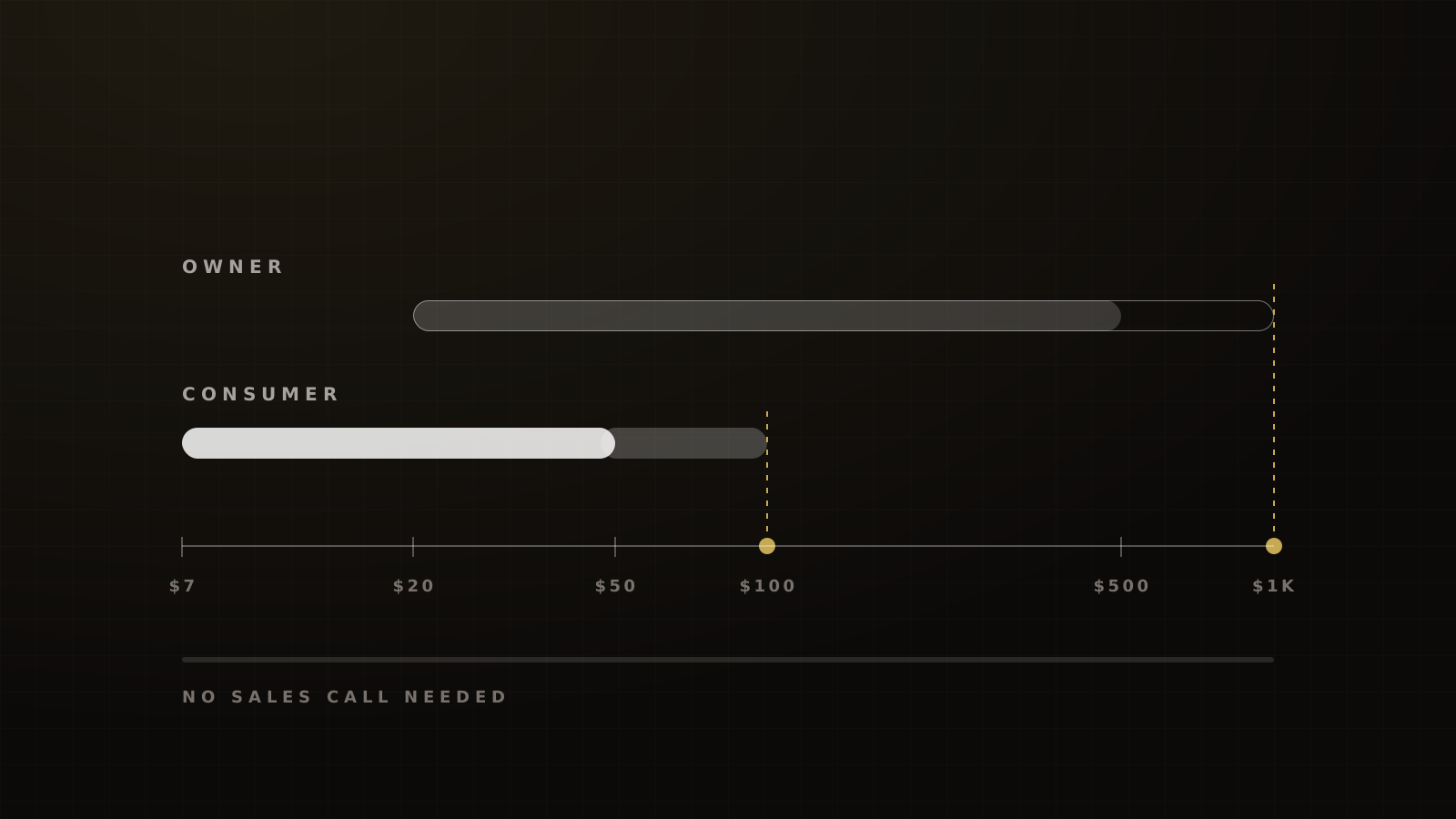
- The buyer sets the ceiling. For consumers, price the entry offer under $50 and almost never over $100. For owners buying for their own business, it can run into the hundreds, up to about $1,000.
- The test is the same for both: cheap enough to buy without a sales call, valuable enough to feel like a steal.
- Business buyers really do pay more. Kajabi's median one-time offer is $275 in business and finance, against $89 in lifestyle and hobbies.[1]
- Too cheap has costs. Stripe's standard fee takes about 7% of a $7 sale,[2] and buyers who pay less can get less out of the same product.[3]
- At low prices, a quiz, calculator or audit is easier to sell than another course.
Price a low-ticket offer for the person buying it. Consumers buy on impulse, so keep their entry offer under $50 and almost never over $100. Business owners buy on return, so their entry offer can go into the hundreds, up to about $1,000.
Both prices obey one rule. The offer has to be cheap enough that nobody needs a sales call to say yes, and valuable enough that the buyer feels they got more than they paid for.
The rule: low enough to buy without a call
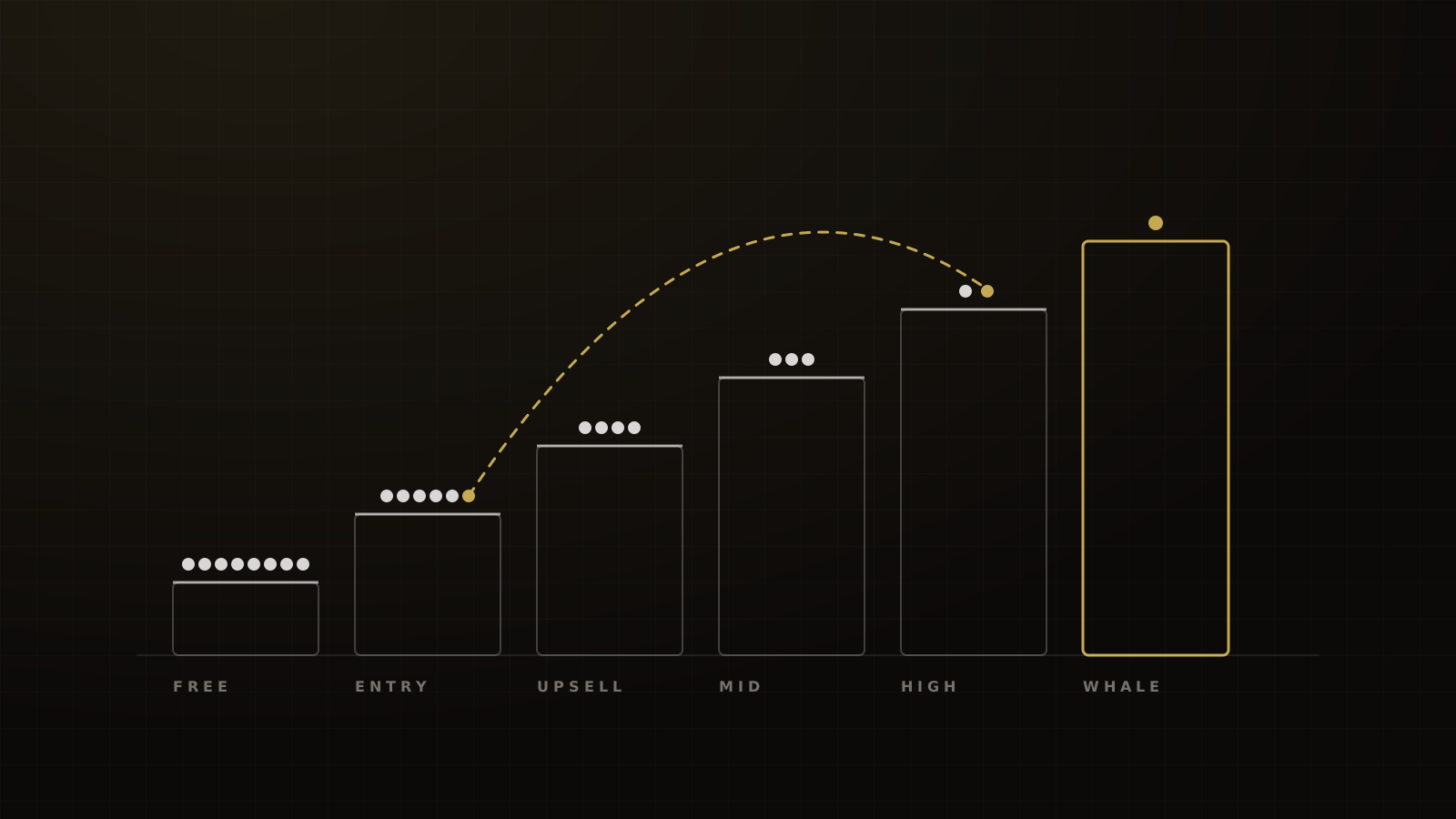
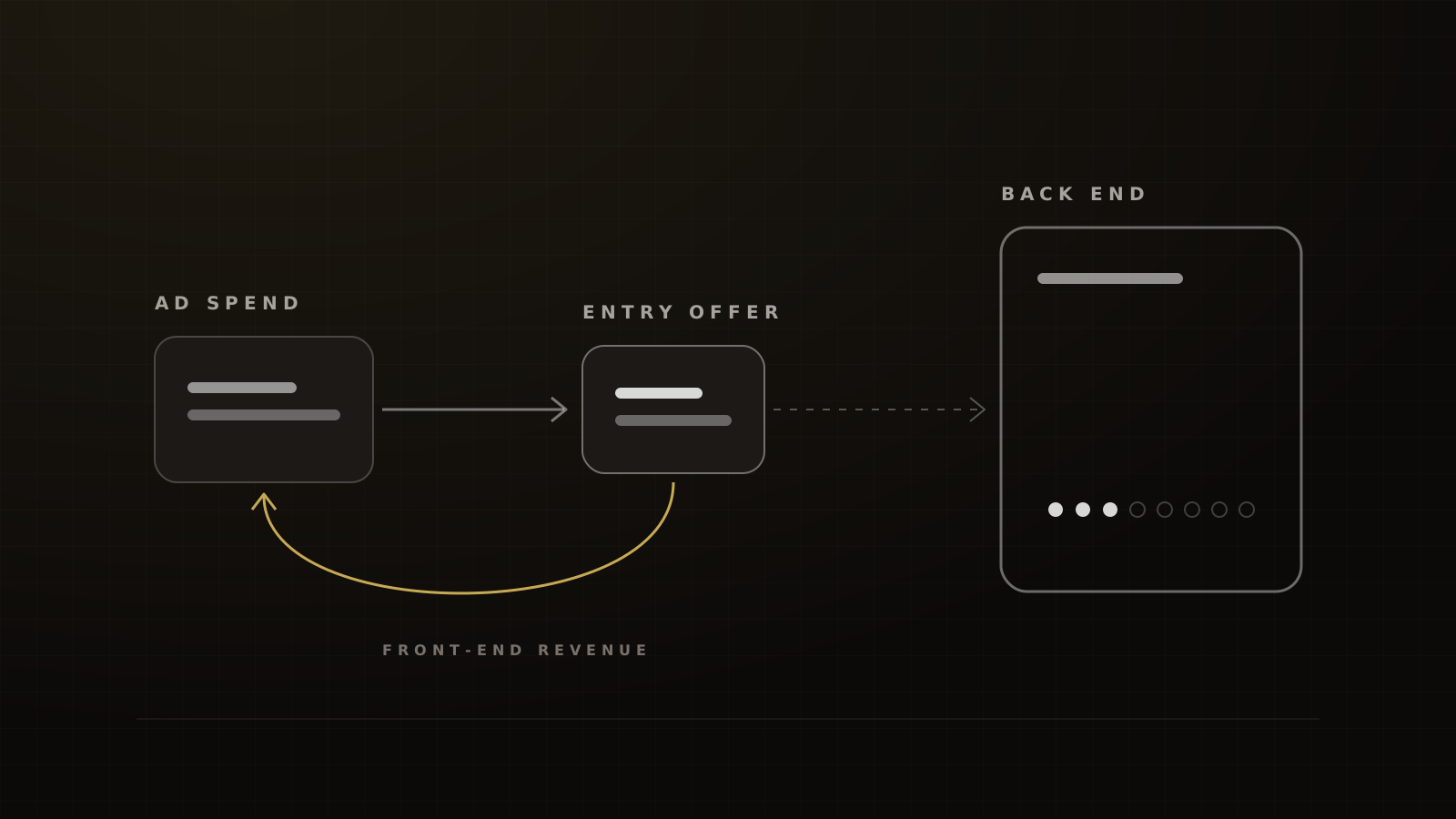
An entry offer has one job. It turns ad spend into buyers at roughly break-even, so the ads pay for themselves and the profit comes later, from the rest of the offer ladder. That's the whole idea behind a self-liquidating offer funnel.
So the entry price isn't where you make money. Kajabi's platform data makes the point from the other direction: experts whose most expensive offer is under $50 typically earned $178 in total, while those with at least one offer at $2,500 or more typically earned $174,730.[4] Kajabi flags that this is correlation, not cause. The lesson still holds. The entry price only matters if it leads somewhere.
The classic price bands come from two places. The tripwire, credited to Ryan Deiss and Perry Belcher, is a tiny first purchase, around $7 in Russell Brunson's telling. Brunson's self-liquidating offer sits higher, roughly $37 to $97, because it has to cover ad costs. DigitalMarketer says tripwires are usually $1 to $20, then adds that in high-ticket markets a $500 tripwire can still count as low ticket.[5]
That caveat is the real answer. The band depends on the buyer, and the buyer is the variable most pricing guides leave out.
Consumers: under $50, rarely over $100
Consumers buying for themselves are in impulse territory. In PartnerCentric's Q1 2026 survey of more than 1,000 US consumers, the median impulse purchase was $50, and people made about seven a quarter.[6]
The ceiling isn't fixed. The same survey found the biggest single impulse buy averaged $355,[6] and Splitit and PYMNTS found 36% of consumers had made an impulse purchase of $250 or more in three months, with a median of $497.[7] But those are purchases from brands people already know. A stranger's digital product, seen in a cold ad, has to clear a much lower bar of trust.
What creators actually get per sale lines up with the sub-$100 rule. Stan's 2025 data from more than 80,000 creators shows a typical $51 per digital-download sale and $96 per course sale.[8]
On the funnels we run, cold traffic buys a $7 to $47 sales page at 3% to 6%. There's no measured public benchmark for that, so treat it as our working range, not an industry number.
The fee floor: what a $7 sale really nets
Fixed fees hit tiny prices hardest. Stripe's standard US card fee is 2.9% plus 30 cents, and it doesn't return the original fee on a refund. A dispute costs $15.[2]
| Price | Stripe (2.9% + $0.30) | Gumroad direct (10% + $0.50) |
|---|---|---|
| $7 | $0.50 (7.2%) | $1.20 (17.1%) |
| $27 | $1.08 (4.0%) | $3.20 (11.9%) |
| $97 | $3.11 (3.2%) | $10.20 (10.5%) |
Derived from each platform's published standard rates. Excludes international and currency surcharges, refunds and disputes.
Gumroad's direct-sale fee is 10% plus 50 cents.[9] PayPal offers micropayment pricing of 4.99% plus 9 cents to approved merchants, against 3.49% plus 49 cents on standard PayPal Checkout.[10]
Now add one dispute. At $7, a single $15 dispute fee costs more than two sales bring in. At $47 it's an annoyance. That's why a sub-$20 offer rarely works as the only thing funding cold ads.
Charm pricing, honestly
Prices ending in 9 do have evidence behind them. In three field experiments with a mail-order retailer, $9 endings raised demand every time, and more so for new items, where buyers had less price information.[11]
That study is 23 years old and covers catalog clothing. Nobody has published a controlled test showing $27 beats $30 for a digital product. Kajabi reports $97 as the most popular digital-product price,[1] which tells you it's common, not that it causes lift. Pick an ending you like and spend your testing budget on the offer.
Business owners: when $500 to $1,000 is still "low ticket"
A business owner looks at an entry offer differently. The question isn't "can I afford this?" but "will this pay for itself?" A $497 audit that finds one fixable leak is an easy yes for someone who runs a business. The same $497 is a big decision for someone buying a hobby course.
The platform data supports this. Kajabi's median one-time offer is $275 in business and finance against $89 in lifestyle and hobbies.[1] And DigitalMarketer's $500 tripwire line is written for exactly these markets.[5]
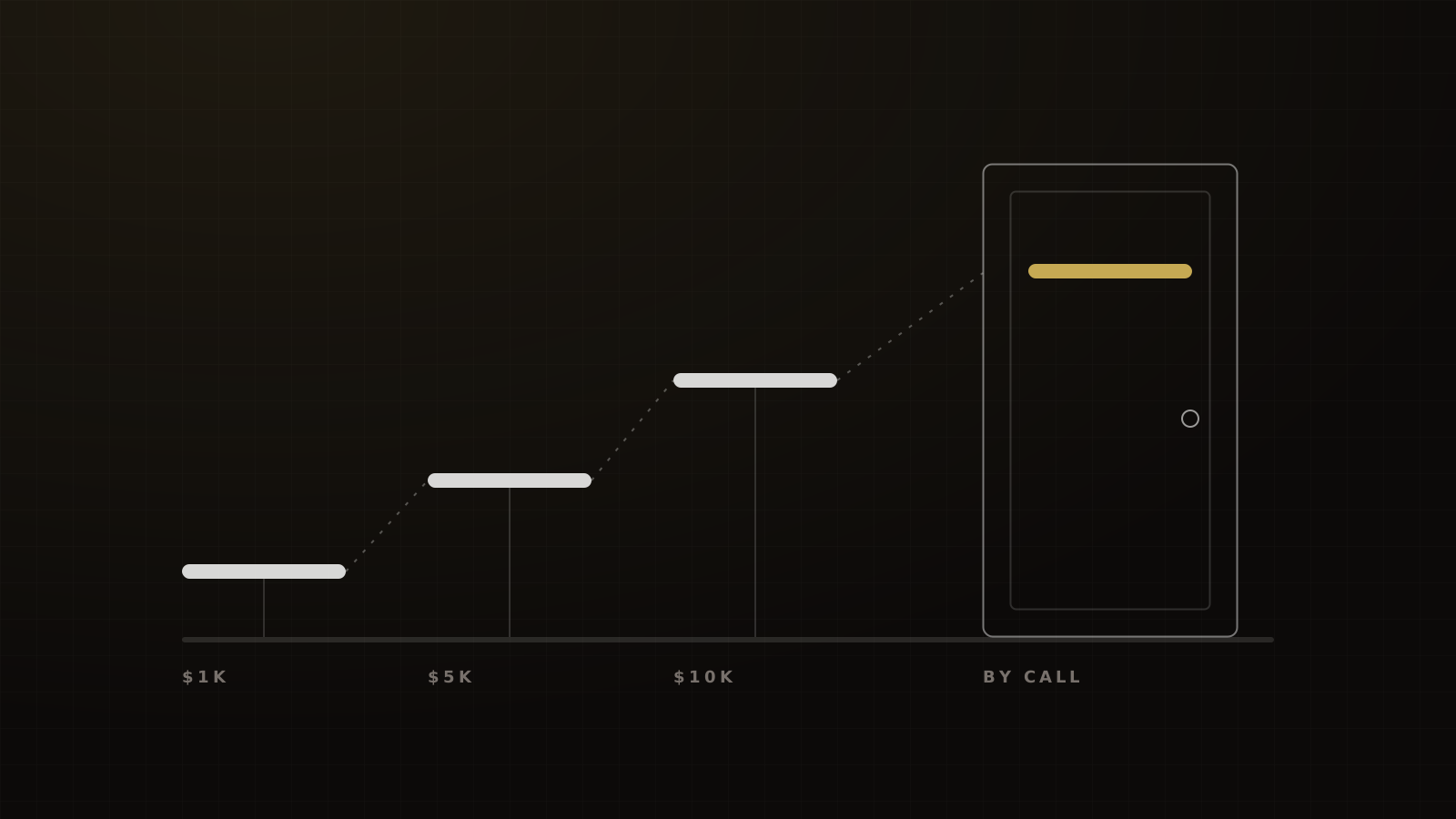
So for owner-buyers, we're comfortable taking an entry offer into the hundreds, up to about $1,000, as long as it still doesn't need a call to close.
The owner vs the employee
There's a catch no pricing guide we've seen covers. The owner is the approval process. An employee isn't.
Ramp publishes an example expense policy that auto-approves spending under $50 (or gives it a single quick review) and sends $50 to $500 to a manager.[12] It's an example, not survey data, and G2's 2025 survey of 1,169 B2B software buyers reports no dollar threshold at all.[13] Still, the point stands: if your buyer has to ask someone, a $497 impulse buy turns into a meeting.
If your ads reach owners, price for the owner. If they reach managers and staff, stay under the approval line their company is likely to use, or sell the entry offer to the owner directly.
What to sell business owners at this price
- An audit or diagnostic with a written result.
- A toolkit: templates, scripts, calculators, swipe files.
- A half-day workshop that ends with a finished asset.
- An implementation session where something gets built.
Each one gives a tangible return the owner can see before the next offer arrives.
Too cheap backfires
Low prices have a cost beyond fees. Alex Hormozi's virtuous cycle of price, from $100M Offers, argues that cheap offers attract the least committed buyers, who get worse results, which leaves you no margin to serve them well. Charge more and the whole cycle runs the other way. In his words: "Those who pay the most, pay the most attention."
There's research behind the idea. In lab experiments by Shiv, Carmon and Ariely, people who paid a discounted price for the same energy drink solved fewer puzzles than people who paid full price.[3] Price changed what the product did for them.
Payment also changes follow-through. On edX, about 46% of paying learners completed their course, against 3.13% of all participants.[14] Paying didn't cause all of that gap, but it's a large one.
We see the same pattern at events. Paid VIP tickets in the $100 to $297 range show 85% to 90% in our experience, against 35% to 45% for a well-run free one-day event. We break down the event version in free vs paid event tickets.
The cheapest products also earn the least. On Kajabi, products under $25 make up 14.8% of the catalog but 3.5% of expert earnings, and the median one earns $96 in its lifetime.[1]
Give a reason for the low price
A low price with no explanation reads as a trap. Gary Bencivenga's reason-why principle says every offer should tell the buyer why it's priced the way it is, ideally with the word "because".
Good reasons are true and specific:
- "It's $27 because it's the first module of the full program, and we'd rather you try it than wonder."
- "It's priced at cost because we want you on the next workshop."
- "It's a founding cohort, so it's cheaper while we refine the delivery."
Don't invent a higher "original" price to cross out. A fake anchor is the fastest way to make a real discount look dishonest.
Tools beat courses at low prices
Ray put it plainly on a client call: "Courses alone are a little worn out." Another video course is the easiest thing for a cold buyer to ignore, and the hardest to finish.
A tool gives a personal result. A quiz that scores your funnel, a calculator that shows your break-even, an audit that names your top three leaks: each one feels like consulting, which makes a $20 offer a no-brainer.
Two rules for tool offers:
- Charge before the result, not after. The result is the reason to buy. Give it away first and there's nothing left to sell.
- Make it easier to use what they already have. One public tripwire example: a $7 pack of three graphic templates, offered on the thank-you page, that made a free guide easier to put into practice.[15]
For a full build of the purchase-to-booking sequence that follows, see our guide to the low-ticket funnel.
Common mistakes
- Copying a price band from a course. "$7 tripwire" and "$37 to $97 SLO" are starting points, not answers.
- Pricing so low that fees and disputes eat the margin. Run the fee math before you pick the number.
- Selling a B2B entry offer to people who need approval. Price for the person holding the card.
- Treating the entry offer as the business. It's the front door. Build the rooms behind it before you buy traffic.
If you want a second pair of eyes on your entry price and the ladder behind it, book a strategy call.
Frequently asked questions
Sources
- 1.What experts actually charge. Kajabi, 2026-08-05.
- 2.Pricing. Stripe, undated, checked 2026-10-04.
- 3.Placebo effects of marketing actions: consumers may get what they pay for. Shiv, Carmon & Ariely, Journal of Marketing Research 42(4), 2005.
- 4.The value ladder that actually works. Kajabi, 2026-08-05.
- 5.Customer value optimization. DigitalMarketer, 2019-09-06.
- 6.Impulse buying statistics. PartnerCentric, 2026-04-13.
- 7.More than half of Americans fear covering unexpected expenses in 2025. Splitit and PYMNTS, via PR Newswire, 2025-03-31.
- 8.State of the creator economy. Stan, 2026-07-21 (updated).
- 9.Pricing. Gumroad, undated, checked 2026-10-04.
- 10.PayPal business fees (US). PayPal, 2026-10-01.
- 11.Effects of $9 price endings on retail sales: evidence from field experiments. Anderson & Simester, Quantitative Marketing and Economics 1(1), 2003-03.
- 12.Expense management workflow. Ramp, 2025-12-26.
- 13.Buyer behavior in 2025. G2, 2025-05-14.
- 14.Study offers data to show MOOCs didn't achieve their goals. Inside Higher Ed, reporting Reich & Ruipérez-Valiente in Science, 2019-01-16.
- 15.Generate recurring revenue. DigitalMarketer, 2016-04-13.
- 16.How to increase average order value. SamCart, 2026-04-02 (updated).
Written by
Devin AlexanderCo-Founder & CEO
Devin architects Victory's revenue systems: team structure, comp plans, scripts and the accountability frameworks that make sales floors predictable. He has generated more than $150M in sales and trained more than 250 closers.
Part of the guide: Offer Architecture: Value Ladders, Grand Slam Offers and Self-Liquidating Front Ends