High-Ticket Offer Pricing: Whale Tiers, Price Gaps and Why the Six-Figure Price Stays Off the Page
Price the high ticket from the top down: a whale tier sold only on calls, rungs far enough apart to be different decisions, and a start-high rule.
 Devin AlexanderCo-Founder & CEO
Published 8 min read
On this page
Key takeaways
- Price from the top down. Build a top tier for the buyers who want the most help, and sell it only on a call.
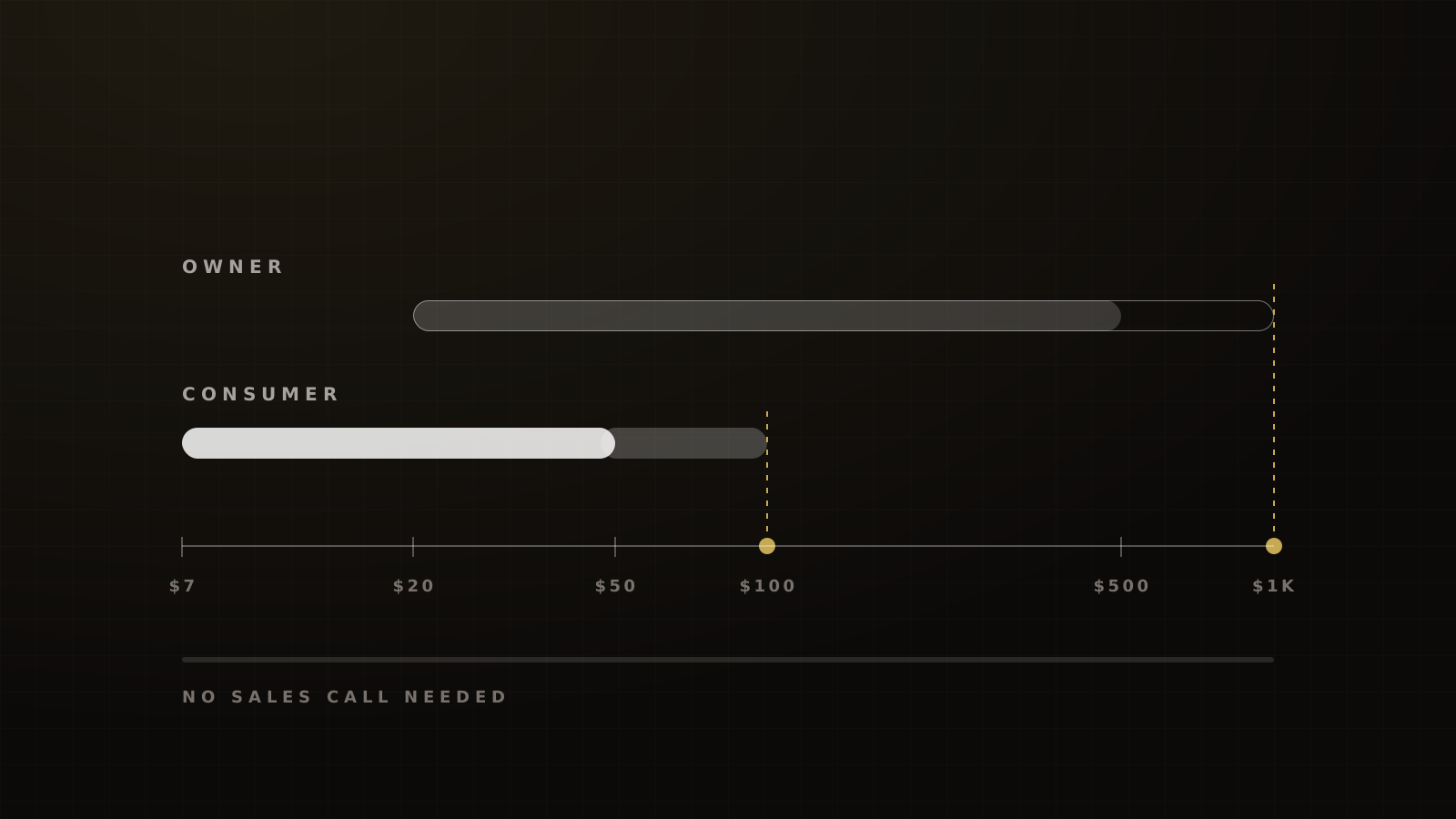
- Keep the six-figure number off the landing page. Show entry and mid prices, and give qualified buyers a budget signal for the top tier.
- Space the rungs far enough apart to feel like different decisions. A $10,000 offer stands alone, not beside a $1,000 upsell.
- Decoy tiers are weaker than their reputation. A 38-study replication found no decoy effect outside abstract tests.[1]
- Start high and don't discount by country. Raising a price later feels unfair to buyers; 82% judged one opportunistic increase unfair in a classic study.[2]
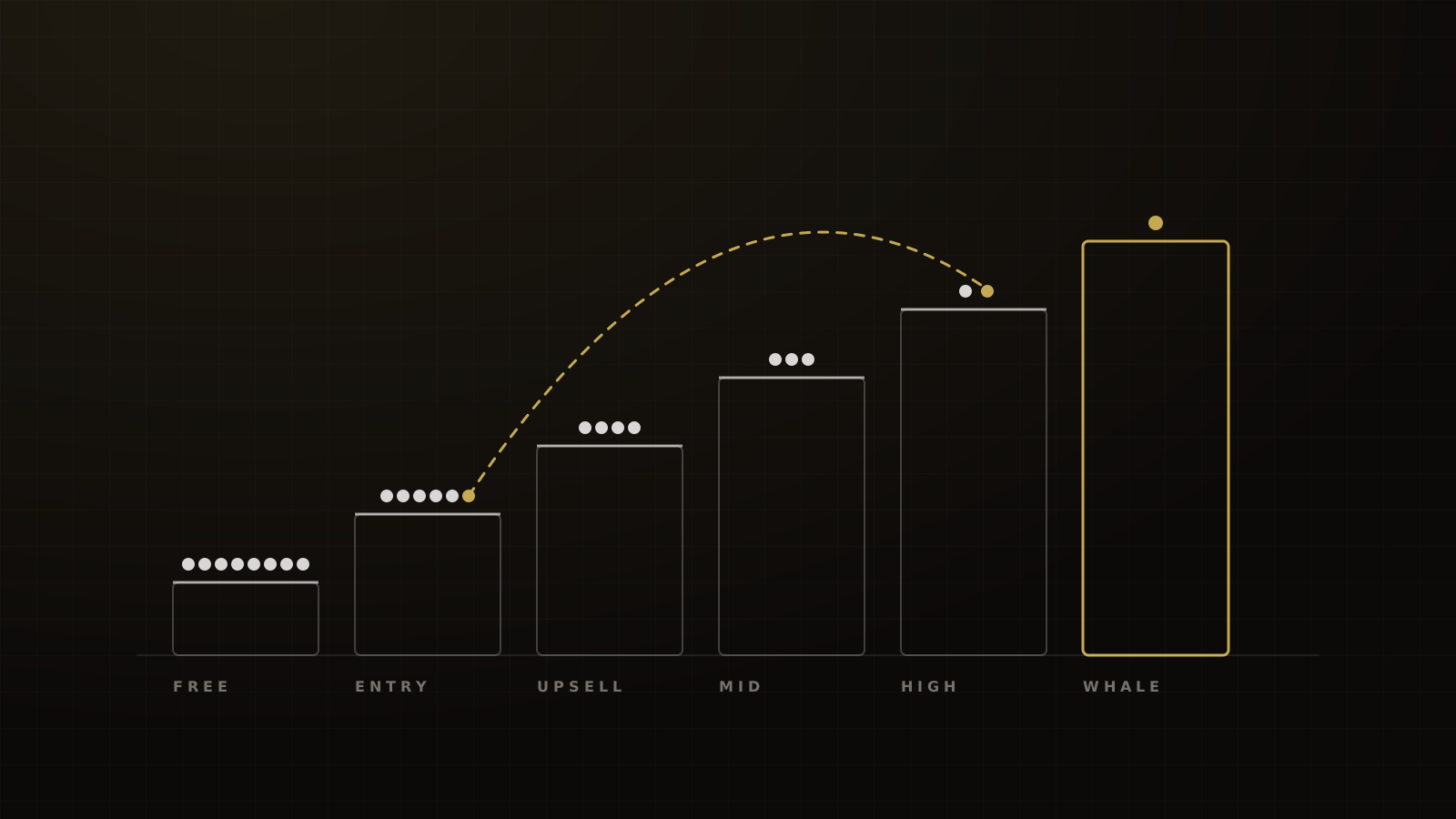
Price high-ticket offers from the top down. Decide what the most committed buyer would pay for the most help, build that tier, and sell it only on a sales call. Then space the rungs below it so each one feels like a different decision.
Four rules come out of the pricing decisions we make with clients: keep the six-figure price off the page, mind the gaps between rungs, start high, and never discount by country. Here's each one, with what the research supports and where it's our experience.
Build the top rung first
A ladder without a top rung leaves money on the table. Some buyers want more help than your biggest package offers. If there's nothing to sell them, they buy less from you or more from someone else.
Kajabi's platform data shows how much the top rung matters. Experts with at least one offer at $2,500 or more typically earned $174,730, while experts whose top offer was under $50 typically earned $178.[3] Kajabi flags that this is correlation, and successful experts may simply add premium offers. Consulting shows a similar pattern: in a self-selected survey of about 1,000 consultants, 51% of value-based pricers averaged $10,000+ projects, against 39% of hourly billers.[4]
Alex Hormozi's virtuous cycle of price, from $100M Offers, explains why premium buyers often do better: they commit more, so they get better results, and you have the margin to serve them well. Acquisition.com's own checklist tells sellers to be more expensive than everyone else.[5]
Don't build the top rung from hourly math. ICF's 2025 study puts the average one-hour coaching session at $234.[6] That's useful context for one-to-one time. It says nothing about what a done-with-you program, a mastermind or a bespoke engagement is worth.
One of our favorite stories makes the point. A buyer on a sales call asked whether the top package was really the top. It was, so we built a bigger one on the call. Have that rung ready before someone asks.
The price-gap rule
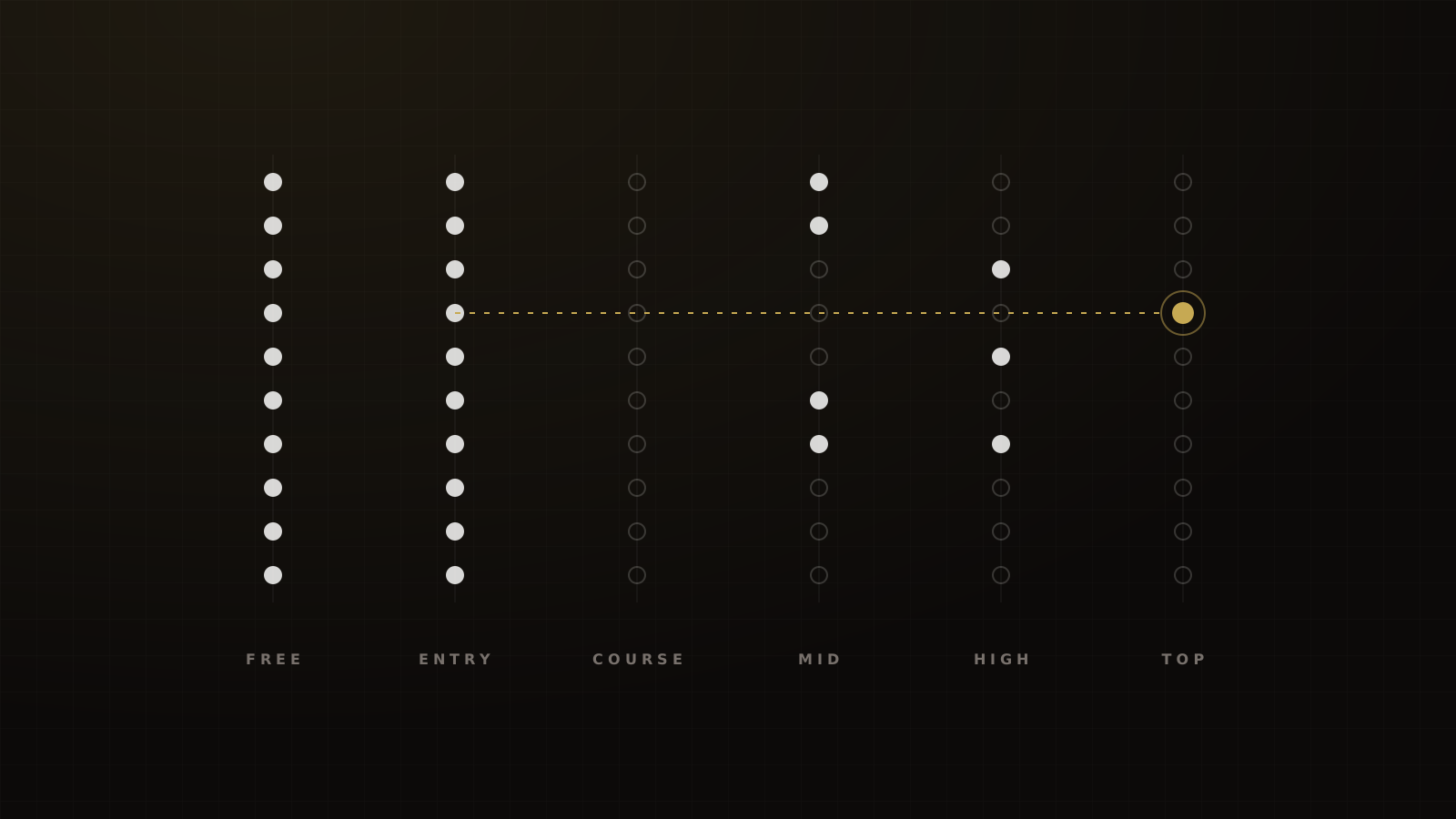
Rungs that sit too close cannibalize each other.
You wouldn't do a $10,000 offer with a $1,000 upsell. People are going to aggregate toward the cheaper product.
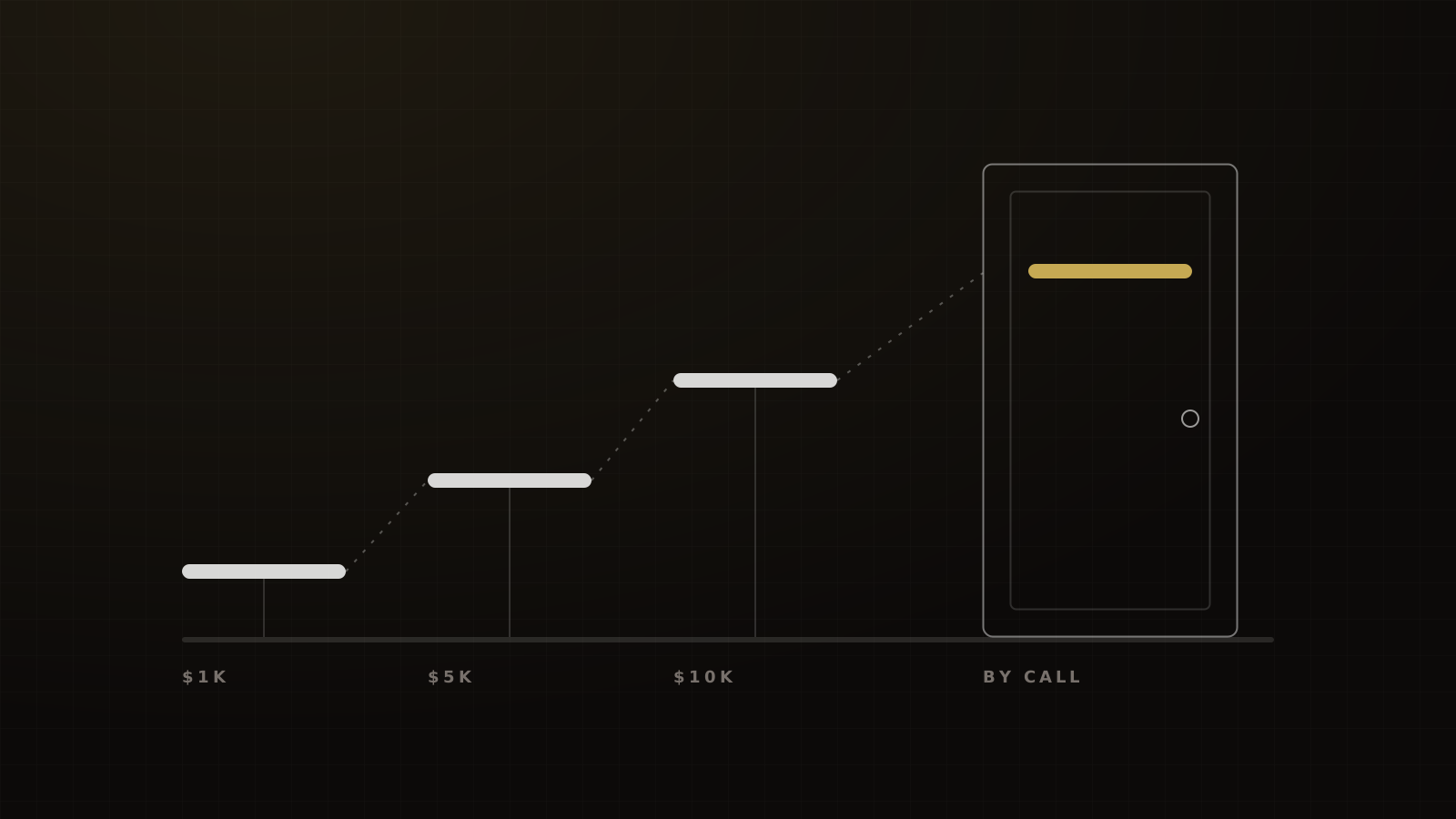
If the cheaper option can substitute for the expensive one, most buyers take it. So the working points we use with clients are offers around $1,000 and $5,000, with $10,000 and up as a solo offer. You can still mention the cheaper option to someone who can't afford the big one. You just don't push it.
Decoys, honestly
A lot of pricing advice says to add a deliberately bad middle tier, a "decoy", to make your target look better. The original 1982 research did find that adding a clearly worse option shifts choice toward the option it resembles.[7]
The effect is much weaker in practice. Frederick, Lee and Baskin ran 38 studies and found no decoy effect outside abstract numeric tests, including a failed replication of a famous classroom example.[1] Across 3.6 million real wine purchases, decoys shifted preference by roughly 1%.[8]
So don't build a fake tier. Every tier should be something you'd be happy to sell.
How many tiers to show
The famous jam study found 30% of shoppers bought from a six-jam display, against 3% from a 24-jam display.[9] But a meta-analysis of 50 experiments found the average choice-overload effect was virtually zero,[10] and a later one found it depends on how complex the choices are and how unsure the buyer is.[11]
High-ticket offers are complex and buyers are unsure, which is exactly where overload bites. Ray's rule is simple: don't overwhelm people with too many options. We show two or three tiers on a page, never more.
Keep the six-figure price off the page
Ray's rule, from a client call: "I definitely wouldn't mention the 100k price point. You would only share that number on a sales call."
A top-tier price on a landing page does two kinds of damage. It scares off the mid-tier buyer, who now thinks everything is out of reach. And it does nothing for the buyer who would pay it, because that buyer needs a conversation about scope anyway.
Sales-led sellers behave the same way. In SBI's 2025 survey of 288 SaaS pricing leaders, 69% of sales-led or sales-assisted companies don't publish prices at all.[12]
Buyers push the other way. In TrustRadius's 2024 report, 51% of buyers at enterprise price points said they wish all vendors had transparent pricing.[13] A G2 audit found only 4% of its product profiles list explicit prices,[14] while 72 of 100 top B2B SaaS sites have a pricing page.[15]
Here's how we reconcile them. Show the prices of repeatable offers with fixed scope. Keep only the bespoke top tier for calls, and give it a budget signal so qualified buyers don't have to guess: "by application, typically five figures".
The call door matters more than most founders think. In our experience, 40% to 60% of a $1,000 to $10,000 webinar offer's sales close through "talk to someone" rather than self-serve checkout. There's no public benchmark for that split. And calls booked no more than about three days out show 82% to 88% of the time on the funnels we run, so keep that booking window short. Our guide to the high-ticket sales team covers the call side.
Start high, discount never
You can always lower a price. Raising one is much harder.
Devin set a client's VIP tier at $197 "because we can never raise the price, but we can always decrease the price." There's no direct study of course or coaching price rises, but the fairness research points the same way. In Kahneman, Knetsch and Thaler's classic survey, 82% of 107 respondents judged it unfair for a store to raise snow-shovel prices from $15 to $20 after a storm.[2] Buyers judge increases by what they paid before.
Discounting has a second cost. In lab experiments, people who paid a discounted price for the same product got less benefit from it.[16] When a buyer pushes on price, Hormozi's advice in $100M Offers is to add a bonus aimed at their objection rather than cut the price. We do the same.
Starting high also works lower on the ladder. The paid VIP event tickets we sell at $100 to $297 show 85% to 90% in our experience, and we price the VIP tier so its ticket revenue covers its own ads. See free vs paid event tickets for the data behind that.
Don't discount by country
Many checkout tools support country pricing, so this is a policy, not an industry rule. For bespoke and high-ticket offers, our policy is no geographic discounts.
The reason is that buyers talk. Communities, cohorts and masterminds mix people from everywhere. When one member learns another paid less for the same thing, the result in our experience is resentment, cancellations and disputes. We found no public data on how often this happens, so treat it as our experience.
If you want a cheaper option for a market, make it a different, smaller offer, not a discount on the same one.
Markup discipline
Every rung has to fund its own acquisition. Ray's rule of thumb is to "mark it up at least 25 plus percent". Below that, the offer can't pay for the ads and the sales team that sell it.
The bigger test is cash. Before raising spend on a client funnel, the target we hold is at least 1.5x fully loaded customer acquisition cost in 30-day cash. Hormozi argues for a stricter 2x minimum in his customer-financed acquisition work. Ours is a target, not a result.
Continuity rungs change the math. Recurly reports 4.99% churn for education subscriptions; it labels these annual medians, though the numbers look monthly in scale, so check before using them in a model.[17] Recurly also says annual plans bring 50% to 60% more revenue per user than monthly ones.[18]
Payment plans
Payment plans make big prices easier to say yes to. Jason Fladlien's price framing puts the payment options side by side so the decision becomes how to pay, not whether. In a Stripe test across more than 150,000 checkout sessions, offering buy-now-pay-later lifted revenue by up to 14%.[19] That's retail, not coaching, and some plans don't get paid: the CFPB found 1.83% of pay-in-four loans were charged off in 2023.[20]
High-ticket pricing only works on a ladder that leads there. Read our offer architecture guide, the value ladder examples, how to build a Grand Slam Offer, and the offer ladder case study. If you want us to stress-test your ladder, book a strategy call.
Frequently asked questions
Sources
- 1.The limits of attraction. Frederick, Lee & Baskin, Journal of Marketing Research 51, 2014.
- 2.Fairness as a constraint on profit seeking: entitlements in the market. Kahneman, Knetsch & Thaler, American Economic Review 76(4), 1986.
- 3.The value ladder that actually works. Kajabi, 2026-08-05.
- 4.How to set consulting fees. Consulting Success (Michael Zipursky), 2026-09-07 (updated).
- 5.Pricing and value checklist. Acquisition.com, undated, checked 2026-10-04.
- 6.2025 Global Coaching Study, executive summary. International Coaching Federation, 2025.
- 7.Adding asymmetrically dominated alternatives: violations of regularity and the similarity hypothesis. Huber, Payne & Puto, Journal of Consumer Research 9(1), 1982.
- 8.Decoy effects in 3.6 million real wine purchases. npj Science of Learning (via PMC), 2025-08-22.
- 9.When choice is demotivating: can one desire too much of a good thing?. Iyengar & Lepper, Journal of Personality and Social Psychology, 2000.
- 10.Can there ever be too many options? A meta-analytic review of choice overload. Scheibehenne, Greifeneder & Todd, Journal of Consumer Research, 2010.
- 11.Choice overload: a conceptual review and meta-analysis. Chernev, Böckenholt & Goodman, Journal of Consumer Psychology, 2015.
- 12.2025 State of SaaS Pricing. Price Intelligently by SBI, 2025.
- 13.2024 B2B Buying Disconnect Report. TrustRadius, 2024.
- 14.Is B2B software pricing transparency broken?. G2, 2025-08-28.
- 15.2025 B2B Buyer First Report. Chili Piper, 2025-04-25.
- 16.Placebo effects of marketing actions: consumers may get what they pay for. Shiv, Carmon & Ariely, Journal of Marketing Research 42(4), 2005.
- 17.Churn rate benchmarks. Recurly, 2026-07 data.
- 18.State of Subscriptions 2026. Recurly, 2026.
- 19.Testing the impact of buy now, pay later. Stripe, 2024-06-18.
- 20.Buy now, pay later market report. Consumer Financial Protection Bureau, 2025-12.
- 21.Back up those earnings claims: other lessons from the FTC's Labor Task Force work. Federal Trade Commission, 2026-06-16.
Written by
Devin AlexanderCo-Founder & CEO
Devin architects Victory's revenue systems: team structure, comp plans, scripts and the accountability frameworks that make sales floors predictable. He has generated more than $150M in sales and trained more than 250 closers.
Part of the guide: Offer Architecture: Value Ladders, Grand Slam Offers and Self-Liquidating Front Ends