Offer Ladder Case Study: Building an Entry-to-Six-Figure Ladder for a Speaker and Author
How we built an offer ladder for a speaker and author: each rung's job, the build order, where events and community fit, and the tier above the top.
 Devin AlexanderCo-Founder & CEO
Published 8 min read
On this page
Key takeaways
- For a speaker or author, the book and the stage are the top of the funnel, not the business. The median full-time author earned $10,000 from books in 2022.[1]
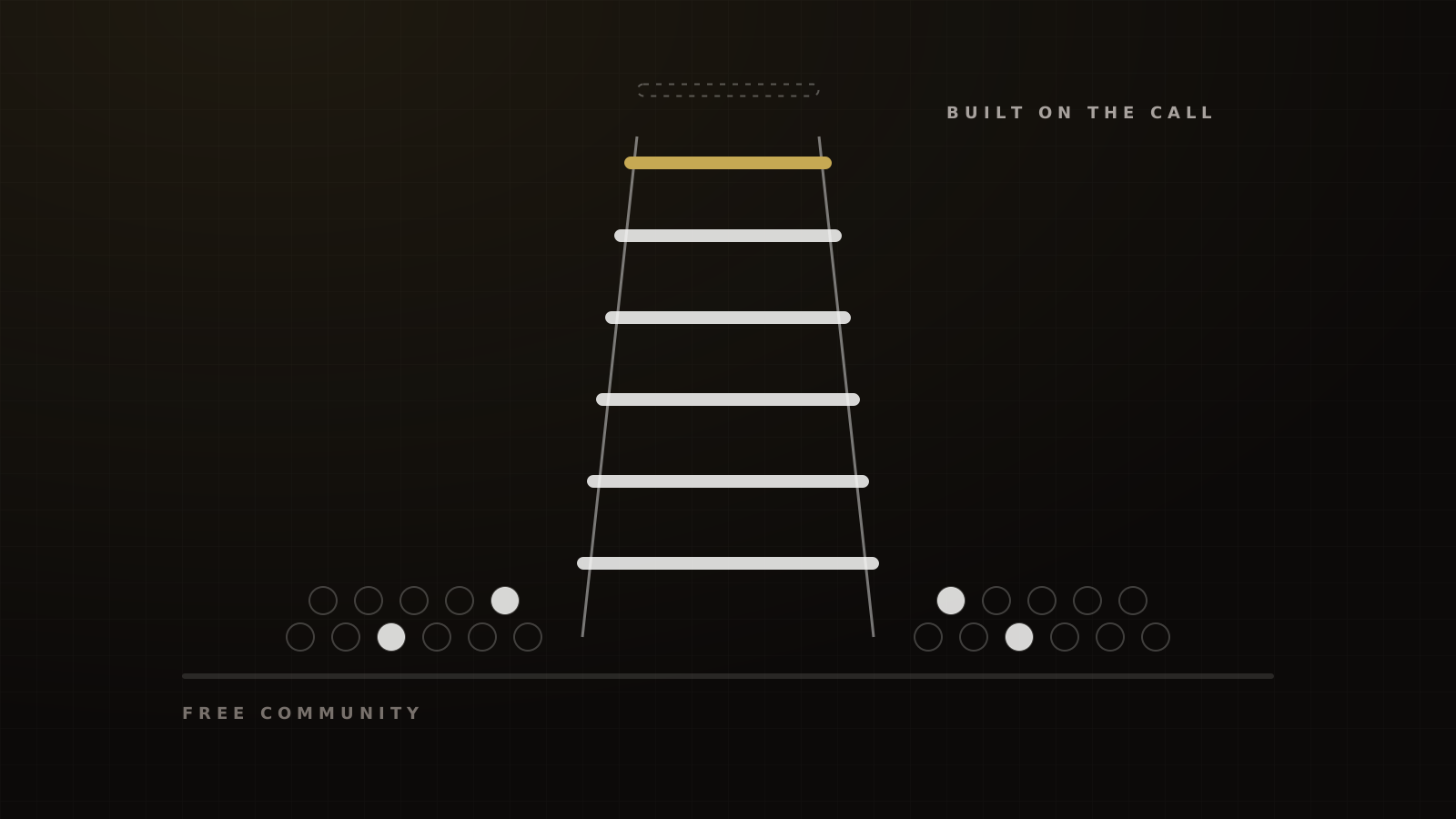
- We built the ladder in six rungs: free call and community, a low-ticket entry product, a course, a live ask-anything tier, a mastermind, and a retreat.
- Each rung got one job and a price far enough from its neighbors that the two didn't compete.
- Events and community sit inside the ladder, not beside it. Free ones acquire; paid ones deliver and retain.
- When a buyer wants more than the top tier, build it. Have the next rung ready before someone asks.
The client was a speaker and author with a real audience: a published book, regular stage time and a following that bought tickets. What they didn't have was a structured way for someone who liked the book to buy anything else.
This is how we built the ladder, in the order we built it, with the job of each rung. The client is anonymized, and the prices and results are being confirmed before we publish them.
Why the book isn't the business
Books and speaking fees rarely pay for a business on their own. The Authors Guild's survey of 5,699 authors found a median of $10,000 in book income for full-time authors in 2022, and $20,000 once speaking, teaching and coaching were included.[1]
Speaking pays better per day but doesn't compound. In the National Speakers Association's 2024 survey of 663 speakers, the average fee per gig was $8,000 in 2023, against event organizers' average budget of $22,000. Most speakers already sell something else: 62% offer coaching, 52% sell books and 33% sell online courses.[2]
The money is in what happens after the first purchase. On Kajabi, 53.8% of all expert earnings came from a customer's second or later purchase.[3] A book reader who never sees a second offer is a sale that stops at the cover price.
The ladder we built, rung by rung
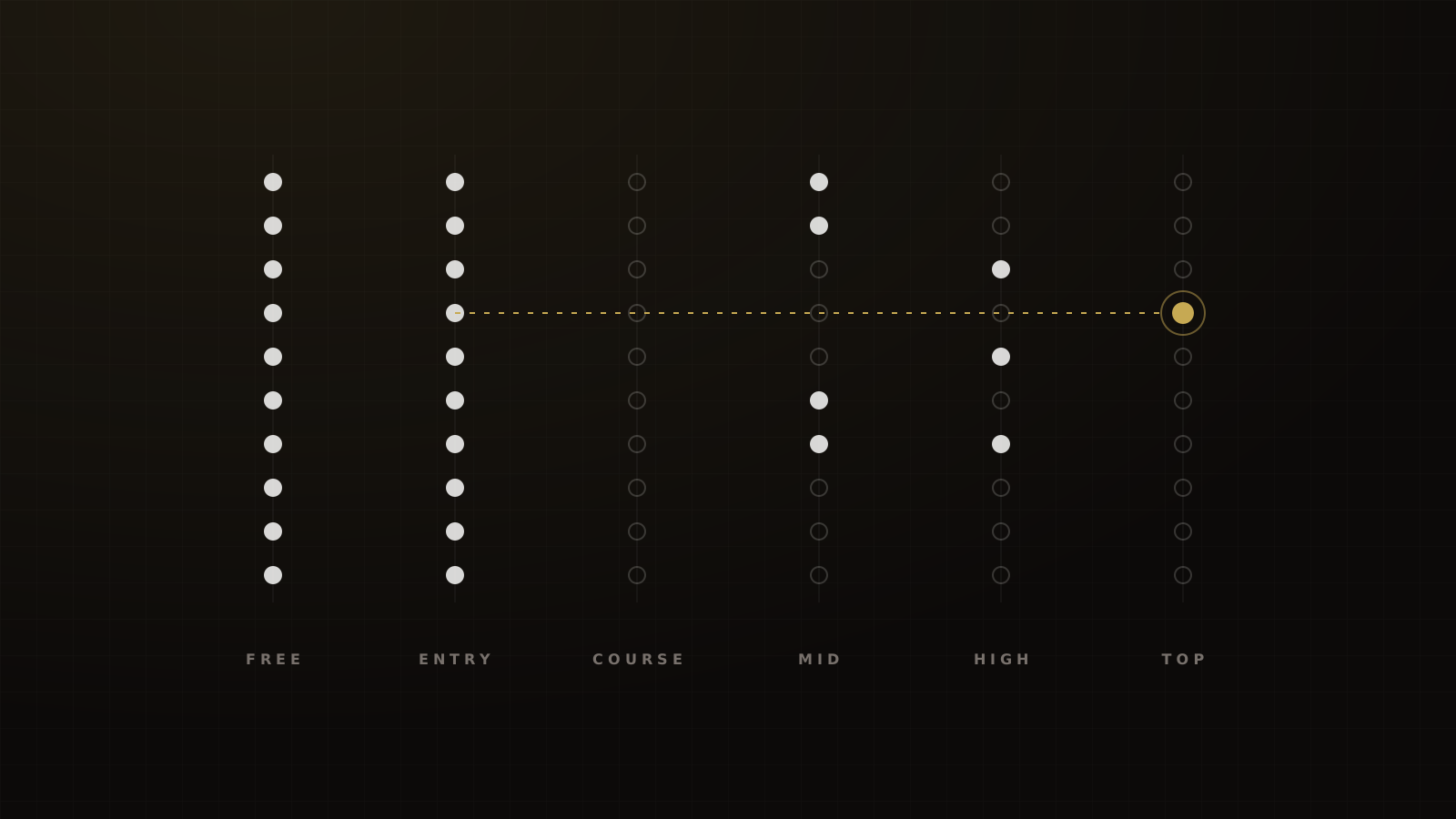
Russell Brunson's value ladder is the starting frame: offers from free to most expensive, each one good enough to make the next one wanted. Alex Hormozi adds a correction we agree with. Buyers don't climb neatly. They skip rungs, so every rung has to make sense on its own.
| # | Rung | Job | Delivery |
|---|---|---|---|
| 1 | Free call and free community | Gather the audience somewhere we control, and start the habit of showing up | Group call, community space |
| 2 | Low-ticket entry product | Turn followers into buyers | Self-serve, bought without a call |
| 3 | Course | Teach the method from the book, step by step | Recorded lessons, run as a cohort |
| 4 | Live ask-anything tier | Help people apply it, with direct access | Recurring live Q&A |
| 5 | Mastermind | Accountability and a peer group for the most committed | Small group, application only |
| 6 | Retreat | The premium experience at the top | In person, limited seats |
Prices are withheld until the client approves them. The job column is the point.
Why free first. Devin's phrase on the call was that the free tier is there "to get a nucleus of people". A speaker's audience is scattered across books, events and social feeds. The free call and community put them in one room, and they also show who keeps turning up.
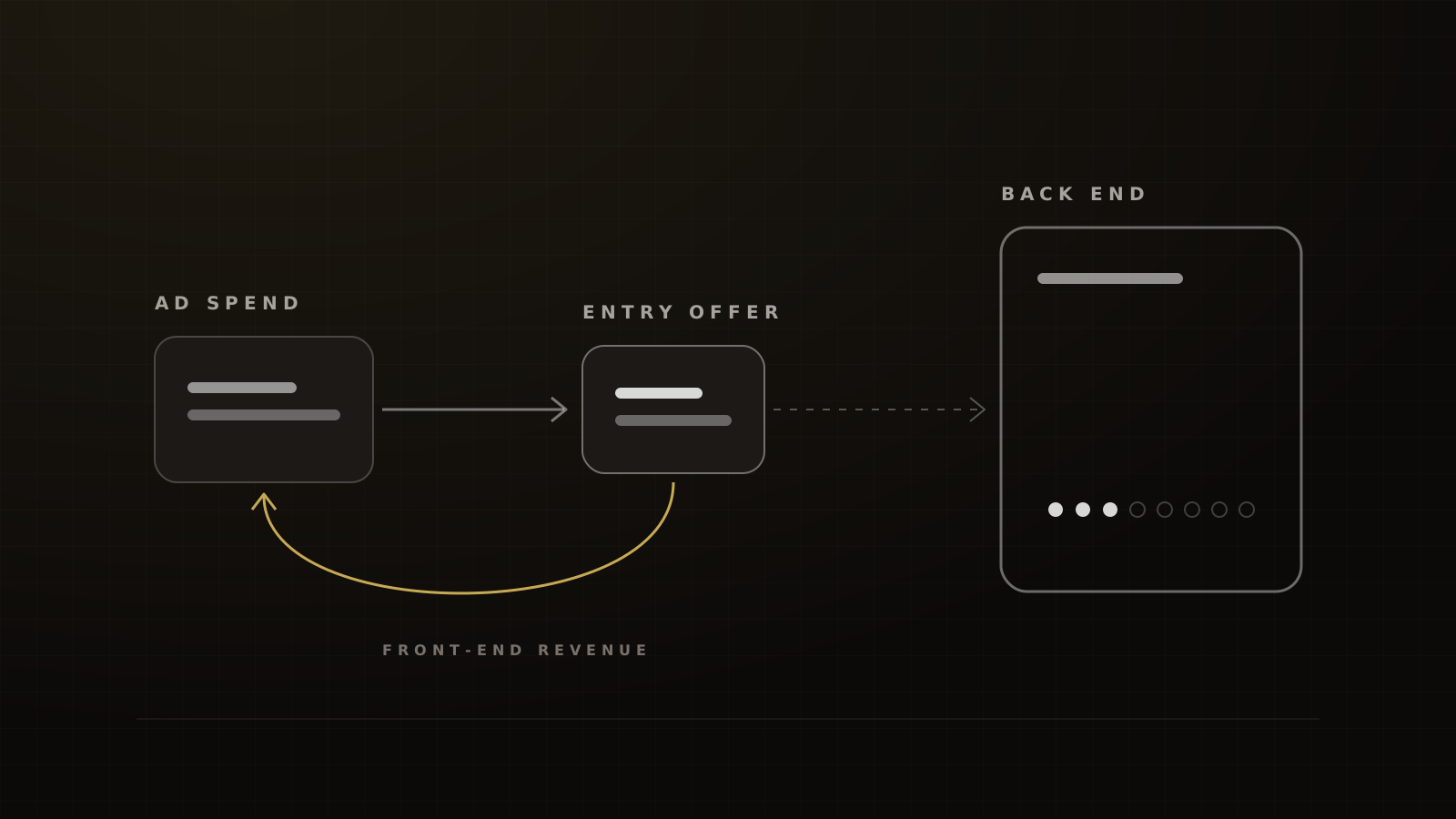
Why low ticket second. The first purchase breaks the seal. Once someone has paid anything, the next yes is a much smaller step. For pricing the entry rung, see how to price a low-ticket offer and our guide to the low-ticket funnel.
Why the course before the live tier. The course carries the method. The live tier is where people bring their own situation. Selling access before the method exists means answering the same basic questions every week.
Why the top two last. A mastermind and a retreat only sell once there are enough committed buyers below them. Launch them too early and you fill seats with people who should be in the course.
For comparison, two public ladders run along similar lines. ClickFunnels' published example for two public figures runs from a free podcast to a $47 challenge, a $997 course, a $1,997 retreat and $14,997 annual coaching.[4] One author-creator's ladder, published by Circle, runs from a $1 course to a $995 academy with 5,000+ buyers and a $4,995 accelerator.[5]
Where events and community fit
Community and events aren't extras. They're how people move between rungs.
Ray summed up why on the call: "People just need a pattern interrupt and a community to encourage them and hold their hand." The free community does the first part. The paid tiers do the second.
Keep the two apart. Free members shouldn't sit in the paid members' space, or the paid space stops feeling worth paying for. Circle's 2024 benchmark found 93% of its top-10% communities charge for access or bundle it with a purchase, against 79% of the rest.[6]
Live events inside the community drive the rest. In the same report, 59% of top communities saw more than half their members attend events, against 33% of others.[6] In the paid community challenges we build, live-call attendance runs above 50% of enrolled.
Devin calls it "drinking the Kool-Aid": the more someone consumes, the more likely they are to buy the high-ticket rung. That's why the free calls in this ladder were value only, with no pitch. People skip events they expect to be a pitch.
Events also bridge rungs. One public case used a free week-long masterclass to sell a $2,197 cohort and filled 50 of 100 seats before the live enrollment event.[7] In our experience, a well-run free one-day event shows 35% to 45% of registrants, and 8% to 12% of attendees buy the main stage offer. There's no credible industry benchmark for that second figure; it's our working range.
One-time vs subscription: what we chose and the trade-off
Our default is one-time purchases and fixed-length cohorts of four, six or eight weeks. They're cleaner to sell, and buyers are tired of subscriptions.
Cohorts also get finished. Ruzuku's data on 1.3 million enrollments shows 53.4% completion for scheduled cohorts against 41.9% for self-paced courses, which it notes is observational.[8] Paying matters too: on edX, about 46% of paying learners completed, against 3.13% of all participants.[9]
This ladder broke our own default. The community had a monthly tier with an auto-renewing free trial, because the speaker's audience wanted an ongoing place to meet. That's the tension: subscriptions churn, but some audiences want a home, not a course.
Churn figures need care. Recurly reports 4.99% churn for education subscriptions; it labels these annual medians, though they look monthly in scale.[10] Memberful reports 9.8% average annual churn.[11] Recurly also finds three of four subscribers who pause come back,[12] so a pause option is worth offering before a cancel.
Hormozi's continuity work gives the retention lever: pair a milestone with an upgrade or bonus, so members have a reason to stay for the next one.
When a buyer outgrew the top tier
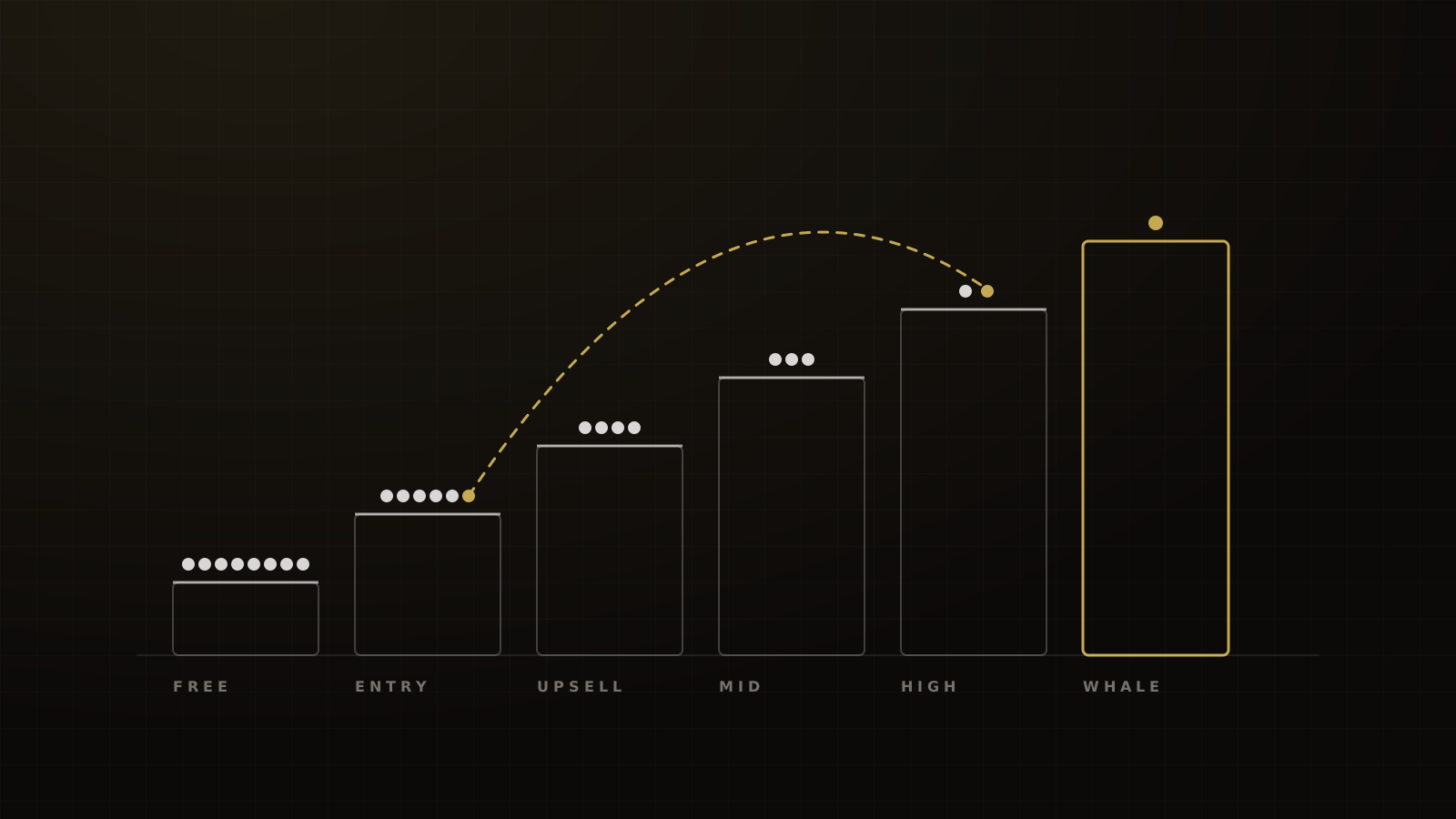
On one of the ladders we built, a buyer asked on a sales call whether the top package was really the top. It was, so we built a bigger one on the call.
You're going to get whales. If we don't have anything to sell them, we just start leaving money on the table.
Kajabi's data shows how much a top rung can matter: experts with at least one offer at $2,500 or more typically earned $174,730, against $178 for those whose top offer was under $50.[16] That's correlation, but the direction is clear.
Two rules came out of it. Keep the top tier's price off the page, and sell it only on a call. And have the next rung designed before anyone asks. We cover both in high-ticket offer pricing.
Results
We'll publish the numbers for this ladder once the client approves them.
What to copy
Building a ladder for a speaker or author
- Give every rung one job, written down, before you set a price.
- Start with a free place to gather the audience, then a low-ticket product that turns followers into buyers.
- Build the method rung (course) before the access rung (live calls).
- Launch the mastermind and retreat only once committed buyers are waiting.
- Keep free members out of the paid members' space.
- Default to one-time purchases and cohorts; if you add a subscription, make renewal and cancellation terms obvious.
- Design the rung above the top tier before someone asks for it.
For the full framework behind this build, read our offer architecture guide, the value ladder examples and the scaling roadmap. If you want to see how we'd build yours, book a strategy call.
Frequently asked questions
Sources
- 1.Key takeaways from the 2023 Author Income Survey. The Authors Guild, 2023-09-27.
- 2.2024 State of the Industry Report. National Speakers Association, 2024-06 (2023 data).
- 3.Is selling online courses profitable?. Kajabi, 2026-08-05.
- 4.The value ladder explained. ClickFunnels, 2026-04-21.
- 5.How to build a core offer. Circle, 2024-05-22.
- 6.2024 Community Benchmark Report. Circle, 2024.
- 7.Membership funnel strategy. Circle, 2024-07-23.
- 8.Cohort vs self-paced completion study. Ruzuku (Abe Crystal PhD), 2026-10 (updated).
- 9.Study offers data to show MOOCs didn't achieve their goals. Inside Higher Ed, reporting Reich & Ruipérez-Valiente in Science, 2019-01-16.
- 10.Churn rate benchmarks. Recurly, 2026-07 data.
- 11.The state of membership: Q3 2025. Memberful, 2025-10-14.
- 12.Analyzing trends of 76 million subscribers. Recurly, 2026-01-14.
- 13.Custom Communications v. FTC, No. 24-3137. U.S. Court of Appeals for the Eighth Circuit, 2025-07-08.
- 14.Negative Option Rule: advance notice of proposed rulemaking. Federal Trade Commission, 2026-03-13.
- 15.Consumer alert on California's Automatic Renewal Law. California Attorney General, 2025-09-04.
- 16.The value ladder that actually works. Kajabi, 2026-08-05.
Written by
Devin AlexanderCo-Founder & CEO
Devin architects Victory's revenue systems: team structure, comp plans, scripts and the accountability frameworks that make sales floors predictable. He has generated more than $150M in sales and trained more than 250 closers.
Part of the guide: Offer Architecture: Value Ladders, Grand Slam Offers and Self-Liquidating Front Ends